
Tulum's archaeological zone is receiving around 1,000 visitors per day, a figure that reflects months of fluctuation but signals stable demand for one of the Mexican Caribbean's most visited heritage sites, according to the site's lead archaeologist.
José Manuel Ochoa Rodríguez, the archaeologist responsible for the zone, said attendance has moved up and down compared to prior years without disrupting daily operations. The contrast with recent peaks is notable: in February 2025, the National Institute of Anthropology and History (INAH) recorded 3,000 visitors per day. That number has since moderated, though Ochoa Rodríguez characterized the current pace as sustainable and expected to strengthen ahead of the summer.
Sargassum remains a pull factor, not just a problem
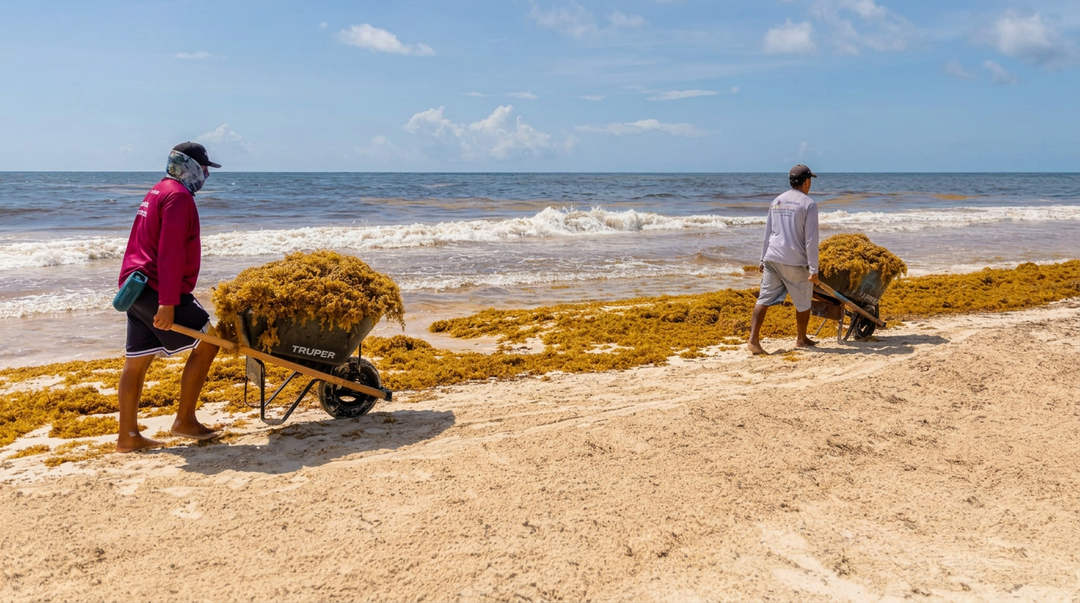
Among the variables shaping who comes and when, Ochoa Rodríguez named sargassum as one of the most direct influences on the site's visitor dynamic. The presence of seaweed along the Tulum coast has long complicated the destination's appeal as a beach-and-ruins combination, and the archaeologist acknowledged its continued effect on tourism flows.
That said, he noted that the zone is not operating in isolation. Municipal authorities, the National Commission of Natural Protected Areas (Conanp), and site personnel are coordinating efforts to maintain conditions suitable for both visitors and heritage conservation, an arrangement that has kept the site functional even during periods of heavier sargassum accumulation.
Who fills the site, and when
The visitor profile shifts depending on the day of the week. On weekdays, international tourists make up the majority of those walking the clifftop grounds, drawn by the site's historical significance and its position overlooking the Caribbean. On weekends, the balance tilts toward domestic visitors, many of them drawn to Tulum by the municipality's broader recreational and cultural offerings rather than the ruins alone.
This pattern points to a dual dependence: the archaeological zone serves both as a global heritage destination and as a weekend anchor for national tourism within Quintana Roo.
Summer outlook and what full capacity means for local businesses
Ochoa Rodríguez expressed confidence that the upcoming summer vacation period will push attendance back toward the site's operational ceiling. "We expect a favorable increase during the summer holidays and estimate that attendance could reach 100 percent of its usual capacity again," he said.
That recovery would matter well beyond the ruins themselves. Guides, vendors, transport operators, and service providers in the area depend on consistent visitor volume to sustain their income. A return to peak attendance would ripple outward through the local economy at a moment when Tulum's broader tourism sector has been contending with its own pressures.

The site, perched above the sea on the eastern edge of the Yucatán Peninsula, remains one of the most photographed and visited Mayan archaeological sites in Mexico. Its combination of coastal scenery and pre-Columbian architecture gives it a draw that few comparable sites can replicate, a factor officials are counting on to carry it through the slower weeks before the summer surge arrives.
Does the pattern of international visitors on weekdays and domestic tourists on weekends match what you've seen at the Tulum ruins? Join the conversation and share your perspective with us on Instagram and Facebook at @thetulumtimes.

The Tulum Times · Newsletter
The story continues in your inbox.
Essential Tulum news and local insight, a few times a week. Free.
No spam. Unsubscribe anytime.
Tulum Cenotes, Ruins, and Practical Visitor Guides
Guides, access updates, regulations, and practical planning around cenotes and the Tulum archaeological zone.

“The best journalists reporting from paradise, highlighting the heroes that keep Tulum the most beautiful place in the world! THANK YOU!”