

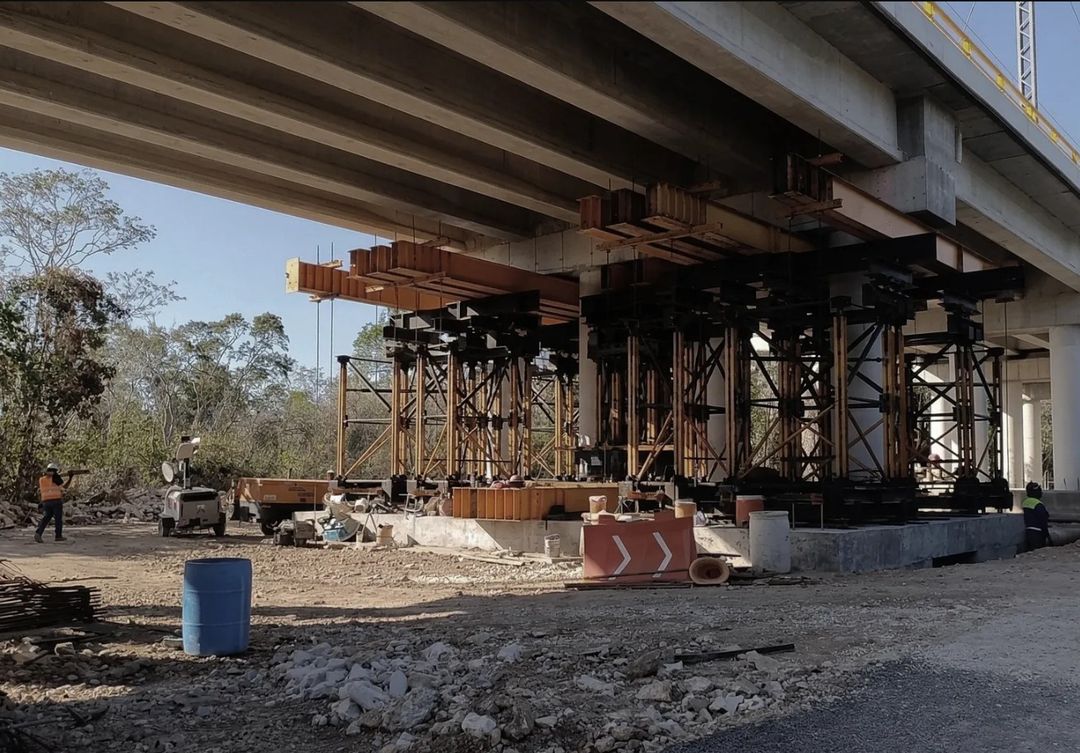
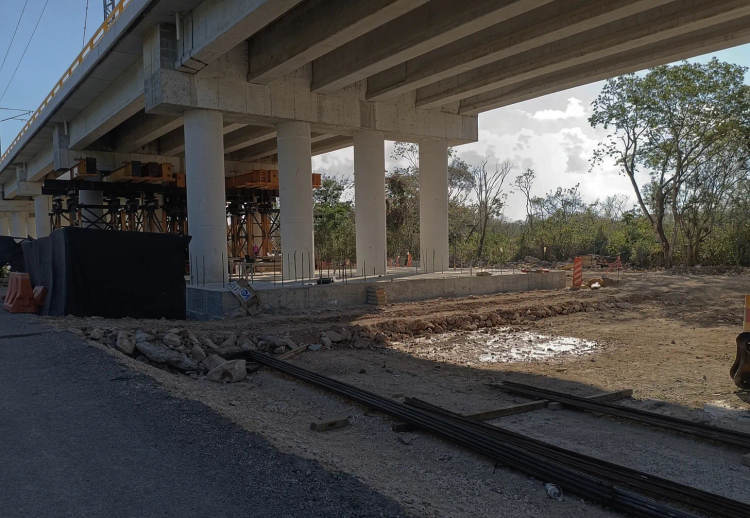
The visual evidence of modern engineering struggling against ancient geology has become a focal point for environmentalists and structural experts in the Riviera Maya. Recent images circulating across digital platforms show what appears to be a measurable sinking in the elevated viaduct of the Tren Maya within Section 5. This specific segment connects Cancun with Tulum and was designed to bypass the terrestrial challenges of the jungle floor. However, the emergence of subsidence suggests that the vertical stability of the massive concrete structure is currently being tested by the very ground that supports it.
Subsidence refers to the progressive and vertical sinking of the terrestrial surface. In the context of the Yucatan Peninsula, this process is rarely a sudden event but rather the visible result of a long and relentless chemical interaction. The specialists monitoring the site argue that this development is not an anomaly but a predictable consequence of building heavy infrastructure over a karst landscape. While the elevated viaduct was promised as a solution to minimize environmental impact, it is now facing the geological reality of a subsoil that refuses to remain static under the weight of concrete and steel.
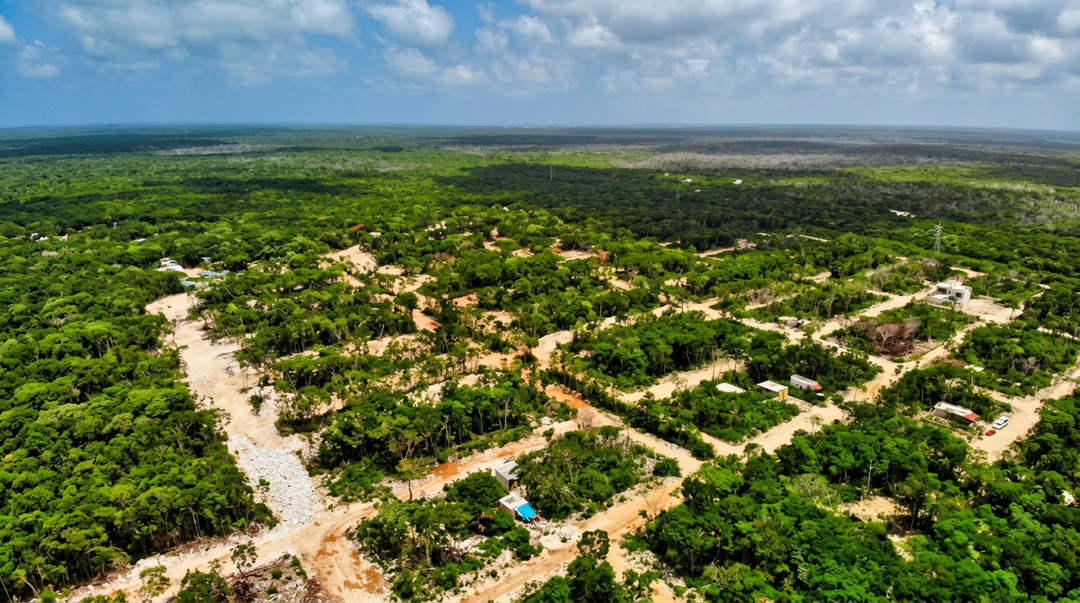
The fundamental issue lies in the chemical composition of the regional subsoil. The ground throughout the Riviera Maya consists primarily of limestone rock. This material possesses a unique vulnerability to water. When rainwater falls through the atmosphere, it absorbs carbon dioxide and becomes slightly acidic. As this acidic liquid filters through the jungle floor and enters the limestone layers, it begins to dissolve the rock in a slow but constant process. Over thousands of years, this interaction has created the vast network of caves and underground rivers alongside the cenotes that define the peninsula. This same process of dissolution is what creates oquedades or hollow subterranean spaces that eventually weaken the structural integrity of the terrain.
The Footings of a Growing Problem
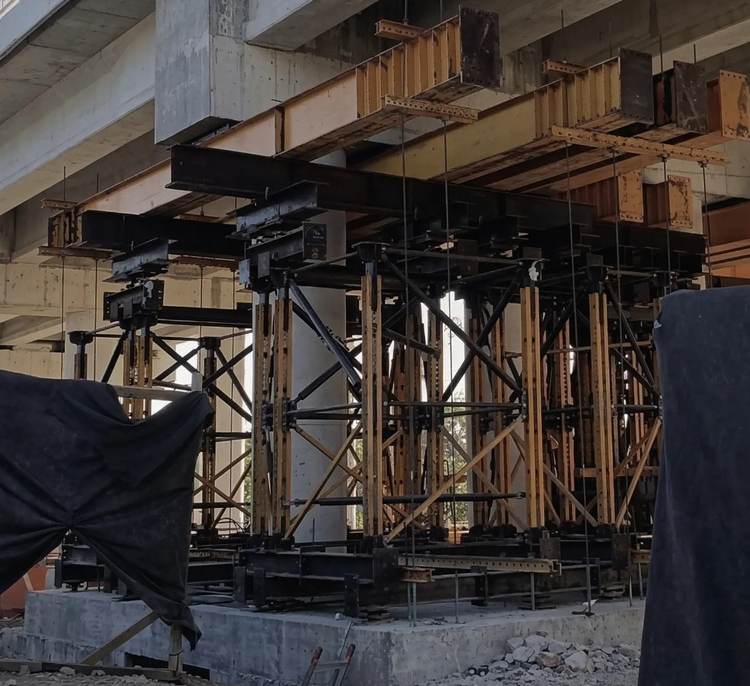
Guillermo D. Christy, a recognized cavern specialist and environmental researcher, has been one of the most vocal figures documenting the changes in Section 5. He recently highlighted the construction of new zapatas or reinforcement footings as a clear indicator of structural distress. According to Christy, the addition of these heavy reinforcement blocks is a reactive measure rather than a planned part of the maintenance cycle. He suggests that the engineers are attempting to distribute the load of the viaduct across a wider area because the original columns are beginning to settle into the dissolving limestone.
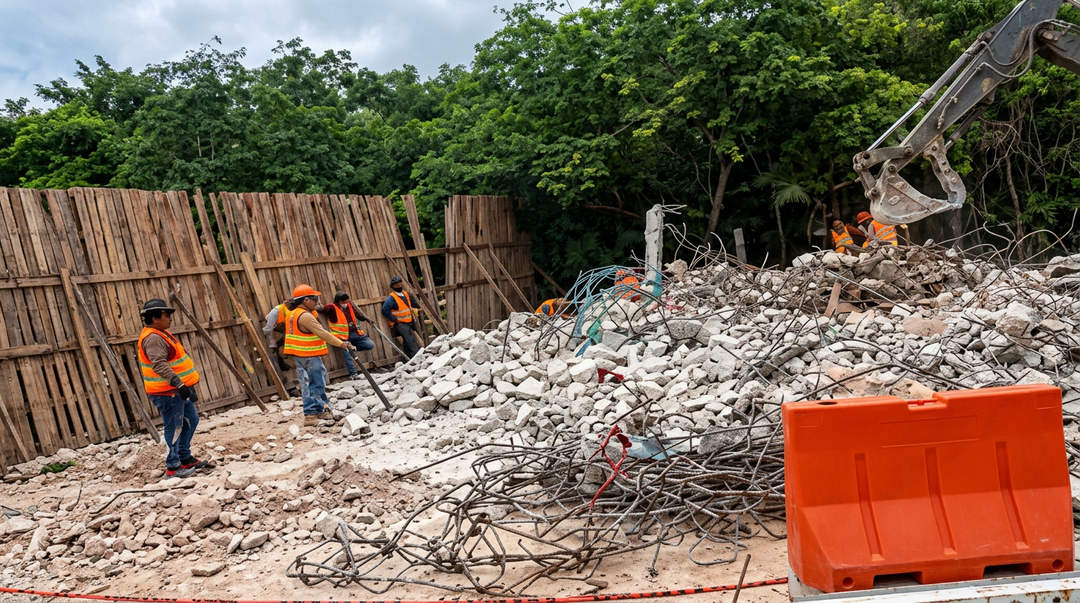
The presence of these metal and concrete supports has also drawn criticism from independent observers. Some suggest that adding more weight to a point that is already sinking could actually accelerate the weakening of the fragile soil. The logic involves a feedback loop where the reinforcement adds mass to a surface that is losing its density. Experts point out that the karst floor is not a solid slab of granite but a complex and hollowed sponge that reacts unpredictably to concentrated pressure points.
The group SelvameMX, which has monitored the project since its inception, maintains that these risks were predicted well before the first columns were poured. They argue that the decision to elevate the train was made without the comprehensive geotechnical studies required for such a delicate environment. The group recently stated that the karst landscape has begun to respond to the audacity of the project and that the current subsidence is a reminder that the geology of the region cannot be easily bypassed through political willpower alone.
A History of Rapid Shifts and Design Changes
The current structural challenges in Section 5 cannot be understood without looking back at the history of the project. In March of 2021, the federal government announced that Section 5 South would be built as an elevated viaduct. This was a significant departure from the original plan to build the tracks along the existing Federal Highway 307. The shift occurred after the hotel sector expressed concerns that ground-level construction would damage the aesthetic appeal of the tourism corridor and create logistical bottlenecks for their guests.
The modification was framed as a win for both the environment and the passenger experience. Officials argued that an elevated train would offer a panoramic view of the coastline and the jungle while preserving the derecho de vía or right of way. However, the speed at which the design shifted meant that the deep subterranean mapping of the route was arguably rushed. The insistence on meeting tight political deadlines often took precedence over the slow and methodical pace of geological verification.
The lack of a public position from the Secretariat of National Defense or the Tren Maya administration has only added to the uncertainty. Neither entity has offered a technical explanation for the visible settling of the viaduct columns or the emergency reinforcement work being carried out. This silence contrasts with the constant monitoring that independent specialists claim is essential for avoiding a catastrophic failure. Geotechnical experts maintain that continuous monitoring with specialized sensors is the only way to evaluate the stability of the structure over time and prevent a major collapse in a zone characterized by high hydric interconnection.
The Coming Challenge of Cargo Operations
While the Tren Maya currently operates primarily as a passenger service, the long-term plan includes the regular passing of heavy cargo trains. This prospect is what creates the most anxiety for environmentalists and local communities. The planned cargo operations involve the transport of hydrocarbons and heavy materials across some of the most important aquifers in the Yucatan Peninsula.
The risk profile changes fundamentally when the weight of a passenger train is replaced by the massive tonnage of a cargo train carrying liquids. A subsidence that appears manageable today could become a critical point of failure under the stress of heavy freight. Specialists like Christy have asked the public to imagine the consequences of a train carrying fuel or chemicals derailing over a subterranean river. The interconnection of the aquifer system means that a spill in one section of the viaduct could rapidly contaminate the water supply for a vast portion of the Riviera Maya.
The passenger service has been in operation for roughly two years in some sections and has functioned in Section 5 since February of 2024. During this short period, the train has already reported significant operational losses and a demand that remains well below the original projections. The financial pressure to make the project viable through cargo transport appears to be at odds with the geological reality of a track that is literally sinking in parts.
The Cost of Battling Nature
The recurring question among residents and researchers in Quintana Roo is how much money the government is willing to spend to compete against the natural processes of the earth. The constant reinforcement of the viaduct represents an ongoing economic drain that was not factored into the initial budgets. Each new footing and every corrective intervention adds to the total cost of a project that is already one of the most expensive in the history of modern Mexico.
The formation of cenotes is the natural endpoint of limestone dissolution. The crust of the earth collapses when the weight above exceeds the strength of the hollowed rock below. While engineers can use deep piling and massive footings to reach more stable layers, the karst landscape is notoriously deep and inconsistent. The fear is that the subsidence in Section 5 is not a localized incident but a sign of a structural mismatch that will require perpetual and expensive attention.
Ultimately, the stability of the Tren Maya Section 5 viaduct depends on whether the human desire for rapid connection can find a safe middle ground with the slow and inevitable movement of the limestone floor. For now, the visual evidence of sinking columns suggests that the jungle and the aquifer are asserting their presence in a way that no amount of concrete can completely silence.
---
How do you view the balance between large-scale infrastructure and the environmental protection of the karst landscape in the Riviera Maya? Join the conversation and share your perspective with us on Instagram and Facebook at @TulumTimes.

The Tulum Times · Newsletter
The story continues in your inbox.
Essential Tulum news and local insight, a few times a week. Free.
No spam. Unsubscribe anytime.
Tulum Development, Permits, and Construction Watch
Reporting on permits, construction, regulation, and major development decisions shaping Tulum’s urban growth and investment climate.

“The best journalists reporting from paradise, highlighting the heroes that keep Tulum the most beautiful place in the world! THANK YOU!”


