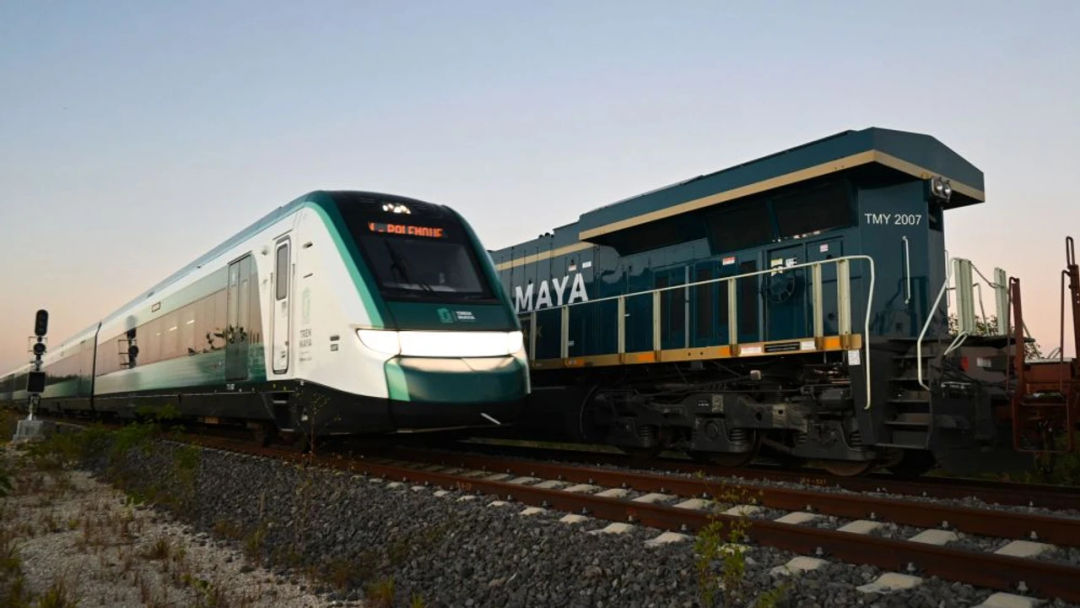
Passenger trains continue to travel across the Maya Train’s Tramo 5 Sur, even as the federal government agreed to launch a technical review over mounting concerns that the structure may be vulnerable to sinkholes.
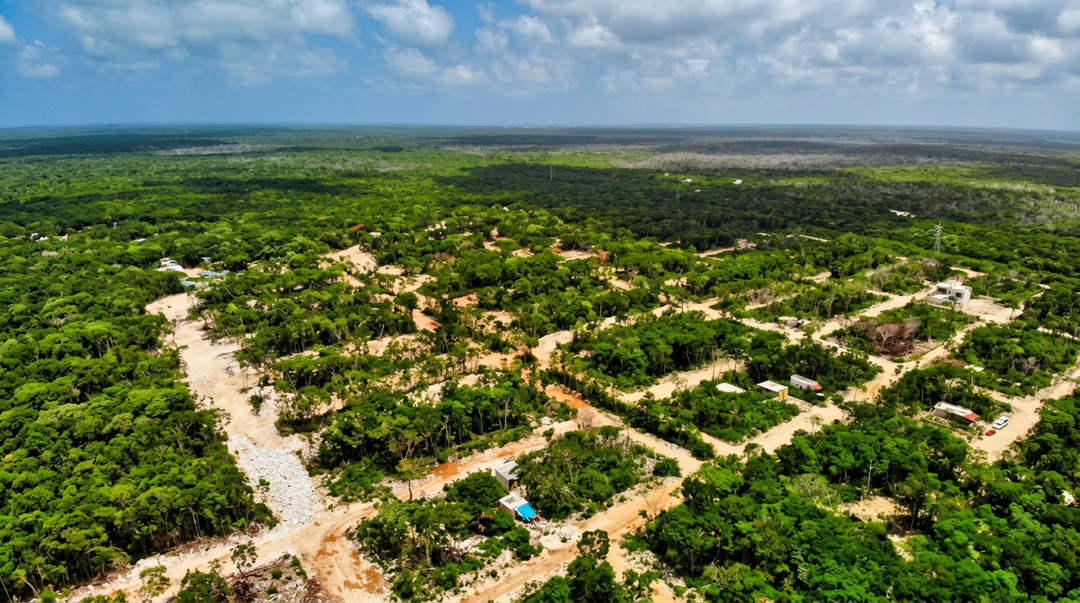
The tension over the railway segment, which connects Cancún, Playa del Carmen, and Tulum, centers on the region's delicate geology. The tracks are elevated over highly porous karst soil that conceals the Sac Actún cave system and a network of underground rivers. While engineers initially modified the design to include elevated viaducts to bypass the uneven terrain, recent reports indicate that these measures may be facing severe physical stress.
Specialists monitoring the site have documented specific engineering challenges. Recent field observations report differential settlements in some of the supporting pilings and significant difficulties in consolidating concrete inside the natural subterranean cavities. Furthermore, the structural materials are exposed to constant humidity. Engineer Wilberth Esquivel recently released visual evidence indicating that emergency reinforcement work is already underway on several concrete columns, validating concerns that the initial construction is actively requiring stabilization.
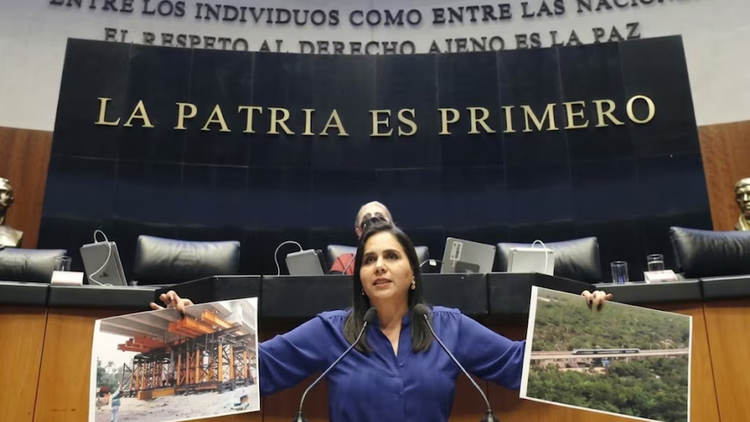
National Action Party (PAN) Senator Mayuli Latifa Martínez Simón warned that the karst terrain might be failing to support the dynamic load of the railway system. She announced an upcoming formal request demanding that federal authorities execute independent structural risk evaluations, conduct environmental inspections, and analyze the system's operational viability as a preemptive safety measure.

The scrutiny on Tramo 5 Sur does not exist in a vacuum. Scars from a 2025 derailment in the Izamal section have heightened public and political scrutiny regarding the overarching safety of the Maya Train. Consequently, conservation collectives argue that any structural failure in the Tulum segment would not only pose a passenger safety risk but also inflict devastating, irreversible damage to the underlying aquifer.
In response to the escalating demands, President Claudia Sheinbaum confirmed that an inter-institutional technical review will be conducted alongside infrastructure authorities. Yet, the administration has declined to halt train operations during the assessment. The federal posture remains focused on verifying the field data internally, leaving the region suspended between ongoing railway operations and the urgent warnings of geologists and structural experts.
Join the conversation: How do you perceive the balance between infrastructure development and environmental safety in the Yucatan Peninsula? Share your perspective with us.

The Tulum Times · Newsletter
The story continues in your inbox.
Essential Tulum news and local insight, a few times a week. Free.
No spam. Unsubscribe anytime.
Maya Train, Tulum Station, and Regional Connectivity
Coverage of the Maya Train, stations, routes, travel changes, and infrastructure decisions affecting Tulum.

“The best journalists reporting from paradise, highlighting the heroes that keep Tulum the most beautiful place in the world! THANK YOU!”