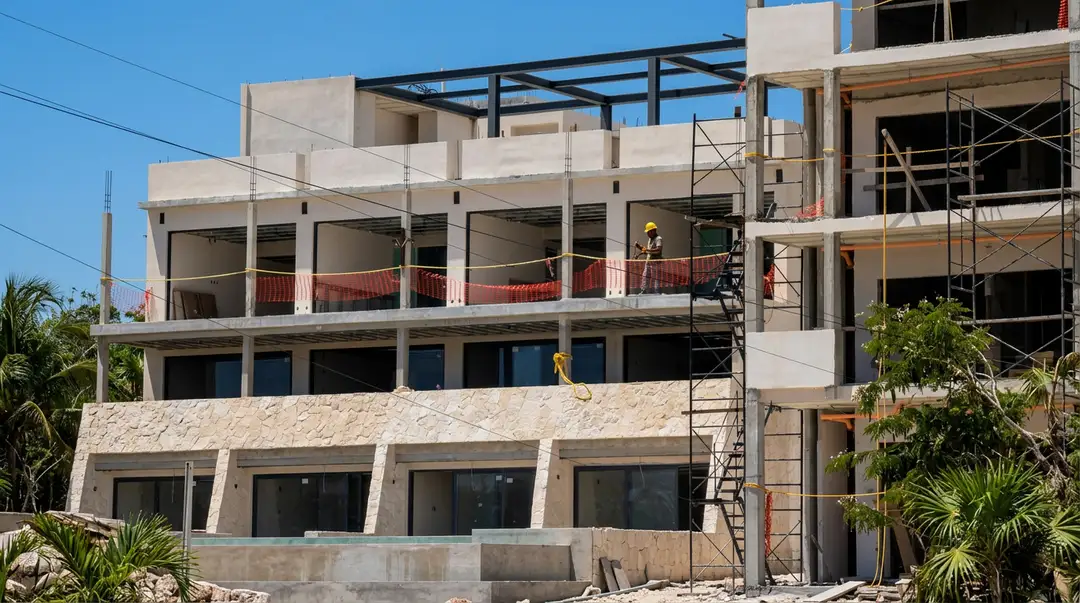
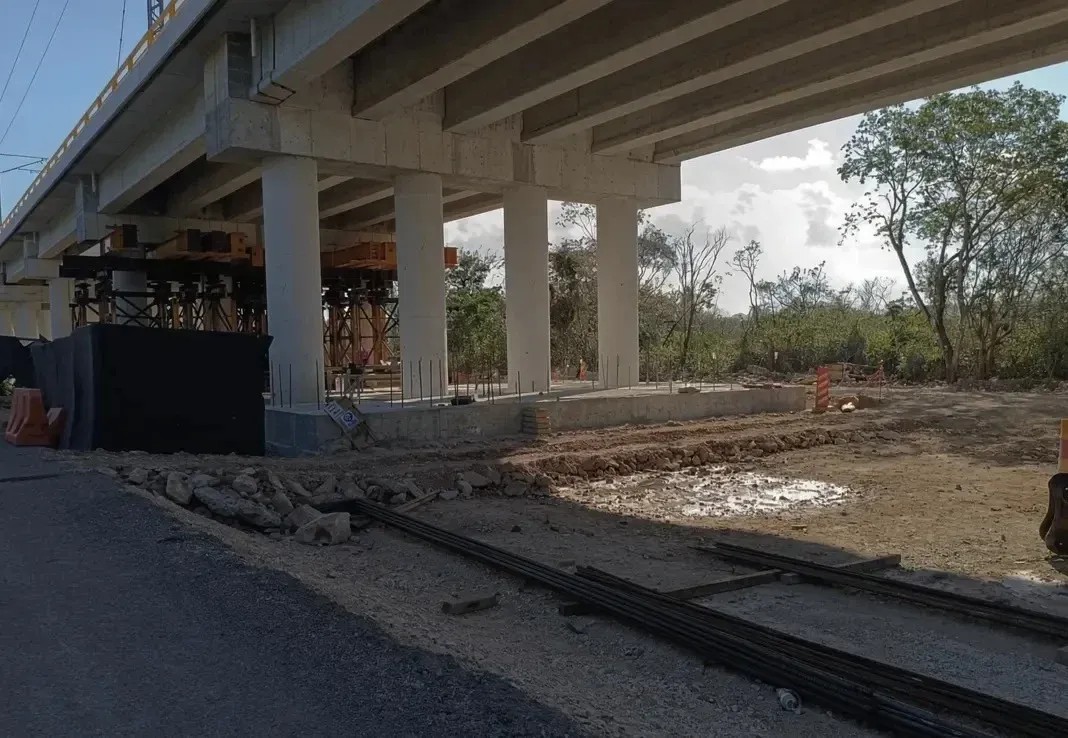
Recent images revealing structural reinforcements along the Maya Train's Section 5 South have reignited environmental concerns, prompting President Claudia Sheinbaum to order a specialized technical review of the viaduct.
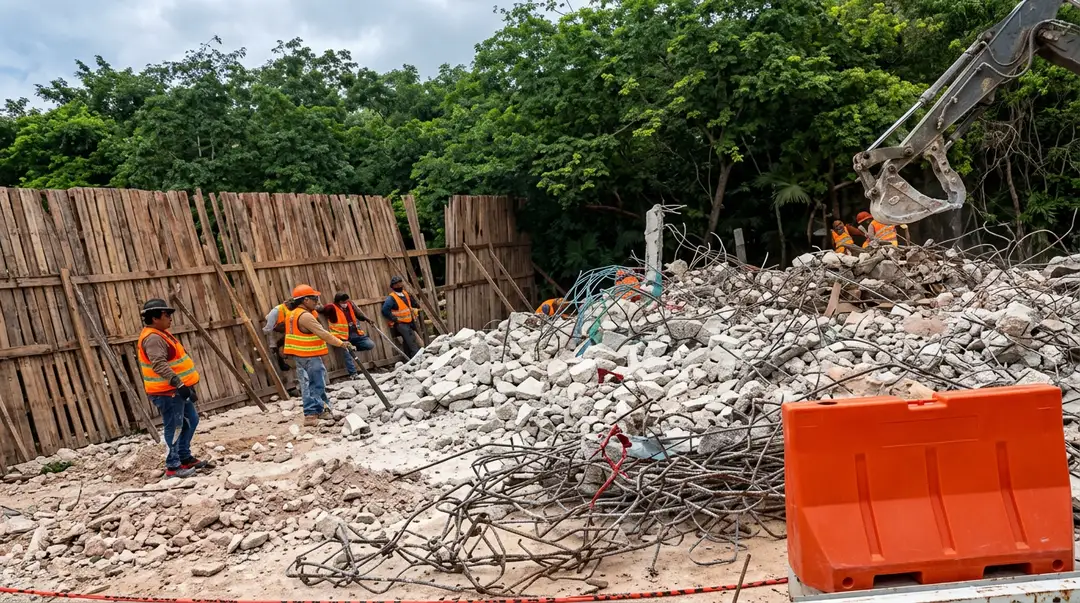
The photographs, which document additional supports placed on the pilings between Playa del Carmen and Tulum, have validated long-standing warnings from local activists regarding the stability of the region's fragile geology. As the multibillion peso project navigates ongoing financial losses, this emerging structural controversy highlights the persistent tension between large scale infrastructure development and the preservation of the Riviera Maya's delicate underground ecosystems. Addressing these engineering challenges is now critical not only for passenger safety but for the long term viability of the railway.
Visual Evidence Triggers Alarm
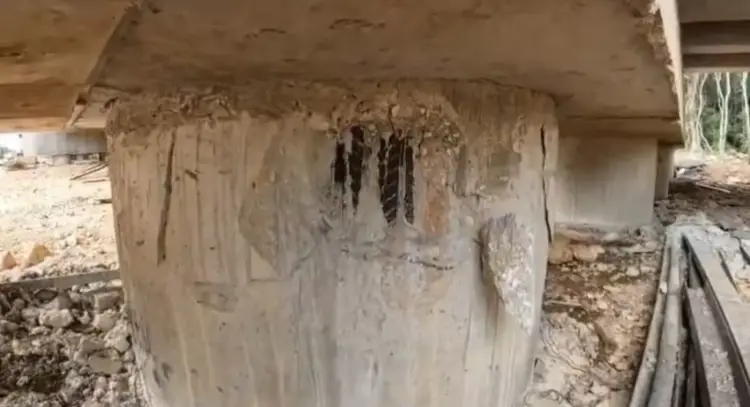
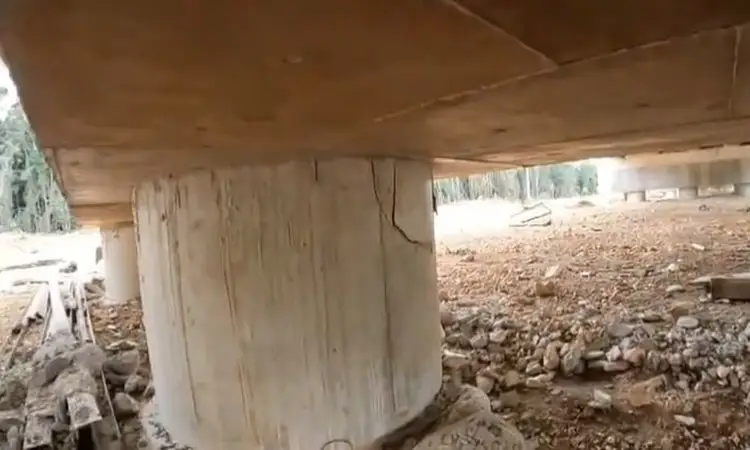
The current wave of scrutiny began when Wilberth Esquivel, a civil engineer based in the Yucatan Peninsula, published video footage documenting what appears to be corrective shoring on several concrete pilings. In the recorded material, military personnel can be seen operating near the structures, and Esquivel is warned against filming in what is designated as a federal area. The footage quickly circulated among local communities and environmental organizations, serving as the first visual confirmation of potential structural settling.
"They are 'repairing' the columns because it is surely sinking," stated José Urbina, a prominent environmentalist affiliated with the collective Sélvame del Tren. The organization has spent years documenting the project's construction phases, particularly its intersection with the region's subterranean waterways. According to Urbina, the massive drilling required to anchor the viaduct into the limestone bedrock can precipitate micro collapses, a risk that is fundamentally aggravated by the weight and continuous vibration of a functioning railway system.
The Secretariat of National Defense, which maintains operational control over the Maya Train and heavily participated in its construction, initially stated that it lacked immediate information regarding the shoring efforts. This response has done little to quell public anxiety, particularly among communities that rely on the integrity of the underlying aquifer.
The Perils of Karst Terrain
The engineering complexities of Section 5 South are intrinsically linked to its geology. The Yucatan Peninsula is defined by karst soil, a landscape formed by the dissolution of soluble rocks such as limestone, dolomite, and gypsum. While this high porosity facilitates the natural recharge of the region's vital aquifers, it also generates an extensive, interconnected network of caverns, grottos, and underground rivers.
Constructing a high speed railway viaduct over such an unstable foundation presents unprecedented engineering challenges. The original route for this segment was modified during the administration of former President Andrés Manuel López Obrador to traverse deeper into the jungle canopy. This decision, aimed at minimizing disruption to established highway corridors and hotel infrastructure, necessitated the installation of thousands of steel and concrete pilings driven deep into the cave systems.
Environmentalists have consistently argued that these pilings, particularly those inserted without adequate protective coatings, pose a severe threat to subterranean water quality. Since 2024, independent researchers have documented instances of metal corrosion and cement leaching directly into the cenotes. Beyond chemical contamination, the physical alteration of the cave ceilings risks structural failure. Urbina has publicly warned that the currently reinforced columns may represent only a fraction of the total structural damage hidden beneath the surface.
Federal Government Announces Technical Review
In response to the mounting public pressure and the circulation of Esquivel's footage, the federal government has acknowledged the need for a formal investigation. President Claudia Sheinbaum addressed the issue during a recent morning press conference, announcing that a specialized review would be conducted to evaluate the viaduct's structural safety.
"A punctual review will be made to guarantee structural safety," the president affirmed. The technical analysis will be spearheaded by Jesús Esteva, who will work in direct coordination with military officials to issue a comprehensive diagnostic report. The involvement of independent structural engineers in this process remains a point of contention for transparency advocates, who argue that the military's dual role as both the builder and the inspector constitutes a conflict of interest.
The outcome of this review is anticipated to determine whether the shoring represents routine maintenance adjustments entirely expected in major infrastructure projects or an emergency response to foundational failure.
A History of Ecological Warnings
The current structural concerns are inseparable from the broader environmental debate that has defined the Maya Train since its inception. Organizations dedicated to conservation have repeatedly categorized the railway as a project with severe ecological impacts. The International Rights of Nature Tribunal has previously condemned the construction practices, citing grave disruptions to the local environment and the destruction of sensitive habitats.
The legal and regulatory framework surrounding the project has also been complex. During its execution phase, the Maya Train was officially declared a matter of national security. This designation effectively streamlined construction timelines by bypassing standard environmental impact assessments and public consultation processes. However, federal environmental authorities have not been entirely silent. In 2024, the Federal Attorney for Environmental Protection formally admitted before a judge that the construction had caused clear damage to cenotes, caverns, and subterranean rivers, violating established environmental regulations.
These admissions have provided legal footing for ongoing injunctions filed by civil society groups, though the physical progress of the train has largely outpaced the judicial process.
Economic Realities and Operational Deficits
Beyond the structural and environmental hurdles, the Maya Train must confront stark economic realities. The infrastructure endeavor, which ultimately required an investment exceeding 500 billion pesos, was heavily promoted as an economic catalyst capable of democratizing tourism wealth across the Mexican southeast. However, financial reports detailing the operation's performance through the end of 2025 indicate significant challenges in achieving profitability.
The system is currently operating at a substantial loss, registering deficits of approximately 9.9 million pesos daily. While gross revenue from ticket sales has demonstrated an upward trajectory as the service stabilizes, this income has proven insufficient to offset the massive operational overhead, which includes maintenance, military staffing, and energy costs.
Óscar David Lozano Águila, the general director of the Maya Train, has publicly recognized these financial headwinds. He noted that the primary user demographic currently consists of national travelers. Attracting a higher volume of lucrative international tourism remains the project's most pressing commercial challenge. Without a significant shift in passenger demographics and ridership volume, the financial sustainability of the railway will remain heavily dependent on federal subsidies.
As the government prepares to release the findings of its structural review, the Maya Train stands at a critical juncture. The resolution of the engineering concerns in Section 5 South will test the resilience of the infrastructure and the transparency of its administrators.
How should the government balance infrastructure modernization with the protection of underground ecosystems? Join the conversation and share your perspective with us on Instagram and Facebook at @TheTulumTimes.

The Tulum Times · Newsletter
The story continues in your inbox.
Essential Tulum news and local insight, a few times a week. Free.
No spam. Unsubscribe anytime.
Maya Train, Tulum Station, and Regional Connectivity
Coverage of the Maya Train, stations, routes, travel changes, and infrastructure decisions affecting Tulum.

“The best journalists reporting from paradise, highlighting the heroes that keep Tulum the most beautiful place in the world! THANK YOU!”