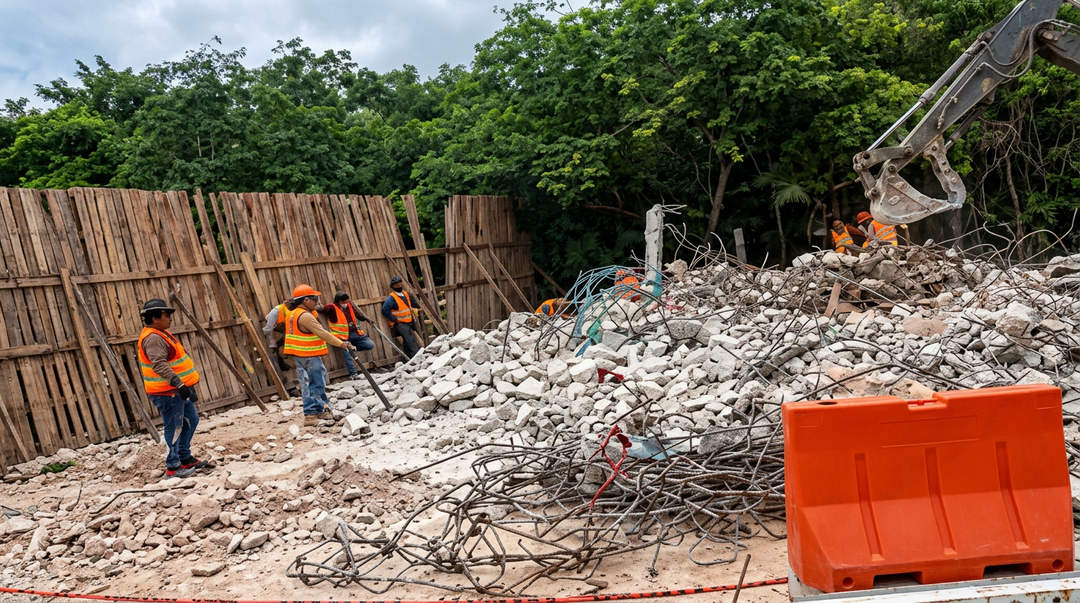

Equipos de Zofemat han recolectado más de 2,800 toneladas de sargazo en Tulum esta temporada, parte de una limpieza que el gobierno municipal dice que ejecuta junto con la Marina, el estado y hoteles privados.
La cifra importa porque la playa es el producto. La economía turística de Tulum descansa en agua que fotografia de color turquesa, y el sargazo dejado el tiempo suficiente para descomponerse vuelve el agua marrón, envenena el aire con sulfuro de hidrógeno, y aleja a los huéspedes de la orilla hacia la alberca. Todo lo que el municipio está haciendo ahorita es una carrera contra la descomposición.
Castañón supervisa Playa del Pueblo y nombra a sus socios
El presidente municipal Diego Castañón Trejo recorrió Playa del Pueblo durante una visita de supervisión para ver en persona el trabajo de recolección. Describió una operación coordinada en tres niveles de autoridad y el sector privado, con la Secretaría de Marina, el gobierno del estado de Quintana Roo, y operadores hoteleros todos trabajando el mismo tramo de costa.
"Estamos hoy aquí en Playa del Pueblo con personal de Zofemat atacando esta entrada extrema. No bajaremos la guardia, y estamos haciendo este trabajo en coordinación con la Marina, el gobierno estatal y los dueños de hoteles", dijo el presidente municipal, en declaraciones traducidas del español.

La participación de la Marina no es nueva. Semar ha encabezado la respuesta federal al sargazo en el Caribe mexicano desde 2019, trabajando mar adentro con barreras de contención y embarcaciones de recolección mientras equipos municipales se ocupan de lo que aún llega a tierra. La división del trabajo es simple en teoría. Detén lo que puedas en el mar, y recoge el resto.
Los números de Zofemat, 2,800 toneladas y más de 1,000 viajes de contenedores
El volumen reportado por la Zona Federal Marítimo Terrestre cubre solo lo que su propio personal retiró. No incluye lo que equipos hoteleros sacaron de sus playas privadas, lo que significa que el total real en tierra es mayor de lo que el conteo municipal sugiere.
Mover esa masa es su propio problema logístico. Zofemat reporta más de 1,000 viajes de contenedores a centros de transferencia, cada uno un ciclo de camión que debe ser programado, dotado de personal y abastecido de combustible. El sargazo es pesado, mojado y lleno de arena, y no se compacta de la forma en que funciona la basura ordinaria. Una tonelada de él ocupa mucho más espacio que una tonelada de residuos domésticos.
El sector hotelero está ejecutando su propia limpieza en paralelo. Las propiedades a lo largo de la playa coordinan equipos internos para limpiar su frente, lo que mantiene la arena presentable para los huéspedes y libera equipos públicos para concentrarse en playas abiertas como Playa del Pueblo, donde nadie está pagando una brigada privada para que se presente al amanecer.
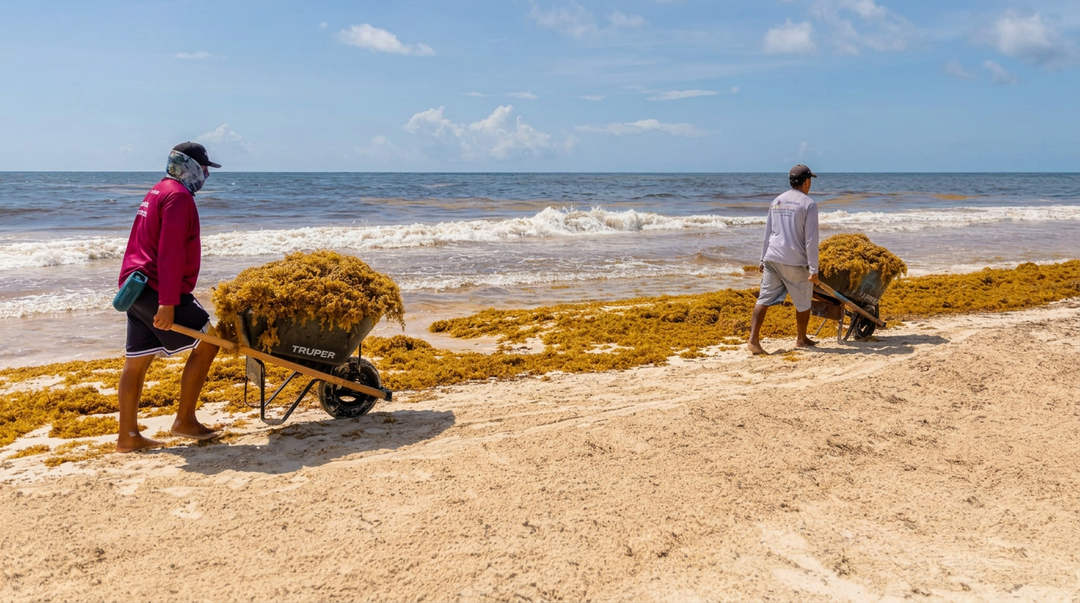
A dónde va el sargazo de Tulum después de que sale de la arena
David Buchanan, director general de Zofemat Tulum, dijo que la recolección es solo la mitad del trabajo. La otra mitad, y la que describió como una prioridad crítica, es asegurar sitios de disposición final adecuados para todo lo que los camiones se llevan.
Su preocupación es el lixiviado. Conforme el sargazo se descompone, libera líquido que contiene lo que la maleza marina absorbió durante sus meses en el mar. Arrojado en terreno sin preparar, esa escorrentía puede alcanzar el acuífero, dañar la vegetación local, y afectar la fauna costera en toda la Riviera Maya. Buchanan planteó esto como la diferencia entre resolver un problema y reubicarlo.
La geología bajo Tulum hace que las apuestas sean particularmente directas. Esta es caliza porosa, atravesada por cenotes y ríos subterráneos que alimentan tanto el suministro de agua potable como el sistema arrecifal mar adentro. Cualquier cosa que se filtre en el terreno aquí no se queda en un lugar. Viaja.
Buchanan llama atípica la temporada para la costa de Quintana Roo
Buchanan caracterizó las condiciones actuales como un escenario completamente atípico para la costa de Quintana Roo, lenguaje que pone esta temporada fuera del rango para el que equipos locales planean.
Las llegadas de sargazo en el Caribe mexicano generalmente ocurren desde la primavera hasta el otoño, con las semanas más pesadas concentradas en la mitad de esa ventana. Los municipios presupuestan equipos y equipo contra una curva esperada. Cuando la curva se rompe, el déficit aparece como sargazo sentado en la arena más tiempo de lo que debería, porque no hay suficientes manos, camiones o sitios autorizados de disposición para trasladarlo a la velocidad en que llega.
Los equipos siguen trabajando sin interrumpción a través de los meses de mayor llegada
El gobierno municipal confirmó que el trabajo continuará sin interrupción durante el período de mayores llegadas, planteando el esfuerzo explícitamente como una defensa de la competitividad turística de Tulum. Ese planteamiento es honesto sobre la motivación. La playa es un activo económico, y el noveno municipio la está protegiendo.
Lo que el anuncio no resuelve es la pregunta de disposición de Buchanan. La capacidad de recolección puede escalarse con más equipos y más camiones. Los sitios aprobados que pueden sostener miles de toneladas de materia orgánica en descomposición sin filtrarse en el acuífero no pueden improvisarse en una temporada. Hasta que esa pieza se resuelva, cada tonelada adicional retirada de la arena se convierte en una tonelada que tiene que ir a algún lugar, y la medida honesta de esta operación no será lo que sale de Playa del Pueblo. Será lo que sucede con ello después.
¿Debería Tulum gastar más en sitios aprobados de disposición de sargazo que en la recolección de playas? Únete a la conversación y comparte tu perspectiva con nosotros en Instagram y Facebook en @thetulumtimes.

The Tulum Times · Newsletter
La nota sigue en tu correo.
Lo esencial de Tulum y contexto local, un par de veces por semana. Gratis.
Sin spam. Cancelá cuando quieras.
Tulum Sargassum Updates and Beach Conditions
Live seaweed conditions, cleanup updates, forecasts, and practical beach planning across Tulum and the Riviera Maya.

“The best journalists reporting from paradise, highlighting the heroes that keep Tulum the most beautiful place in the world! THANK YOU!”