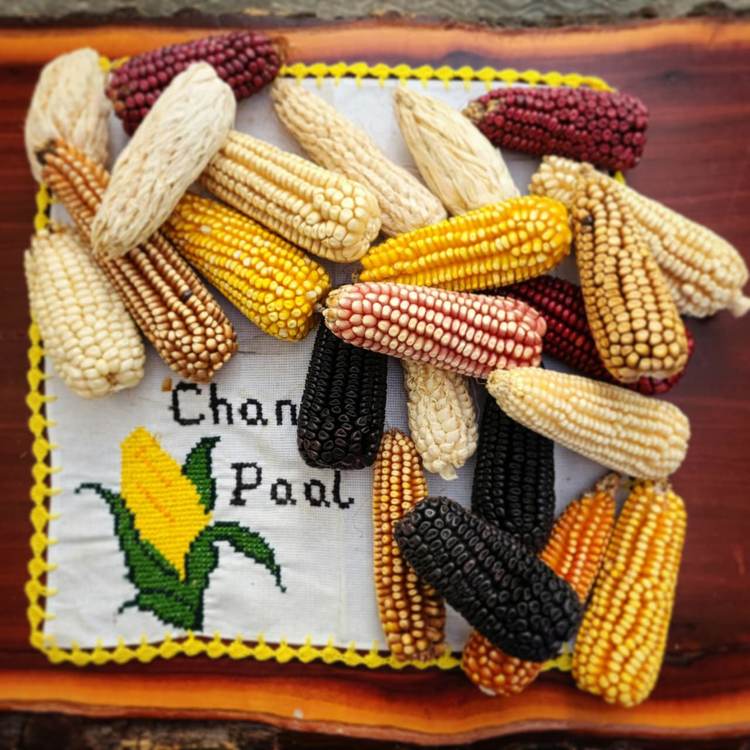
The first thing that reaches the table at Chan Paal is a basket of totopos in blue, red, and yellow, and the corn in them was ground in the same building that afternoon.
One bite, and the distance between this and a bagged tortilla stops being an abstraction.
Tulum has spent a decade learning to cook for everyone. The result is a town where you can eat very well in Italian, Japanese, Levantine, and Californian, and where a plate of genuinely regional food has become harder to find than a matcha. Chan Paal, 15 minutes up the Cobá road in the village of Macario Gómez, is the clearest answer we have found to that problem, and it is the best regional cooking within reach of Tulum right now.
What the beach road stopped cooking
The place does not appear on the lists travelers read before they arrive. It sits at the entrance to the village, on the highway that carries traffic out to the ruins at Cobá, in a room where the mill is part of the furniture. Its Google rating sits at 4.9. Most of the people in the room on a weekday are from the village or from the cabañas scattered along that stretch of road.
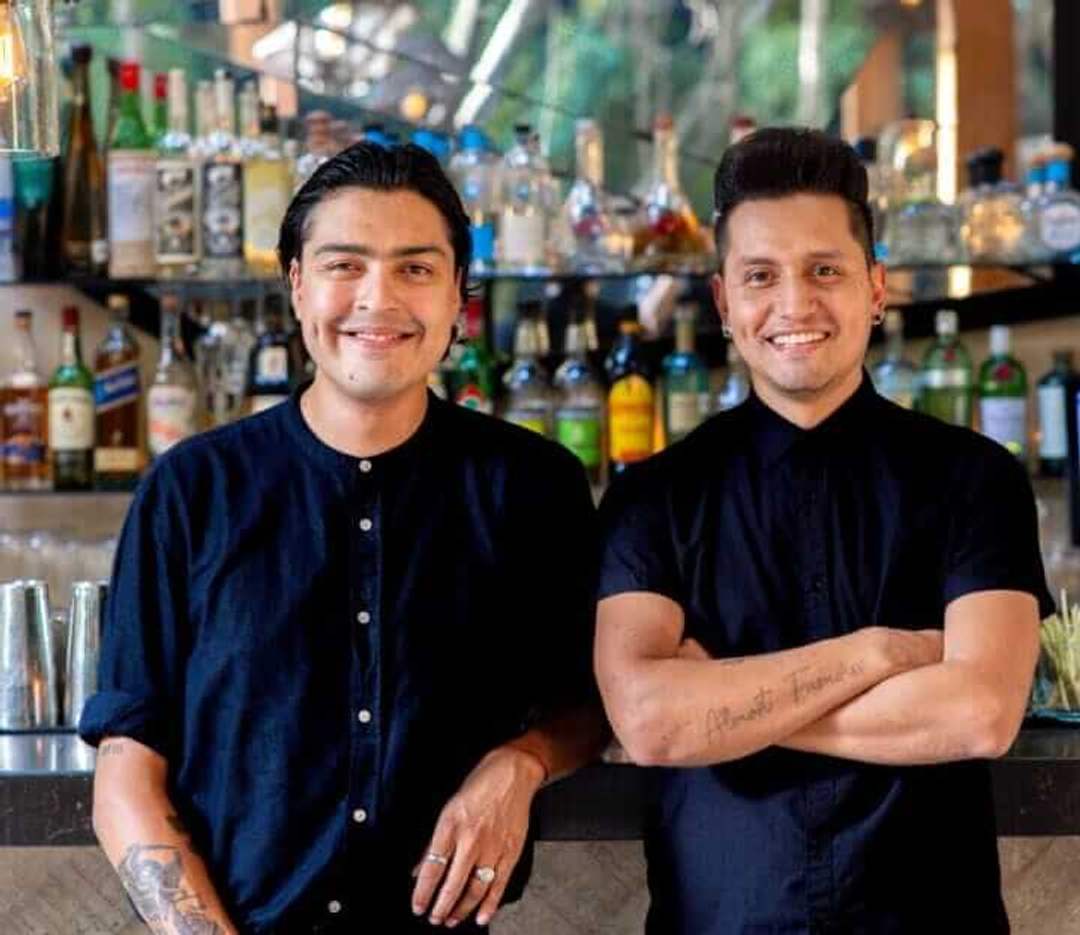
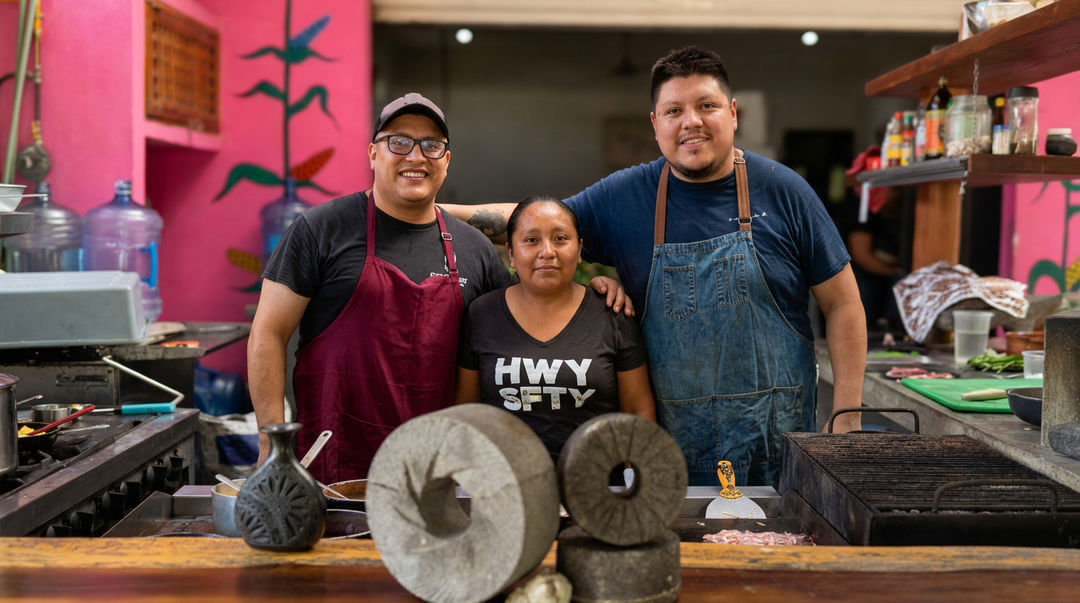
Eleazar Bonilla and his brother Eduardo opened it almost three years ago as three things at once: a mill, a tortillería, and an antojería, which is an unusual amount of work to take on for a village of 884 residents, the figure the 2020 census gives for Macario Gómez.
The corn arrives by parcel from four states
The reason the food tastes the way it does starts a long way from the coast. Bonilla laid out the sourcing in a voice message to The Tulum Times. Blue, red, purple, yellow, and white corn, bought from producer cooperatives in Veracruz and the State of Mexico, from communities in Yucatán, and from the brothers' own parents in Querétaro, who gather it in towns including Comonfort and Acambay and load it onto a parcel truck.
Corn from four states, then, moving across the country to a village most drivers pass without slowing down. Bonilla explained why they bothered.
"In Quintana Roo we realize that the masa and tortilla industry is not the quality it should have, even for people's food and nutrition," he said in Spanish, in remarks translated by The Tulum Times. "We came out of that."
The pantry behind it is assembled the same way. Organic beans from Michoacán and Morelos, which matters because bean salsa sits under plate after plate here. Fresh cheese from Veracruz. Longaniza and smoked meat from producers in Valladolid, and two growers there who now supply tomate país and chile país. Quelites and other milpa greens go inside the food, not on top of it as decoration.


Eleazar Bonilla cooked for 12 years on the hotel strip
None of this is the work of an amateur with a good idea about corn. Gourmet de México reported in December 2025 that Bonilla spent 12 years as the executive chef at La Zebra in Tulum's hotel zone before he opened his own place.
You can taste both halves of that history. The cooking methods are the unhurried ones, the slow confits, the long-simmered beans, the masa worked by hand. The way the plate is built came from twelve years of doing it for a hotel dining room, and it shows in the balance of a dish rather than in any flourish.
The trade itself is older than his career. The brothers grew up in Querétaro in a family of merchants and tortilleros. Their father has worked in masa and tortillas for more than 45 years and still does. Their mother never cooked professionally, and she is the one who handed down the techniques the kitchen runs on today. Three generations stand behind a single tortilla here, which is not a line of marketing; it is the supply chain.
A tetela, a fried egg, and bean salsa underneath
Order the tetela. It is a triangular antojito from Oaxaca, and what arrives is a corn parcel stuffed with mushrooms cooked slowly in fat, filled with Oaxaca cheese, topped with a fried egg, and set over bean salsa, with fresh cheese, cream, greens, and pickled onion. Cut it, and the yolk goes into the beans. That first forkful is the argument for the whole trip, and everything in it- the corn, the beans, the cheese, the onion- came from a person the kitchen can name.
Huevos mayas is the dish that tells you which peninsula you are on, an open omelet with mint and chaya, smoked cheese, refried beans, and habanero salsa, served with an infladita and a hand-pressed tortilla. The huevos tirados run darker and richer, scrambled into black bean and bayo bean salsa with adobo chipotles, roasted cheese, and fried plantain.
The hot cakes are made with pinole from blue corn, a flour ground with sweet spices, and they come out slate-colored under seasonal fruit and vanilla foam. Toasted corn is the oldest flavor in this country, and it turns out to work beautifully in a stack of pancakes.
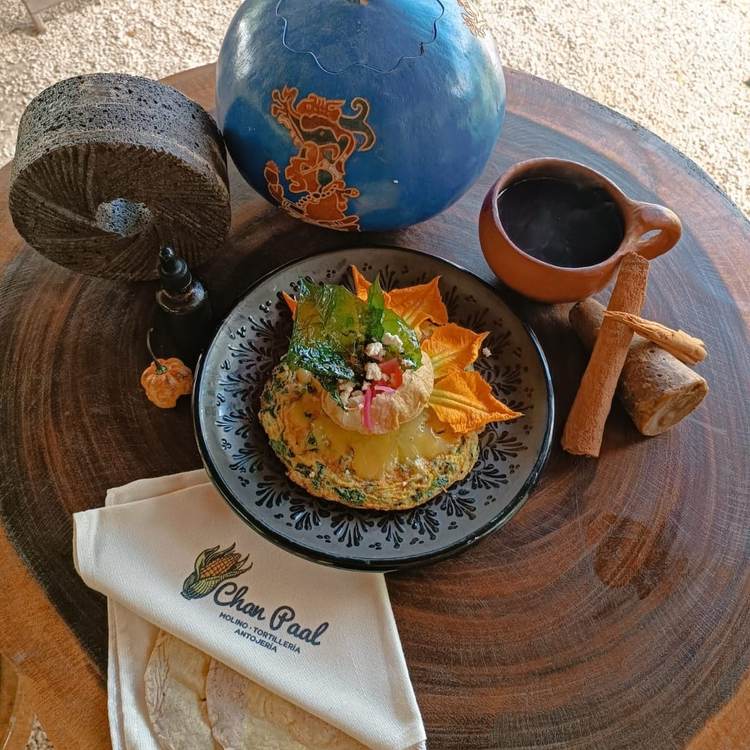
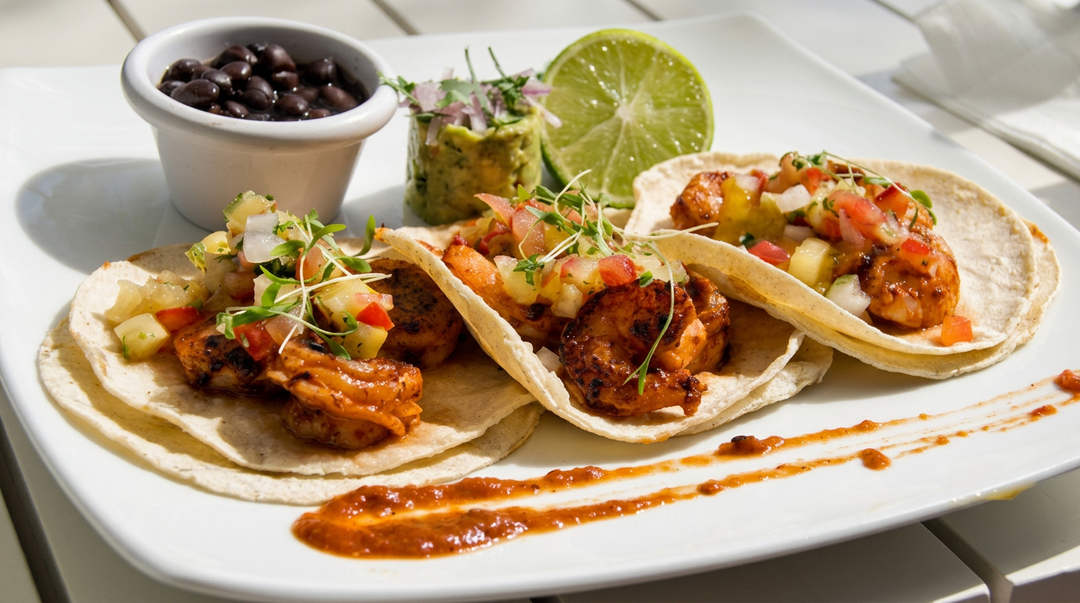
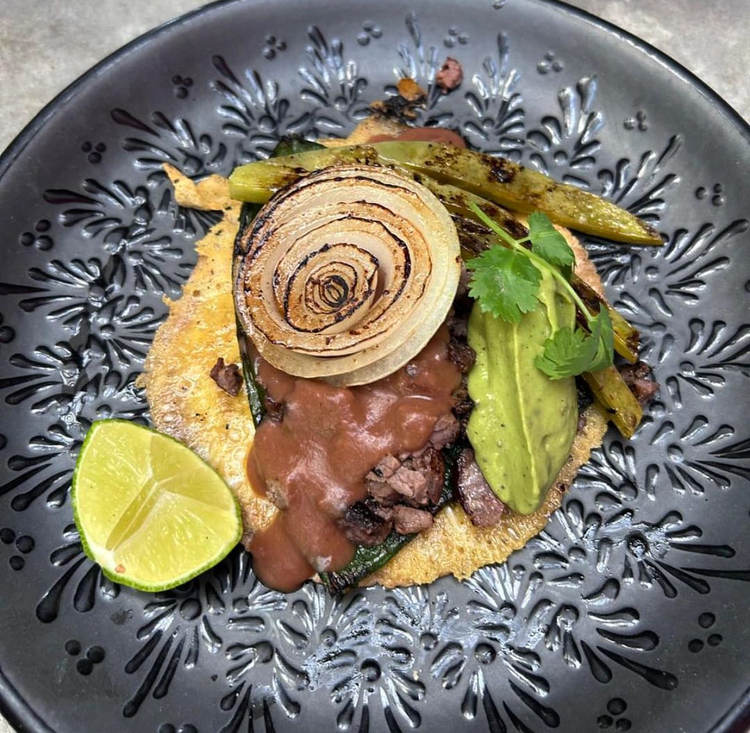
From there the kitchen has fun. Machetes folded long around Oaxaca cheese and pickled vegetables, finished with garlic shrimp or Maya quelites or quesabirria that arrives with its own bowl of consomé. A poblano chile crusted in cheese and filled with grilled beef, beans, avocado, and nopales, which the menu calls a torito. Fish al pastor with grilled pineapple and garlic-serrano mayonnaise. A gordita packed with pressed chicharrón. A sope of pork arrachera with asiento and crisped queso de bola. Chilaquiles rojos, verdes o divorciados.
To drink: café de olla from the pot, sweetened with piloncillo and spiced, then the same coffee poured into horchata, which the menu calls horchata sucia. Blue corn pinole. Jamaica with cinnamon. A lemonade with lemon ice cream dropped into it.
Expect to wait, because the masa is made here
This is not a fast table, and it should not be. The corn is milled on the premises, and the tortillas are pressed by hand, and a Tripadvisor reviewer described watching Bonilla and his team working the masa right at the entrance to the village. Food that starts as whole grain and ends as a tortilla on your plate does not move at the speed of a beach club kitchen.
Order a café de olla, let it take the time it takes, and watch the comal.
Chan Paal means small child in Maya
The name is a thank-you note. Chan Paal is how a family says "baby," and two men from the Bajío chose a Maya name for a reason that Bonilla states without hedging.
"We are very happy and grateful to Maya culture, to the people who embraced us and, as we say, adopted us," he said.
He returned to it later in the same message. They are Mexicans, he said, but they arrived from different communities with different customs, and the town took them in anyway. That gratitude is legible in the food, which borrows from Oaxaca, the Bajío, and Yucatán without pretending to be from any one of them.
Three years in, and a slow season
The timing has not been kind. Bonilla said the season has not helped much, and that the plan is to keep going, which is the sentence a lot of kitchens in this municipality are saying to themselves this year.
The village repays a longer visit. Bonilla listed the neighbors working in bejuco, carpentry, macramé, and dreamcatchers, a small economy strung along the Cobá road. Chan Paal sits on the Carretera Tulum Cobá at calle 12, on the right as the village begins if you are driving out from town.
In Querétaro, 45 years into the trade, his father is still gathering corn and loading it for shipment. It travels across the country to a village of 884 people. It reaches you as a warm tortilla, worth every minute of the drive.
Have you made the drive out to Macario Gómez to eat? What did you order? Join the conversation and share your perspective with us on Instagram and Facebook at @thetulumtimes .

The Tulum Times · Newsletter
The story continues in your inbox.
Essential Tulum news and local insight, a few times a week. Free.
No spam. Unsubscribe anytime.
Tulum Restaurants, Beach Clubs, and Nightlife Guide
Food, dining, beach clubs, and nightlife coverage for visitors looking for practical choices, current openings, and the mood of Tulum after dark.

“The best journalists reporting from paradise, highlighting the heroes that keep Tulum the most beautiful place in the world! THANK YOU!”