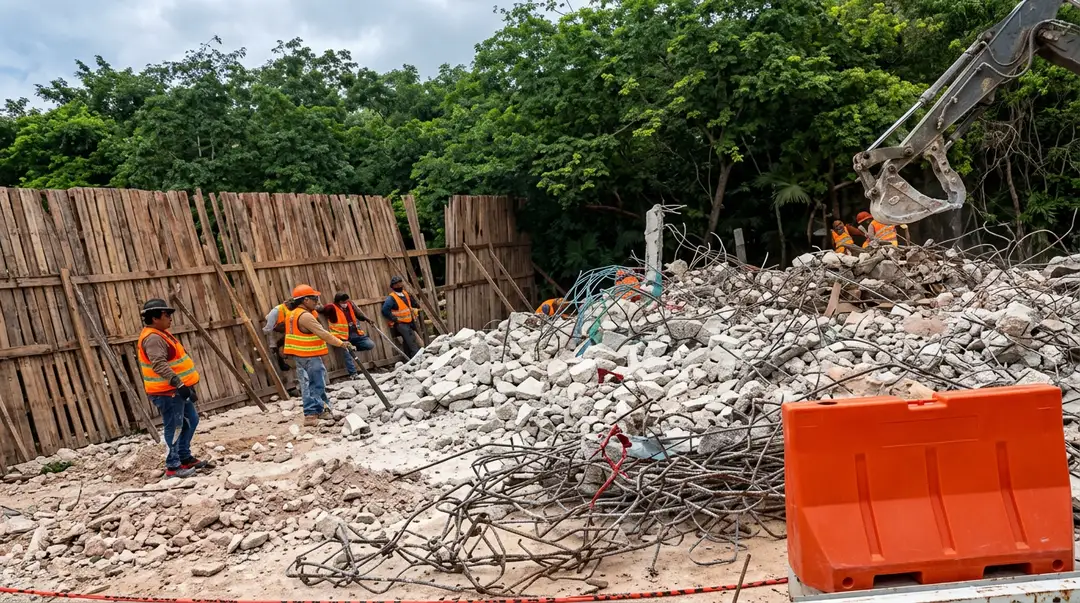

Tulum's municipal government has activated its emergency coordination committee, confirmed 38 operational shelters, and launched preventive street-level operations as the 2026 Atlantic hurricane season enters its opening weeks, with officials and meteorologists urging caution despite a below-average forecast.
The activation comes as federal forecasters predict a quieter-than-usual season, but local authorities are not taking chances. Mayor Diego Castañón Trejo convened military, naval, and rescue personnel under a single command structure, warning that no single agency can manage a hurricane alone and that cross-institutional coordination is the only viable response to a major storm.
How Tulum's emergency committee is organized
The emergency committee brings together the Mexican Army, Navy, and municipal rescue teams under a coordinated command structure. Mayor Castañón addressed the assembled bodies with a direct message: full coordination is not optional.
"No authority can face a hurricane alone," Castañón said, according to municipal communications. He also called on residents to avoid spreading unverified information on social media and asked the public not to contribute to panic in the event a storm approaches.
The committee's role is to manage logistics, communication, and deployment decisions from the moment a tropical system enters the alert zone through the full emergency cycle and recovery period.
38 shelters confirmed, 10 ready to open immediately
Carlos Tolosa, director of the Tulum Fire Department, confirmed that 38 temporary shelters are currently distributed across the municipality. Of those, 10 can be opened within minutes if the rains already affecting low-lying zones begin to produce flooding.
A separate review of facilities in the neighboring municipality of Benito Juárez, which includes Cancún, has also concluded the inspection of 82 properties that will function as emergency shelters during hydrometeorological events this season. The process was completed ahead of the June 1 start of the Atlantic tropical cycle.
Shelter readiness is one of the most concrete indicators of how seriously local civil protection agencies are treating this season. Having facilities pre-cleared and ready to receive residents, rather than scrambling to certify them after a storm develops, represents a significant operational shift from how some prior seasons were managed.

What the 2026 hurricane season forecast actually says
The official outlook from NOAA, the U.S. National Oceanic and Atmospheric Administration, puts the probability of a below-normal 2026 Atlantic hurricane season at 55%, with eight to 14 named storms expected, three to six of which could become hurricanes. One to three of those hurricanes are forecast to reach Category 3 strength or stronger, with winds above 111 mph.
El Niño conditions are cited as the primary driver of the quieter outlook. The pattern weakens trade winds and increases wind shear in the Atlantic, which suppresses storm development. NOAA's National Weather Service Director Ken Graham noted the reduction in risk while adding a firm caution: "It only takes one storm to make for a very bad season."
Meteorologist Shalom Rojas, speaking at the Tulum preparedness event, echoed that framing. She described the 2026 season as somewhat calmer than recent years but warned against complacency. The Caribbean, she noted, has historically produced dangerous exceptions even in statistically quiet seasons.
Why a "below-average" forecast is not a green light
The NOAA figures represent probabilities across the entire Atlantic basin, not a prediction for any specific coastline. A single Category 4 hurricane tracking directly toward the Yucatán Peninsula would qualify as a below-average season nationally while being a catastrophic local event. Tulum's geography, which includes low-lying coastal zones, cenote networks that can surge, and a tourism infrastructure built close to the shoreline, makes it particularly exposed to storm surge and flooding even from weaker systems.
Street operations already underway across Tulum
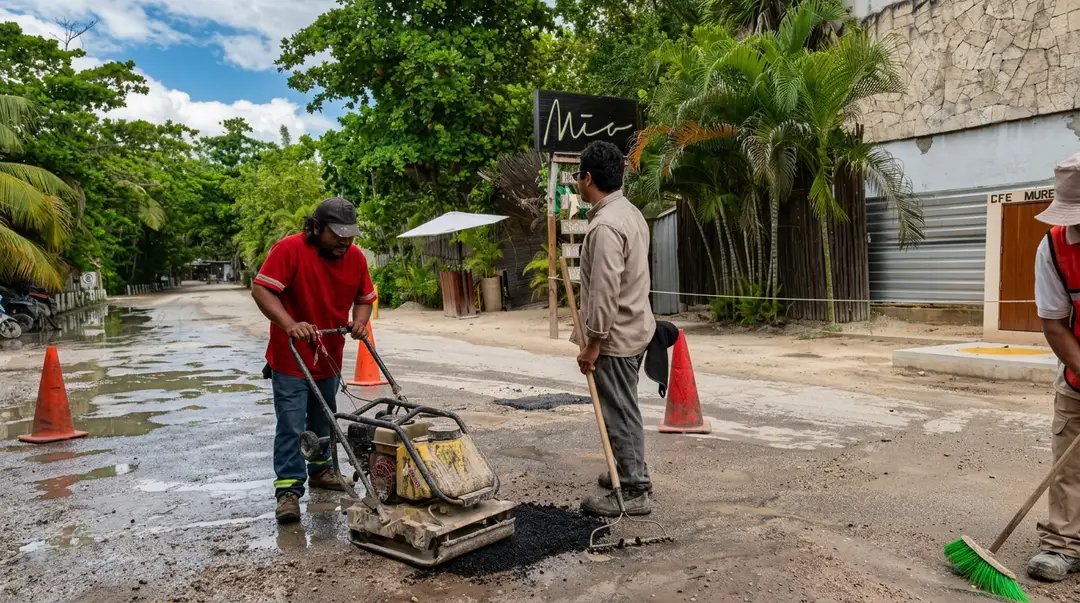
Municipal brigades have begun working through Tulum's streets in advance of any storm formation. The operations include tree trimming along main roads, removal of loose cables and overhead hazards, cleaning of storm drains, and clearing of the absorption wells that manage rainwater across the urban grid.
The wells are a recurring problem. When they become clogged with sediment and debris, even a moderate rainfall can overwhelm drainage capacity and flood low-lying residential areas. Clearing them before the peak season months of August through October is one of the most effective preventive measures available to the city.
The tree pruning work serves a similar function. Overgrown branches and poorly anchored trees are among the most common causes of infrastructure damage during tropical storms, and removing that risk before a storm develops is far less costly than responding after the fact.
What residents should know before a storm develops
Mayor Castañón's call to avoid social media rumors is consistent with guidance from civil protection agencies across Mexico. In the hours before and during a storm, misinformation about shelter locations, road conditions, and evacuation orders can be as dangerous as the storm itself, leading people to make decisions based on false information at precisely the moment when accurate information matters most.
The 38 confirmed shelters are distributed across the municipality, and civil protection authorities will communicate their activation status through official channels when a storm system warrants it. Residents in known flood zones, particularly in low-lying areas near the coast and around drainage corridors, should identify their nearest shelter now rather than waiting for an alert.
The Atlantic hurricane season runs through November 30. The statistical peak, when sea surface temperatures and atmospheric conditions are most favorable for storm development, falls between mid-August and mid-October.
Is your neighborhood or business prepared for the 2026 hurricane season? Join the conversation and share your perspective with us on Instagram and Facebook at @thetulumtimes.

The Tulum Times · Newsletter
The story continues in your inbox.
Essential Tulum news and local insight, a few times a week. Free.
No spam. Unsubscribe anytime.
Tulum Weather, Seasonality, and Best Time to Visit
Weather context, travel timing, seasonal changes, and planning guidance for visitors and residents.

“The best journalists reporting from paradise, highlighting the heroes that keep Tulum the most beautiful place in the world! THANK YOU!”