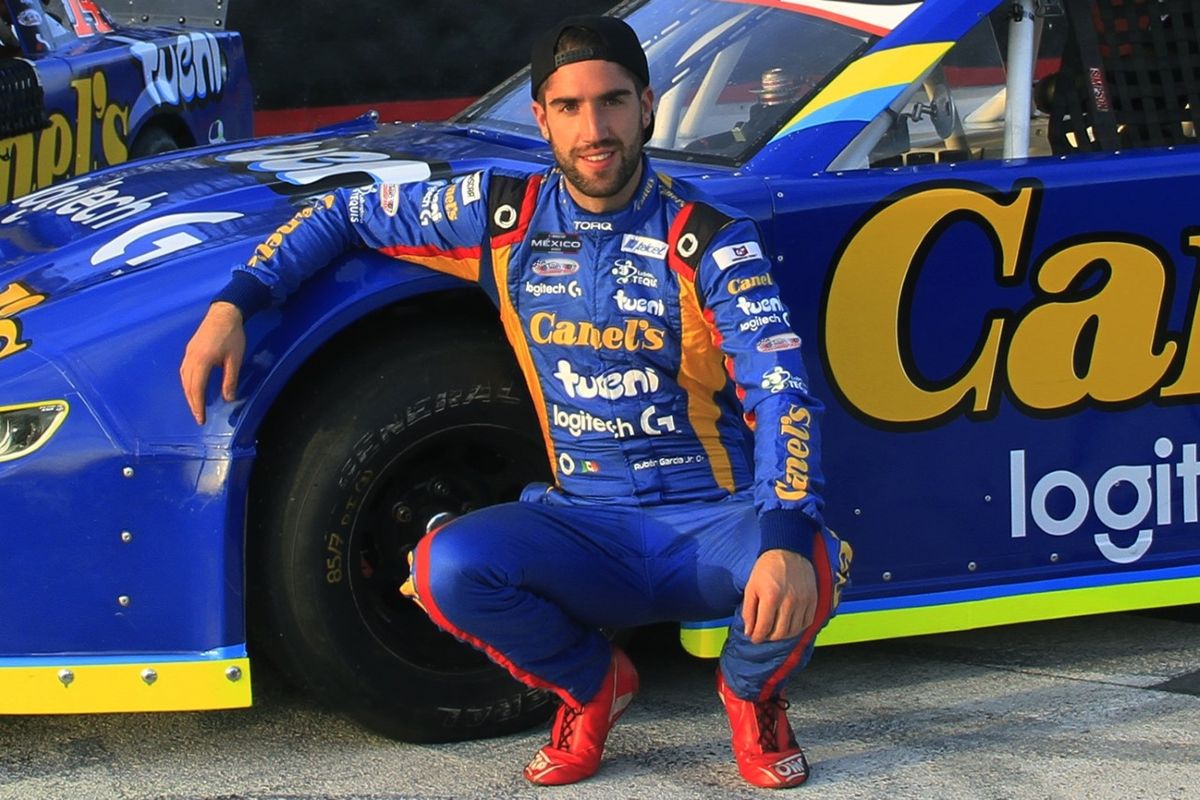
Ruben Garcia Jr arrives in Tulum on April 25 and 26 for the third date of NASCAR Mexico Series, aiming to extend his early season run with a third consecutive victory in the Tulum 100.
If he delivers, the result will confirm more than strong form. It will validate the technical reset his team made after a difficult 2025 campaign and position the No. 88 as the early benchmark in a season that now rewards full-year consistency.
Garcia opened the 2026 calendar with wins in San Luis Potosi and Chiapas at the wheel of the No. 88 Canels, Logitech G, Mobil, Laboratorio Tequis car. That start already changed the tone around his title bid, especially after he described last year as one of the most frustrating periods of his recent trajectory.
In team comments, the Mexico City driver said that after his accident in 2025, the operation never recovered a truly competitive chassis during the remainder of that season. He said the group explored multiple adjustments without restoring race-winning pace.
The New Chassis Shifted the Team Direction
According to Garcia, the turnaround began immediately after the final date of 2025, when the team committed to a new chassis. He said performance appeared from the first laps, and the current two-race winning streak reflects that change in baseline rather than a short-term fluctuation.
That explanation matters because it links results to process. Two straight wins can be read as momentum, but in technical series they are also evidence that engineering decisions, setup philosophy, and race execution have aligned under stable conditions.
Garcia has framed Tulum as the next proof point. His stated target is direct. Win again, secure maximum points, and reinforce championship control before the calendar moves deeper into the season.
Why Tulum Creates a Different Race Equation
The Tulum 100 arrives inside a broader event window that combines NASCAR Mexico with the Tulum Air Show, a format Garcia supports as part of the category's need to innovate for sponsors, fans, and teams.
He argued that innovation is essential, but also said these projects require advance planning and financial backing to keep a full season sustainable. That business dimension is often discussed less than race strategy, yet it remains central to how teams protect technical development and logistical continuity.
On track, Garcia expects an intense race dynamic because Tulum is projected to be the shortest oval on the 2026 schedule. In practical terms, shorter ovals usually compress the field, increase traffic density, and raise the probability of contact during position fights.
He described the Tulum weekend as potentially unforgettable for that reason. NASCAR Mexico races already hold attention lap by lap, and a compact oval can multiply that pressure by forcing repeated close-quarters decisions in every stint.
Chase Format Debate Returns in 2026
Beyond the Tulum date itself, Garcia also backed NASCAR Mexico's 2026 championship structure, where the title comes through a Chase system rather than the previous playoff path.
His argument is based on competitive fairness over a full year. Under the earlier model, he said a single victory could place a driver into playoffs, then luck in the final stages could decide a championship with limited reflection of season-long performance.
Garcia used personal experience to support that view, saying he has lived both sides of that variance. In one case luck worked against him, in another it favored him. The Chase format, in his reading, reduces that distortion by rewarding regular high execution across the entire calendar.
That position also aligns with his own campaign objective. A five-time champion, Garcia has made clear he is pursuing a sixth crown, and his current opening stretch suggests his team intends to build it through continuity rather than isolated peak weekends.
Early Stakes for the No. 88 Program
The timing of Tulum makes this date strategically important. A third straight win would not settle the championship, but it would widen the psychological and points pressure on direct rivals before the middle phase of the season.
Even without a win, clean execution in a high-contact oval environment can preserve momentum. For leading teams, avoiding damage and protecting points on volatile weekends is often as valuable as outright pace when title campaigns are measured across many rounds.
For Garcia and the No. 88 group, the mission is now clearly defined by their own public line. They rebuilt after 2025, recovered speed with a new chassis, and converted that step into two victories. Tulum is the next stress test for whether that recovery is now a durable competitive cycle.
If adaptation and control hold under the pressure of the shortest oval on the calendar, the Tulum 100 could become one of the key early references in the 2026 championship race.
Can Ruben Garcia Jr turn his technical reset into a third straight NASCAR Mexico victory in Tulum? Join the conversation and share your perspective with us on Instagram and Facebook at @thetulumtimes.
Support The Tulum Times
Independent journalism takes time and resources. If you found this article valuable, consider supporting our work!
Buy us a taco 🌮“The best journalists reporting from paradise, highlighting the heroes that keep Tulum the most beautiful place in the world! THANK YOU!”
Read Next