

High-octane racing met aviation spectacle as Eloy Falcón secured a historic NASCAR Mexico Tulum 100 victory, emerging triumphant from a weekend defined by dramatic penalties and a high-speed multi-car collision at the Tulum International Airport. The "Tulum 100," contested on a temporary oval consolidated within the Felipe Carrillo Puerto facility, drew thousands of fans to witness a historic intersection of professional motorsports and regional infrastructure.
The event served as more than just a race; it was a high-stakes demonstration of the region's capacity for mega-events, combining military-grade logistics with professional sports tourism. As fighter jets and hundreds of drones framed the skyline, the on-track action proved equally volatile, ultimately rewarding Falcón’s patience over pure pace in a race where the official results were decided long after the checkered flag fell.
The Penalty That Reshaped the NASCAR Mexico Tulum 100 Victory
While Rubén Rovelo of the Alessandro team was the first to cross the finish line, his victory was short-lived. Race officials issued a post-race penalty after determining that Rovelo had violated the series’ technical regulations by failing to respect his chosen starting position on the grid. The infraction, a critical breach of the starting procedure, resulted in Rovelo being relegated to eighth position in the final standings.
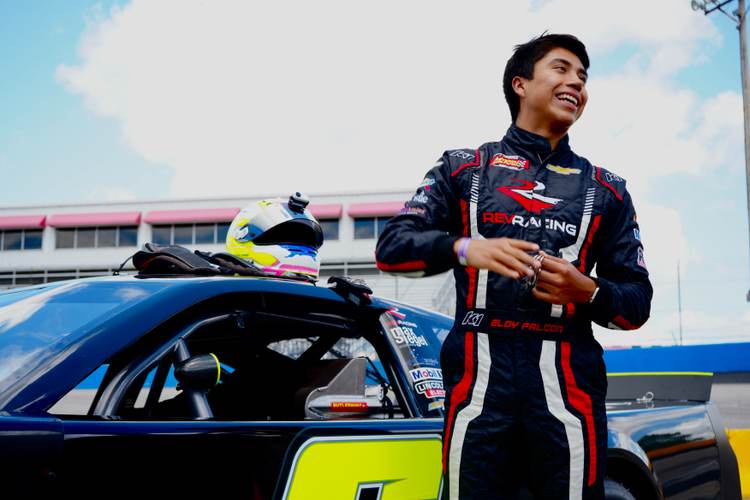
The decision paved the way for Eloy Sebastián Falcón, piloting the No. 9 Volaris-Aldo Conti car, to be declared the official winner. For Falcón, the victory represented a career milestone, marking his first triumph in Mexico’s premier racing category, and a stark reversal of fortune for a team that had struggled since arriving at the tropical circuit.

From Nightmare to Triumph
Speaking after the trophy presentation, Falcón admitted that the weekend had initially felt like an exercise in damage control. "The race almost escaped me," Falcón said. "When I realized I couldn’t pass [Rovelo], I put my head down and told myself that the points for second place weren’t bad. Then, what happened, happened."
Falcón attributed the win to the resilience of the David Tame-led team, noting that the victory was "unthinkable for a weekend that had begun as a nightmare." The driver’s ability to remain within striking distance while managing his equipment proved decisive when the regulatory oversight by the leader shifted the outcome.
A Podium of Perseverance
Rodrigo Rejón of GGG, who started the race in third, secured the second-place finish. Rejón’s performance was a masterclass in survival, navigating a field that was increasingly aggressive as the laps wound down. "It was a great race because finishing second after all the contacts we had throughout the event has its merit," Rejón remarked. "I’m leaving Tulum happy because this was a special race with a truly impressive setting."
Irwin Vences of JV Motorsports completed the podium in third. Vences’ climb was particularly noteworthy, having started the race from the seventh position. He emphasized the physical and mental toll of the Tulum circuit, noting that he had to "strive hard" to move through the pack on a track that offered little room for error.

Challenge Series and Category Highlights
Beyond the stellar category, the "Tulum 100" showcased the depth of Mexican motorsport talent in the Challenge Series. Emiliano Richards secured a commanding victory, navigating the technical challenges of the temporary oval to finish ahead of Giancarlo Vecchi and Mateo Girón, who completed the Challenge podium.
The event’s secondary divisions also crowned new champions on the airport tarmac. Notable performances came from Carlos Novelo Flota, Valeria Aranda, and Bob Espinosa, each of whom secured victories in their respective categories. These wins underscored the event’s role as a platform for both established stars and emerging drivers, all competing under the unique logistical constraints of an active aviation facility.
High-Speed Chaos at Curve Three
The tension of the race reached its peak just after the halfway mark. At the exit of Curve 3, a massive multi-car collision involving five vehicles brought the crowd to their feet. The impact was severe enough that several cars were forced to mount those in front of them, creating a tangle of metal that tested the safety protocols of the temporary airport facility.
Despite the carnage, the race continued, highlighting the durability of the NASCAR Mexico machinery and the intensity of the competition in a brand-new venue. The accident significantly thinned the lead pack, setting the stage for the final duel between Rovelo and Falcón.
An Aviation Spectacle Over the Tarmac
The "Tulum 100" was not merely a ground-based affair. The event leveraged its unique location at the Tulum International Airport to integrate a massive aerial display. Fighter jets and paragliders performed maneuvers throughout the afternoon, while a Viva Aerobus Airbus 320, the official airline of the event, made a low-altitude pass that echoed through the surrounding jungle.
As night fell over Tulum, the spectacle shifted to the sky. Hundreds of drones synchronized to write "NASCAR México Series" and "Tulum 100" in glowing letters, providing a futuristic coda to an event that aimed to redefine sports marketing in the Mexican Caribbean.
A Blueprint for Regional Logistics
The success of the "Tulum 100" was predicated on a grueling weekend schedule that transformed the airport into a fully functional racing complex. The temporary oval hosted a series of sessions, including intensive practices and high-stakes qualifying rounds, that allowed drivers to acclimate to the unique grip levels of the airport surface.
With a strong public turnout and seamless coordination between series organizers and aviation authorities, the event has positioned itself as a landmark in the regional sporting calendar. The logistical feat of converting a strategic infrastructure asset into a professional sporting venue marks a precedent for future mega-events in Quintana Roo.
As the final engines cooled and the drone displays faded, the editorial balance of the weekend was clear: Tulum accelerated into a new era of sports tourism, and its infrastructure responded with precision.
Official Results: NASCAR México - Tulum 100
Stellar Category
PositionDriverTime1ELOY FALCÓN1:04:23.6852RODRIGO REJÓN1:04:24.0543IRWIN VENCES1:04:24.3984JOSÉ LUIS RAMÍREZ1:04:25.6045GERMÁN QUIROGA1:04:26.0696XAVI RAZO1:04:26.9817RUBÉN GARCÍA JR.1:04:28.4688RUBÉN ROVELO1:04:22.426*9OMAR JURADO1:04:26.65710MAX GUTIÉRREZ1:04:28.541
*Provisional winner relegated due to grid violation.
Challenge Series Podium
PositionDriver1EMILIANO RICHARDS2GIANCARLO VECCHI3MATEO GIRÓN
Notable Category Winners
- Carlos Novelo Flota
- Valeria Aranda
- Bob Espinosa
The success of the Tulum 100 marks a significant turn for both the NASCAR Mexico Series and the state of Quintana Roo. By successfully hosting a major sporting event within an operational international airport, organizers have established a blueprint for future high-impact tourism initiatives that go beyond traditional sun-and-sand offerings. For Falcón, the victory is a career-defining moment; for Tulum, it is a statement of intent on the global stage.
How will Eloy Falcón’s historic victory at the Tulum International Airport shape the momentum for the rest of the NASCAR Mexico season? Join the conversation and share your thoughts with us on Instagram and Facebook at @thetulumtimes.
Contact the Editor: editorial@tulumtimes.com
The Tulum Times · Newsletter
The story continues in your inbox.
Essential Tulum news and local insight, a few times a week. Free.
No spam · Unsubscribe anytime · 100% free
Tulum Weather, Seasonality, and Best Time to Visit
Weather context, travel timing, seasonal changes, and planning guidance for visitors and residents.

Support The Tulum Times
Independent journalism takes time and resources. If you found this article valuable, consider supporting our work!
Buy us a taco 🌮“The best journalists reporting from paradise, highlighting the heroes that keep Tulum the most beautiful place in the world! THANK YOU!”