One Year After the Ambush of Tulum’s Security Secretary the Search for Justice Continues
The night of March 21, 2025, remains etched into the collective memory of Tulum as one of the most violent and defiant episodes in its recent history. One year after the José Roberto Rodríguez Bautista assassination, then the head of the Secretariat of Security and Citizen Protection (SSyPC), the case remains a stark reminder of the volatile intersection between governance and organized crime in the Mexican Caribbean. The anniversary of this high-profile crime serves as a grim litmus test for the region’s security apparatus and its ability to deliver justice in the face of targeted aggression.
At approximately 8:30 p.m. on that fateful evening, the security chief was ambushed at the intersection of Avenida 5 and Calle 11 in the La Veleta neighborhood. Rodríguez Bautista was traveling in an official vehicle when at least two individuals on a motorcycle opened fire, unleashing a barrage of at least six bullets. The attack triggered an immediate and massive mobilization of emergency services and security forces, plunging the tourist-heavy neighborhood into chaos. Severely wounded, the Secretary was rushed to a local hospital before being transferred to Playa del Carmen, where he succumbed to his injuries at 12:43 a.m. on March 22.
The Architect of "Blindaje Tulum"
The José Roberto Rodríguez Bautista assassination was particularly shocking because of the high expectations surrounding his tenure. Having arrived in Tulum in September 2024, Rodríguez Bautista brought a distinguished background from the Mexican Navy (Marina Armada de México) and prior experience as the Director of the Monterrey Municipal Police. He was widely regarded as the professional hand needed to stabilize a municipality experiencing explosive growth and escalating security concerns.
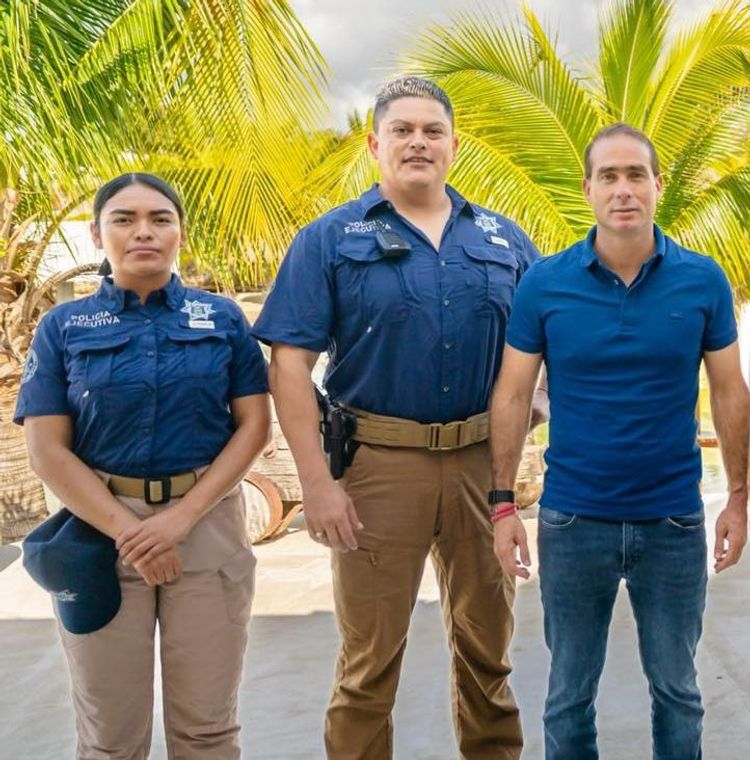
Upon taking office, he spearheaded the "Blindaje Tulum" (Tulum Shield) strategy. Launched officially in October 2024 by Municipal President Diego Castañón Trejo, this ambitious program was designed to be implemented in three phases. It included the acquisition of 15 new patrol vehicles, the recruitment of 70 additional officers, and the installation of over 600 surveillance cameras. His approach emphasized operational discipline, inter-institutional cooperation with the Army and Navy, and a zero-tolerance policy against the narcomenudeo networks that threatened the town's status as a world-class tourism destination.
The "Tulum Shield" was not just about hardware; it was an attempt to shift the culture of the local police into a national benchmark for trust and effectiveness. However, the very successes of this strategy—operational hits against criminal structures and the containment of traditional "plaza" interests—are believed by investigators to have made him a target of the highest priority.

A Calculated Ambush and the Motives Behind It
Initial investigations by the Quintana Roo State Attorney General’s Office (FGE) designated the attack as a meticulously planned operation. Authorities revealed that the plot had been in the works for at least five months, involving extensive monitoring of the Secretary’s daily routines and security details. There were reportedly at least six previous attempts on his life that had been thwarted or avoided, highlighting the relentless persistence of those who wanted him removed.
The primary motives identified by the FGE point toward a deep-seated reprisal. Sources close to the investigation suggest that the hit was orchestrated by a criminal leader based in Tamaulipas, allegedly motivated by Rodríguez Bautista’s previous work as a high-level investigator in Colima. His involvement in search operations near the Jalisco border and his confrontation with powerful criminal hierarchies in Western Mexico had followed him to the Caribbean coast. The assassination was, in essence, a "cold dish" of revenge served in a geography where his protective shield was still being forged.
The Bloody Toll and the Veracruz Connection
The scene at La Veleta was a testament to the brutality of the conflict. During the ambush, the Secretary's detail managed to return fire, resulting in the death of one of the attackers—later identified as a Guatemalan national known as "El Chaparro" or "El Kaibil." A security officer was also injured in the crossfire but survived.
The most significant breakthrough in the case came several months later with the arrest of Alejandro “N,” known as “El Rayo.” In a coordinated operation across state lines, authorities apprehended him in Veracruz. Alejandro “N” is considered a highly dangerous individual, linked by intelligence services to over 100 murders across northern and eastern Mexico. He was reportedly part of a tactical squad of hitmen from Veracruz and the State of Mexico hired specifically for the José Roberto Rodríguez Bautista assassination.
While "El Rayo" is currently in preventive detention in Cancún, facing up to 50 years in prison, the broader intellectual authorship of the crime remains a complex puzzle. The arrest provided a measure of closure, but it also exposed the sophisticated, trans-regional nature of the criminal groups operating against the state's security leaders.
Impact on the Perception of Security in Quintana Roo
Twelve months later, the vacuum left by Rodríguez Bautista’s death continues to affect the local security landscape. Although the "Blindaje Tulum" program persists in name and funding, the loss of its primary architect created an immediate crisis of continuity. For many residents and international investors, the assassination marked a "before and after" in how safe the municipality is perceived.
The audacity of the attack—targeting the highest security official in broad daylight in a residential/tourist zone—was a clear message of intimidation directed at the entire regional government. It raised painful questions about the vulnerability of public servants who refuse to negotiate with organized crime. Today, the local police force continues to struggle with the dual burden of maintaining the offensive started by Rodríguez Bautista while rebuilding the morale fractured by his loss.
A Persistent Call for Justice and Transformation
As the anniversary passes, the atmosphere in Tulum is one of somber reflection. The memory of the night in La Veleta remains fresh, and the demand for full justice—not just for the trigger-pullers but for those who ordered and funded the hit—is as loud as ever. The José Roberto Rodríguez Bautista assassination stands as one of the most significant attacks on the rule of law in Quintana Roo’s history.
The resolution of this case is seen as a litmus test for the state’s ability to protect its own and to hold powerful criminal interests accountable. Until the full truth of the "ghosts of La Veleta" is revealed, the legacy of the fallen Secretary will remain a mix of unfulfilled potential and a heroic, yet tragic, commitment to the safety of Tulum. The search for justice continues, as the "Shield" he built tries to hold firm against the very forces that took his life.