

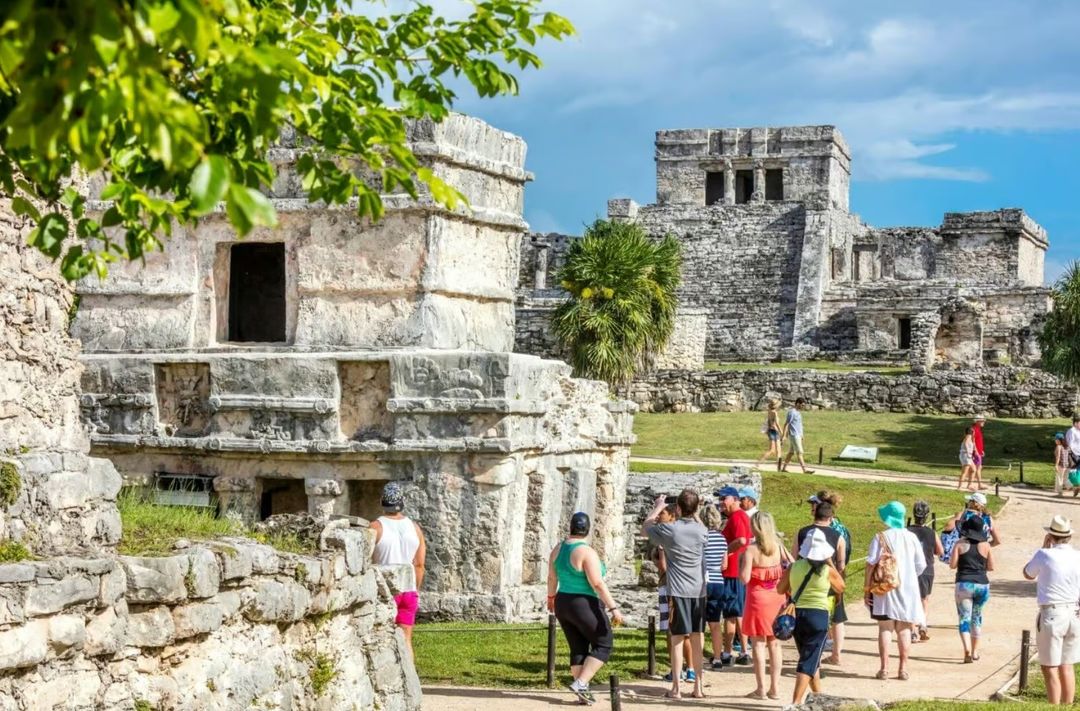
Perched on 12-meter cliffs above the Caribbean, the Tulum Archaeological Zone is the most visited Maya site in Mexico and one of the easiest to visit badly.
The site receives more than two million visitors a year, operates under a ticketing structure that changed significantly at the start of 2026, and offers no shade over the majority of its grounds during peak heat hours. None of this diminishes what Tulum actually is: a fortified port city in use for centuries, sitting at the edge of the sea where the Maya managed trade routes connecting the Yucatan Peninsula to Central and South America. A visit that accounts for logistics arrives at something genuinely worth the effort. One that does not can feel like an expensive, crowded walk in the midday sun with a distant view of a building.

A Walled City Built to Last on Three Sides of Stone
Tulum is among the very few walled settlements the Maya constructed. Three stone walls, reaching up to four meters in height, enclose the site on the north, south, and west sides, with the cliff face above the sea forming a natural eastern boundary. Five narrow gateways pierce the walls, sized to allow foot traffic but not an organized force without difficulty. The design was deliberate: this was a defended city, not simply a ceremonial site.
The city reached its peak between the 13th and 15th centuries, functioning as a principal trading port for Coba, the large inland city roughly 42 kilometers northwest. Goods moved through here by canoe: jade, obsidian, turquoise, copper bells, and cacao traveling along the Caribbean coast. When Spanish explorers first recorded Tulum in 1518, they found a city still active. The Maya continued to inhabit the site for approximately 70 years after Spanish contact before gradually abandoning it by the end of the 16th century. The walls that remain are largely intact. The structures are not reconstructions.


Three Structures That Reward More Than a Glance
El Castillo stands at the site's highest point above the cliff, rising 7.5 meters and visible from well beyond the ruins' boundaries. Built in several phases over multiple centuries, it served as a ceremonial temple and, according to the most widely accepted interpretation among archaeologists, as a functioning lighthouse. Narrow window openings in its upper chamber are positioned to project light seaward at an angle aligned with the only safe break in the reef below, guiding canoes toward the landing point on the beach.
The Temple of the Frescoes stands slightly inland and holds the site's most detailed surviving artistry. Its facade carries relief carvings and its interior once displayed murals depicting deities, celestial bodies, and agricultural imagery. The pigments have faded considerably, but traces of blue and red paint remain visible from outside. Climbing inside is no longer permitted. The Temple of the Descending God, identifiable by the carved figure diving headfirst above its doorway, is interpreted by researchers as connected to the setting sun or the planet Venus, though no academic consensus exists on the deity's precise identity.

Getting to the Site From Tulum Town and Beyond
The archaeological zone sits approximately five kilometers south of Tulum's town center. A taxi from town takes 10 to 15 minutes and costs roughly 200 to 250 pesos. Colectivos, the shared vans connecting Tulum to Playa del Carmen and points north, pass the site's access road and can be flagged from the highway. From Playa del Carmen, the drive takes about 45 minutes. From Cancun International Airport, plan for 90 minutes to two hours depending on traffic. The transportation options around Tulum are covered in depth across the site's transport hub.
The parking area sits roughly one kilometer from the entrance. Visitors can walk the paved jungle path, which takes about 15 minutes each direction, or take the shuttle that runs continuously at 55 pesos round trip. The shuttle is worth considering during the hot months, when the return walk after two hours of direct sun adds noticeable strain. Visitors arriving via the Mayan Train disembark at the Tulum station several kilometers from the ruins and require a taxi or colectivo connection; the train does not stop adjacent to the archaeological zone.


The 2026 Ticket Structure Involves Three Payments, Not One
Admission requires three separate payments to three different agencies, all collected at the entrance. Many visitors arrive expecting a single ticket and are caught off guard by the total. For foreign visitors, the 2026 breakdown is:
- INAH archaeological site fee: 209 pesos (doubled from 104 pesos in 2025)
- CONANP natural protected area fee: 120 pesos
- Parque del Jaguar entry fee: 295 pesos
The combined total for foreign visitors is 625 pesos per person. Mexican nationals and legal residents pay reduced rates across all three tiers, with a combined total of approximately 360 pesos. Children under 13 enter free. Visitors over 60, students, teachers, and people with disabilities presenting valid identification are exempt from the INAH portion of the fee. Mexican residents enter free on Sundays, though Sunday crowds are among the highest of the week. Tickets are not available for advance purchase through a central platform; payment is made in cash or by card at the gate. For context on how the fee increase fits into the site's broader visitor recovery, The Tulum Times reported on the Tulum Archaeological Zone's visitor numbers after its closure period.
Arriving Early Is Not Optional at This Site
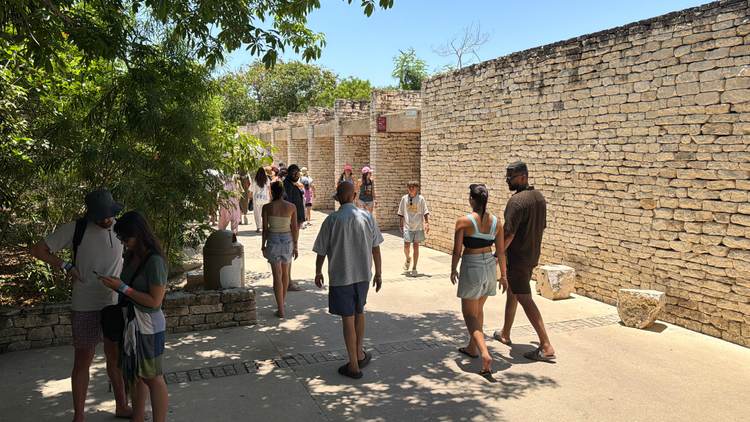
The site opens at 8:00 a.m. The last entry is at 3:30 p.m., with closing at 5:00 p.m. Arriving within the first 45 minutes of opening offers a materially different experience from arriving at 10:00 a.m., when tour buses from Cancun and Playa del Carmen reach the site in number. By midmorning, the pathways between structures are congested, and waiting for an unobstructed photograph of El Castillo requires patience measured in minutes, not seconds.
The dry season, running roughly from November through April, brings more reliable weather and lower humidity. The ruins are open and visited year-round because the structures are unaffected by the conditions that make coastal Tulum seasonal. During the summer months, heat and direct sun across the exposed grounds are the primary challenges. A hat, sunscreen applied before entry, and at least one liter of water per person belong on every packing list regardless of season. The cenotes and ruins coverage at The Tulum Times tracks condition updates and access changes across the region throughout the year.
What the Site Prohibits and What It Expects
Drones are prohibited throughout the site without exception. Large backpacks are not permitted inside the archaeological zone. Professional photography equipment, including cameras with detachable lenses beyond a standard tourist size, requires a permit obtained in advance through INAH. Outside food is not allowed; sealed water bottles pass without issue. Climbing on any of the structures is strictly prohibited, and enforcement is active. INAH-licensed guides operate at the main gate and offer tours in English and Spanish at rates agreed directly with the visitor; the site does not provide audio guides at the entrance.
The Tulum Archaeological Zone connects naturally to a broader day in the region. The cenote network inland from the ruins offers swimming in fresh, clear water entirely unaffected by coastal conditions. For travelers combining the ruins with time at the coast, the Hotel Zone's beaches are a short drive away and accessible within the same half-day without significant transit.
The crowds are not going away. The fees are higher than a year ago. Neither of those things changes what stands there: a walled Maya trading port on a cliff above the Caribbean, built across centuries and largely intact. The preparation is what makes the difference between arriving at a monument and actually seeing one.
Have you visited the Tulum Archaeological Zone recently? Did the new fee structure match what you were expecting, and do you think the experience still justifies the trip? Join the conversation and share your perspective with us on Instagram and Facebook at @thetulumtimes.

The Tulum Times · Newsletter
The story continues in your inbox.
Essential Tulum news and local insight, a few times a week. Free.
No spam. Unsubscribe anytime.
Tulum Cenotes, Ruins, and Practical Visitor Guides
Guides, access updates, regulations, and practical planning around cenotes and the Tulum archaeological zone.

“The best journalists reporting from paradise, highlighting the heroes that keep Tulum the most beautiful place in the world! THANK YOU!”


