
Chaya is a shrubby tree with broad, lobed leaves that grows almost without attention across the Yucatan Peninsula. It sits in yards, by back doors, along the edges of solares, and it is cut from rather than harvested: you take what you need for breakfast and the plant pushes out more. The Maya name for the plant is chay, and it has been a household green here for a very long time. Nobody buys it in large quantities because nobody needs to.
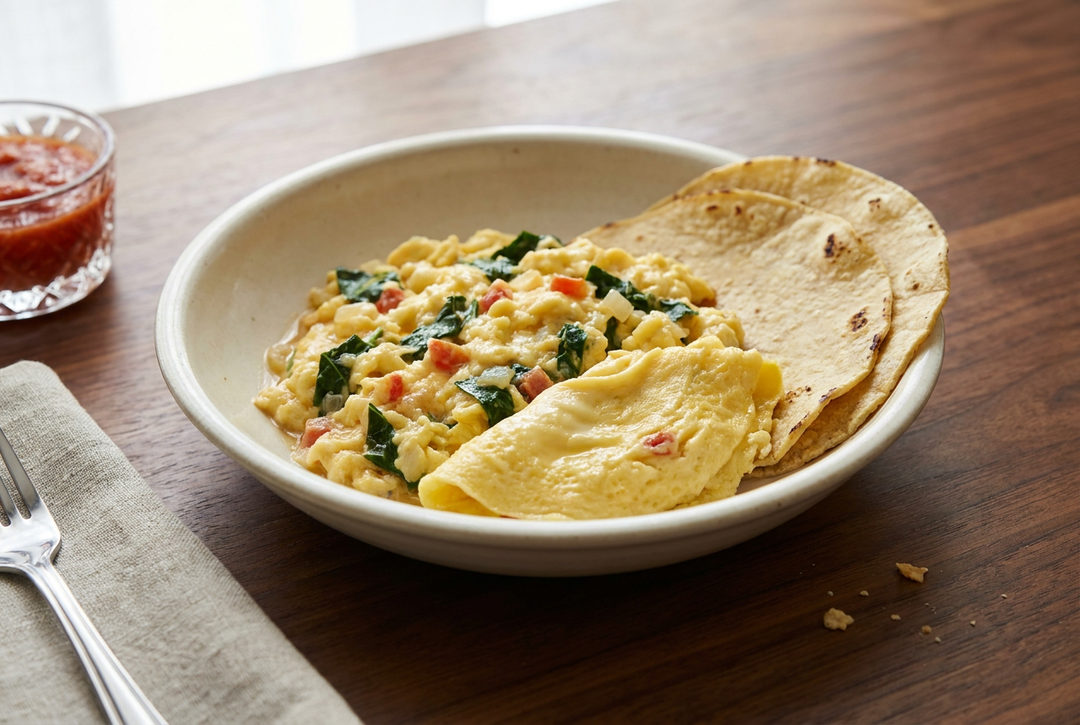
The dish itself is as plain as it sounds. Leaves are stripped from their stems, boiled, chopped and stirred into eggs, usually with a little onion and tomato cooked down first. It is eaten in the morning, with hot corn tortillas and a spoonful of habanero salsa, often alongside black beans. In many houses it appears two or three mornings a week without anyone deciding on it.
The flavour is milder than spinach and less metallic than chard, with a soft, slightly thick texture once cooked. It does not disappear into the egg the way spinach does; the pieces stay distinct and a little chewy. The tomato provides enough moisture for the pan that the eggs stay loose, which is the texture people here want. Dry, firm scrambled eggs are considered a mistake.
The thing visitors get wrong is treating chaya as a salad leaf. The raw leaf contains a stinging sap and compounds that require heat, so it is always cooked, never eaten raw, and the boiling water is discarded. A short boil of five to ten minutes is enough. The second mistake is underestimating how much it shrinks. A bag that looks like far too much will reduce to a couple of handfuls, and a timid bunch will vanish into six eggs, leaving you wondering where the chaya went.
Ingredients
11 items · for 4For the chaya
- 300 g chaya leaves, roughly 25 to 30 large leaves, stems removed
- 1.5 litres water (6 cups)
- 1 teaspoon salt
For the eggs
- 8 eggs
- 1 tablespoon lard, or 1 tablespoon neutral oil
- 1 small white onion, finely chopped (about 100 g)
- 2 medium ripe tomatoes, finely chopped (about 250 g)
- 1/2 teaspoon salt, plus more to taste
To serve
- 12 corn tortillas, warmed
- Habanero salsa or a few slices of fresh habanero
- Refried black beans, optional
Step by step
8 stepsStrip the leaves
Pull the leaves from the thick stems and discard the stems. Handle the raw leaves and any cut stems with care, since the sap can irritate skin; if you have picked the chaya yourself, rinse your hands after. Wash the leaves in plenty of cold water and drain.
Boil the chaya
Bring the water to a rolling boil with the teaspoon of salt and add the leaves, pushing them under. Boil uncovered for 8 to 10 minutes. The leaves will darken and go limp and soft, with no squeak or resistance when you press one between your fingers. Chaya is never eaten raw, so do not shorten this step.
Drain and chop
Pour the leaves into a colander and discard the cooking water. Let them sit until cool enough to handle, then press out the excess liquid with the back of a spoon or your hands. You should be left with about two packed cups. Chop roughly, into pieces about the width of a thumbnail.
Cook the onion
Heat the lard in a wide frying pan over medium heat and cook the onion with a pinch of salt for 4 to 5 minutes, stirring, until it is translucent and softened but not browned.
Reduce the tomato
Add the tomato and cook another 5 minutes, until it has collapsed and the pan looks like a loose sauce rather than chopped fruit. Most of the watery juice should have cooked off, leaving the mixture glossy.
Add the chaya
Stir in the chopped chaya and the half teaspoon of salt. Cook for 2 to 3 minutes so the leaves take on the tomato and onion and any remaining water evaporates. Taste and adjust the salt now, while you can still judge it.
Fold in the eggs
Beat the eggs lightly in a bowl, just until the yolks and whites come together. Lower the heat, pour them over the chaya and let them sit for 20 seconds before you start moving them. Fold slowly with a wooden spoon, lifting from the bottom of the pan, until the eggs are set in soft curds but still look moist. This takes about 2 minutes. Take the pan off the heat while they still seem slightly underdone, as they keep cooking on the plate.
Serve hot
Spoon onto warm plates and serve immediately with hot corn tortillas, habanero salsa and black beans if you have them. The eggs do not hold well, so bring them to the table as soon as they are done.
Notes from the kitchen
- Outside the peninsula, chaya is sold frozen in some Latin American shops and is already blanched, so thaw, squeeze dry and skip the boiling step. Fresh spinach or chard is a workable substitute in the pan, though both are milder and need only a minute of cooking.
- The boiled, chopped chaya keeps for three days covered in the fridge and is the part worth making ahead. Many households boil a large batch and use it for eggs one morning and a soup or empanada filling the next.
- Chaya is traditionally boiled in clay, enamel or stainless steel rather than aluminium, which is the advice given here and costs nothing to follow.
- If your tomatoes are pale and watery, cook them a few minutes longer before the chaya goes in. Wet tomato is the usual reason the finished eggs pool liquid on the plate.
This is the standard household version eaten across the peninsula, with onion and tomato as most cooks here make it.
This photograph was generated with artificial intelligence and may differ from the finished dish.