

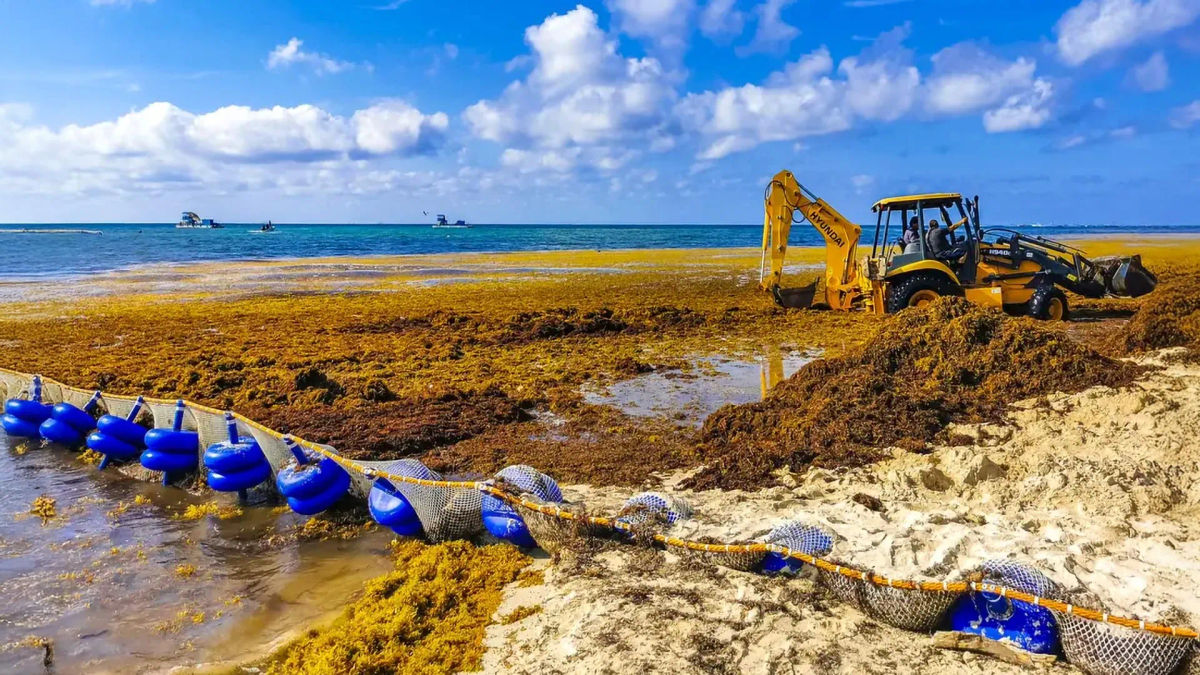
Sargassum conditions across Quintana Roo showed a sharp split on Thursday, with low impact in island destinations and persistent moderate to excessive arrivals along the continental coast, especially from Playa del Carmen to Tulum.
That contrast matters for residents, visitors, and businesses making same-day decisions during a high-demand travel period. It also confirms that local cleanup capacity, not only ocean conditions, is now a central factor in beach quality from one municipality to the next.
According to local monitoring reports, southeast winds between 20 and 35 kilometers per hour continued pushing floating algae toward east-facing beaches, with some updates warning of gusts up to 50 kilometers per hour. The direction and intensity of those winds have sustained recurring arrivals along exposed sections of shoreline.
North Keeps Better Conditions
Isla Mujeres, Cozumel, and Holbox remained among the most favorable areas, with little to no significant sargassum presence in their most visited beach zones. Their geographic position continues to work as a natural barrier against the macroalgae belts that move through the western Caribbean.
In Cancun, conditions were lighter in several northern beaches, including Playa Linda, Playa Langosta, Playa Tortugas, and nearby urban stretches used by day visitors. Local updates in the same reporting window, however, described variable behavior in the hotel zone, where sites such as Playa Delfines and Playa Marlin moved into moderate accumulation periods as arrivals continued through the day.
Those mixed readings in Cancun underline an operational point for the state. Beach status can shift within hours under changing wind and current conditions, so morning reports are increasingly treated as tactical snapshots rather than fixed daily forecasts. For tourism operators, that means staffing, cleanup routes, and visitor guidance now require constant adjustment instead of one early planning decision.
Southern Corridor Shows Heavier Arrivals
The most affected corridor extended from Playa del Carmen to Tulum and farther south into Puerto Morelos, Mahahual, and Xcalak. In Playa del Carmen, areas such as Playa Mamitas and Playacar registered abundant landings. In Tulum, public accesses and coastal sections near the archaeological zone reported recurring high volumes.
Other points in the Riviera Maya south, including Akumal and Bahia Principe, also showed visible accumulation in open coastal strips. Cozumel reflected the same territorial contrast seen statewide. Its west coast remained largely favorable, while exposed eastern beaches such as Mezcalitos and Chen Rio faced direct impact from incoming algae belts.

Tulum Faces Early Season Pressure
In Tulum, municipal officials reported that the recale season arrived earlier than in previous years. Zofemat director Juan Buchanan said arrivals began before the usual late-March to early-April window, and that behavior has raised daily pressure on brigades and hotel operators during the first part of 2026.
Municipal data presented this week indicate that collections in March exceeded 1,000 tons, while the current cumulative figure reached 1,224 tons handled by Zofemat personnel alone. The comparison with 2025 is significant. In the same period last year, reported collection was 462 tons.
To support operations, the municipality installed 17 containers for sargassum handling, including 10 in the hotel zone serving more than 25 hotels. The material is moved to a final disposal site, where it is placed on geomembrane surfaces to dry and recover as much sand as possible before final handling.
Cleanup teams are also adapting to daily sea changes. Officials noted that currents and occasional cold fronts can alter accumulation patterns from one day to the next, complicating planning and labor deployment. So far this year, municipal brigades reported 349 container trips for sargassum and waste transfer.
Officials also stressed that the 1,224-ton total reflects only material collected by Zofemat teams. It does not include volumes managed directly by hotels or by brigades in areas such as Parque del Jaguar. In parallel with algae operations, municipal crews reported removing more than 15,000 kilograms of marine and general waste this year, including 5,862 kilograms in Playa Conchita alone.
Operations Improve Access but Risk Persists
Authorities said Zofemat crews and Navy personnel began cleanup shifts from early morning, which can improve beach conditions in urban and hotel areas by afternoon. Even so, continuous arrivals in exposed sectors limit how long those gains can hold.
The regional context remains structurally complex. Since 2015, sargassum seasons in the Mexican Caribbean have been linked to changing ocean currents and broader climate drivers. When large volumes remain near shore, water quality declines, decomposition odors intensify, and cleanup logistics become more costly for municipalities and tourism operators.
This Thursday's map reinforces a pattern now familiar in Quintana Roo but still operationally difficult. The north can remain swimmable while southern beaches receive intense landings on the same day, forcing a municipality-by-municipality response instead of a single statewide playbook.
How should Quintana Roo balance daily beach access with long-term sargassum management in high-impact zones like Tulum? Join the conversation and share your perspective with us on Instagram and Facebook at @thetulumtimes.
Support The Tulum Times
Independent journalism takes time and resources. If you found this article valuable, consider supporting our work!
Buy us a taco 🌮“The best journalists reporting from paradise, highlighting the heroes that keep Tulum the most beautiful place in the world! THANK YOU!”