
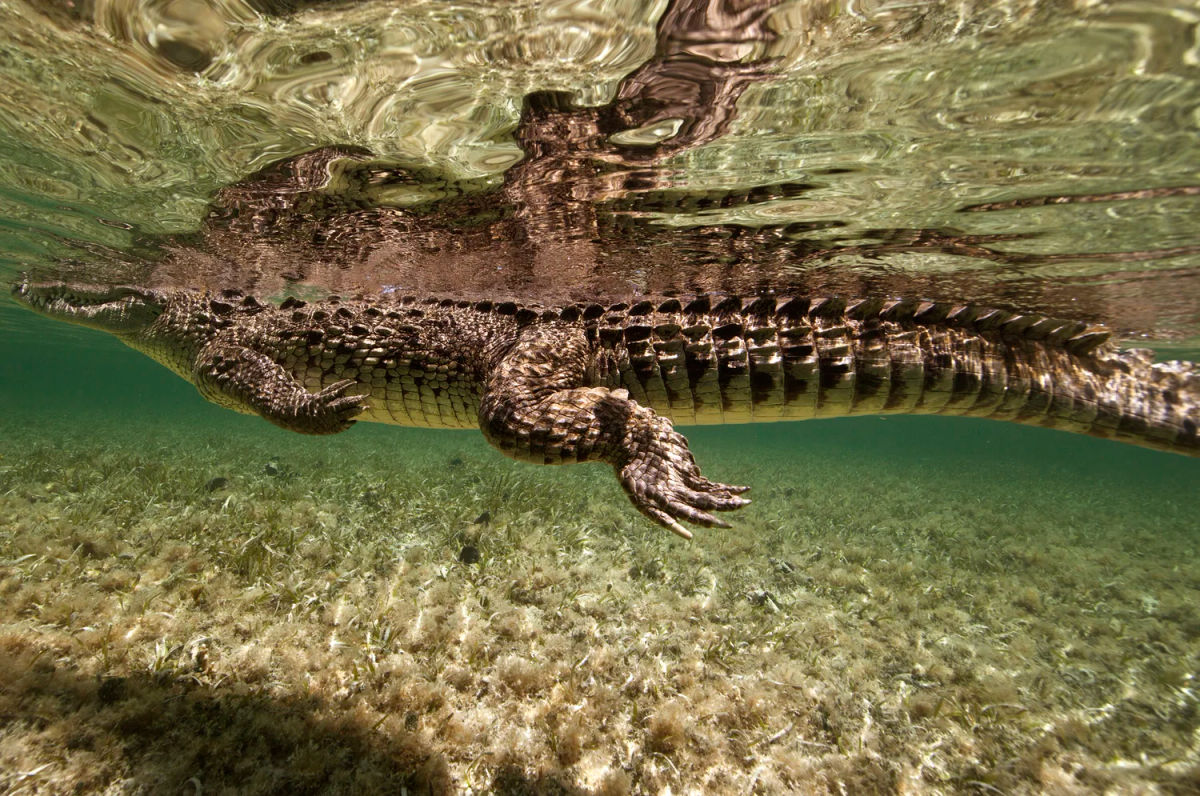
The crocodile attack at Casa Cenote has forced Tulum's municipal government to do something it had not done before: formally coordinate environmental enforcement at one of the Riviera Maya's most visited natural sites.
Rocío Peralta Galicia, a staff member at Tulum's Directorate of Environmental Sustainability, confirmed that the municipality is now working jointly with the Directorate of Civil Protection to produce a package of recommendations aimed at preventing future incidents and preserving the ecosystem. The process also involves coordination with federal authorities, primarily PROFEPA, the federal environmental enforcement agency.
What the Authorities Are Planning
The measures under consideration include the installation of restrictive and informational signs at Casa Cenote, a formal prohibition of activities that are incompatible with the natural environment, and a requirement that any operator conducting activities at the site comply with the applicable legal permits under current environmental regulations.
Among the activities being assessed for restriction is diving in proximity to crocodiles, a practice that had operated without formal regulation despite the known presence of a resident reptile at the site.
Peralta Galicia framed the coordination with PROFEPA as legally necessary, not discretionary. "It is a species with protected status listed under NOM-059-SEMARNAT-2010," she said, referring to Mexico's official catalog of species subject to special protection. Any activity that disturbs or harasses a listed species carries potential consequences under federal environmental law, a framework that predates the attack and that, until now, had not been consistently applied at the cenote.
The Regulatory Gap the Incident Exposed
Casa Cenote, also known as Cenote Manatí, sits in the Tankah III zone and draws divers, snorkelers, and wildlife observers year-round. The site's resident crocodile, known locally as Panchito, had been a visible presence for years, familiar enough to be sought out as a photographic subject by visiting groups.
That tolerance had a cost. The absence of formal restrictions allowed activities to develop around the animal without a legal framework to govern contact, distance, or operator responsibility. The attack did not create the regulatory gap. It exposed one that had been accumulating quietly alongside the site's growing popularity.
What Comes Next, and What Remains Uncertain
Authorities have not announced a formal timeline for when the joint recommendations will be finalized, which specific activities will be prohibited, or whether Casa Cenote will remain open to visitors while measures are drafted and implemented.
The coordination with PROFEPA is described as still in its early stages. No permit suspensions, temporary closures, or enforcement actions have been announced.
For operators currently running dive trips or guided tours at the site, the immediate situation is one of regulatory uncertainty. The legal framework exists. Its application to Casa Cenote is now a stated priority. Whether that translates into enforceable rules, consistent oversight, and consequences for non-compliance will determine whether this response holds.
Environmentalists and wildlife specialists have long argued that habituation to humans does not make wild crocodiles predictable, and that permitting tourist activity in close proximity to protected reptiles creates risks that are foreseeable, not accidental. Tulum's authorities appear, for now, to agree.
Do you think Tulum's cenotes need stricter regulations for wildlife tourism? Join the conversation and share your perspective with us on Instagram and Facebook at @thetulumtimes.