
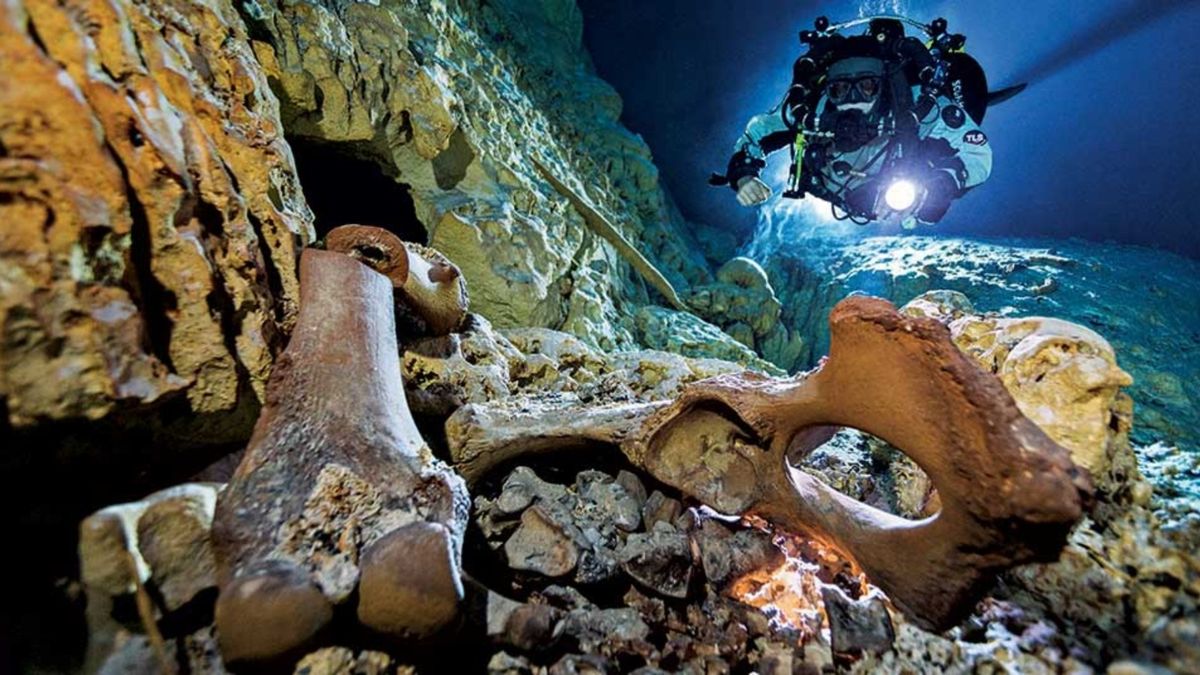
Defying environmental closures, the Mexican Ministry of Defense (Sedena) continues undocumented clearing over the Sac Actún cenote system for the Tulum Bypass, threatening the world's second-longest underground river and a crucial aquifer. The illegal operations stem from the administrative practices inaugurated by the government of former President Andrés Manuel López Obrador, which allowed Sedena to devastate jungle terrains for federal works without mandatory environmental impact authorizations, placing one of Mexico's most significant paleontological and archaeological sanctuaries in immediate danger.
The unauthorized construction exposes a glaring contradiction in federal and local infrastructure policy. As the Secretariat of Infrastructure, Communications, and Transportation (SICT) attempts to redesign the bypass route to reach the new international airport, environmentalists warn that the ongoing devastation over Sac Actún not only risks thousands of years of preserved human and Mayan history but directly compromises the primary water source for Tulum's expanding real estate market.
The Anatomy of an Environmental Breach
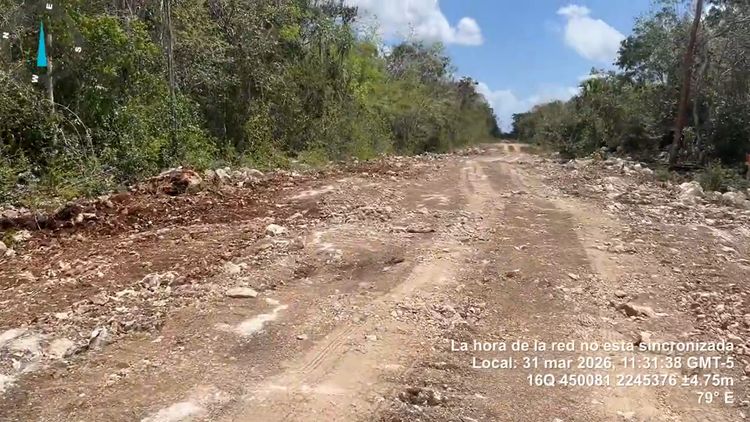
The disruption began in April 2025, when Sedena clandestinely cleared a wide swath of jungle over the sensitive cave network to serve as the foundation for the northern branch of the Libramiento de Tulum. The planned route, engineered by the SICT, was drawn directly over Sac Actún from the Jacinto Pat ejido to the Tulum-Cobá highway near Rancho Viejo.
Following intense pressure from local environmental defenders, the Federal Attorney for Environmental Protection (Profepa) was forced to intervene and halt the ecocide, a project that had been actively consented to and promoted by the Quintana Roo state government and the Tulum municipal administration headed by Mayor Diego Castañón Trejo. Consequently, in September 2025, the SICT withdrew its preliminary Environmental Impact Statement (MIA) from the Secretariat of Environment and Natural Resources (Semarnat), acknowledging that the documentation was incomplete.
However, the suspension appears to exist only on paper. On March 31 of this year, environmental advocates from Selvame Mx retraced the cleared path, documenting active terrain preparation. These ongoing operations directly violate the Profepa sanctions and occur in the complete absence of environmental permits. Activists accuse Sedena of overriding civilian environmental law, speculating that the newly opened corridor will eventually serve unregulated real estate development if the highway project is definitively rerouted.

A Threat to the Regional Aquifer
Beyond the immediate clearing of the jungle canopy, the structural integrity of the Sac Actún system is under severe pressure. This flooded cave network spans more than 368 kilometers, featuring cenotes stretching over 70 meters deep and 298 interconnected natural entrances.
Citizens and hydrogeologists warn that the physical interference with this specific geographic point intercepts the Holbox fault, a critical source of fresh water for the municipality. The construction effectively places a dense barrier of concrete and eventual high-density condominiums directly above the aquifer, threatening to drain and contaminate the limited water supply, ultimately condemning Tulum to severe water scarcity as developers extract what little remains.
An Expanded Infrastructure Footprint
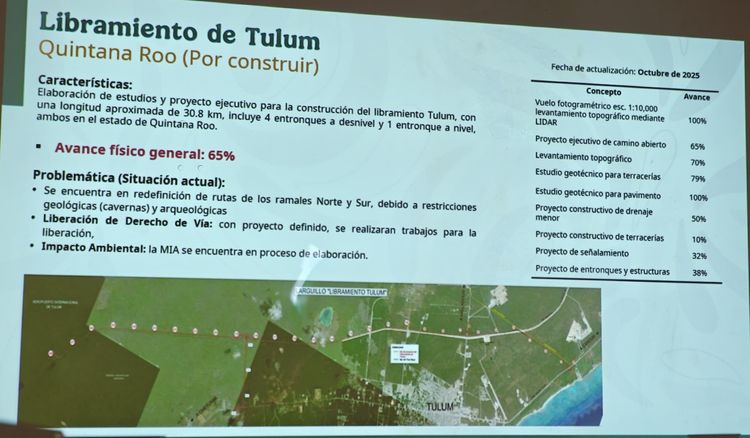
The SICT's withdrawal of the original MIA was not an abandonment of the bypass project, but a strategic pause to purportedly redefine the route around the newly imposed cave restrictions. Yet, preliminary modifications to the executive project indicate that the new trajectory remains precariously close to the cenote system. There is sustained concern that the SICT fully intends to reuse the illegally cleared Sedena path to anchor the northern branch before running it parallel to the Tren Maya tracks.
Moreover, the federal government aims to lengthen the bypass to connect directly with the Felipe Carrillo Puerto International Airport. This modification stretches the highway from its original 26 kilometers to 30.8 kilometers, mandating further deforestation. The expanded plan also adds a new traffic diversion connecting to the Chetumal-Cancún highway near the town of José María Pino Suárez, bringing the total to four planned grade-separated interchanges to handle the projected traffic volume.
The Erasure of Prehistoric Heritage
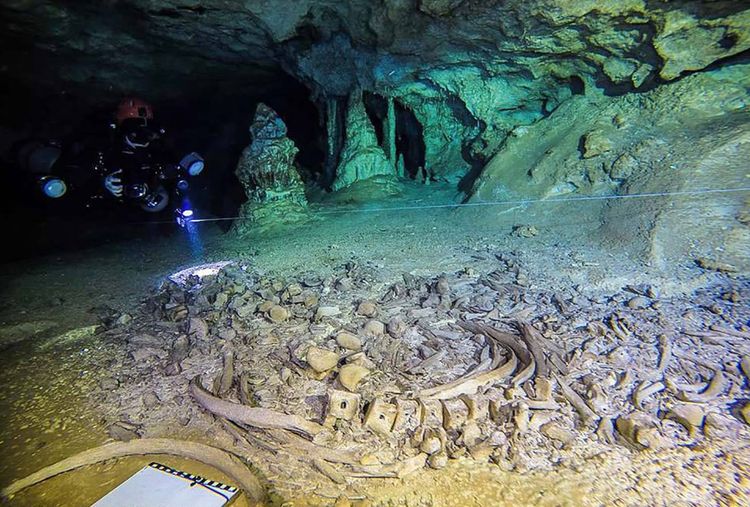
The environmental cost of the bypass is compounded by the irreversible risk to the region's ancient history. Recent explorations by the National Institute of Anthropology and History (INAH) have identified 198 distinct archaeological and paleontological contexts within the Sac Actún and Dos Ojos cave systems. These submerged caverns hold the remains of prehistoric humans and extinct megafauna dating back up to 15,000 years.
Among the critical discoveries are 11 fossilized skeletons from the Ice Age, considered the oldest human remains found in the entire American continent. The latest recovery, an 8,000-year-old male skeleton found in 2022, was officially extracted by the INAH in November 2025 and transferred to Mexico City at the end of March 2026. The inventory also includes the Woman of Naharon - dated at 13,721 years old - and the adolescent Naia, alongside the Grandfather of Muknal, the Lady of the Palms, Ixchel, El Hombre del Templo, and Chan Hol 1 (which was tragically stolen from the site).
The discovery of bones embedded violently into the walls of the Pit cenote has led researchers to hypothesize about catastrophic prehistoric events, revealing skulls where Mayan and ancient contexts dangerously mix. Genetic data extracted from a 10,000-year-old tooth and the presence of ancient DNA from prehistoric bears, saber-toothed cats, giant sloths, and gomphotheres (relatives of the elephant) paint a vivid picture of early human interaction with extinct apex predators.
Additionally, the underwater network is littered with Mayan artifacts, including incense burners, submerged temples, and rooms with ceramic offerings. This evidence suggests the caves functioned as a sacred pilgrimage site and a critical node for pre-Hispanic merchants, leading to the hypothesis that the cave was a ritual temple dedicated to the Mayan God of Commerce. The heavy machinery operating above now threatens to collapse these fragile limestone ceilings, destroying the contexts before they can be fully understood.

Institutional Paralysis and Broken Promises
The ongoing risk to Sac Actún is exacerbated by a pattern of unfulfilled federal commitments. Acknowledging the structural damage caused by the Tren Maya's elevated viaduct in Tramo 5 Sur and the severe eutrophication of Quintana Roo's water bodies, Semarnat head Alicia Bárcena Ibarra recently instructed the creation of a new protected natural area encompassing the peninsula's underground rivers. The agency projected that the decree would be finalized before the end of last year. As the first quarter of 2026 closes, not even the foundational justification studies have been published.
This administrative silence echoes a similar failure by the INAH. In 2018, the institute announced it would petition UNESCO to declare the Sac Actún system a Mixed World Heritage Site. To date, no formal action has been taken, as the INAH dedicated its resources entirely to the rushed archaeological salvage operations ahead of the Tren Maya construction.
While federal agencies delay protective legislation, the heavy machinery remains in the jungle, leaving the structural integrity of the world's most vital underwater heritage site hanging in the balance.
How should municipal and federal authorities balance the undeniable need for the Tulum Bypass with the survival of the Sac Actún aquifer? Join the conversation and share your perspective with us on Instagram and Facebook at @TulumTimes.