
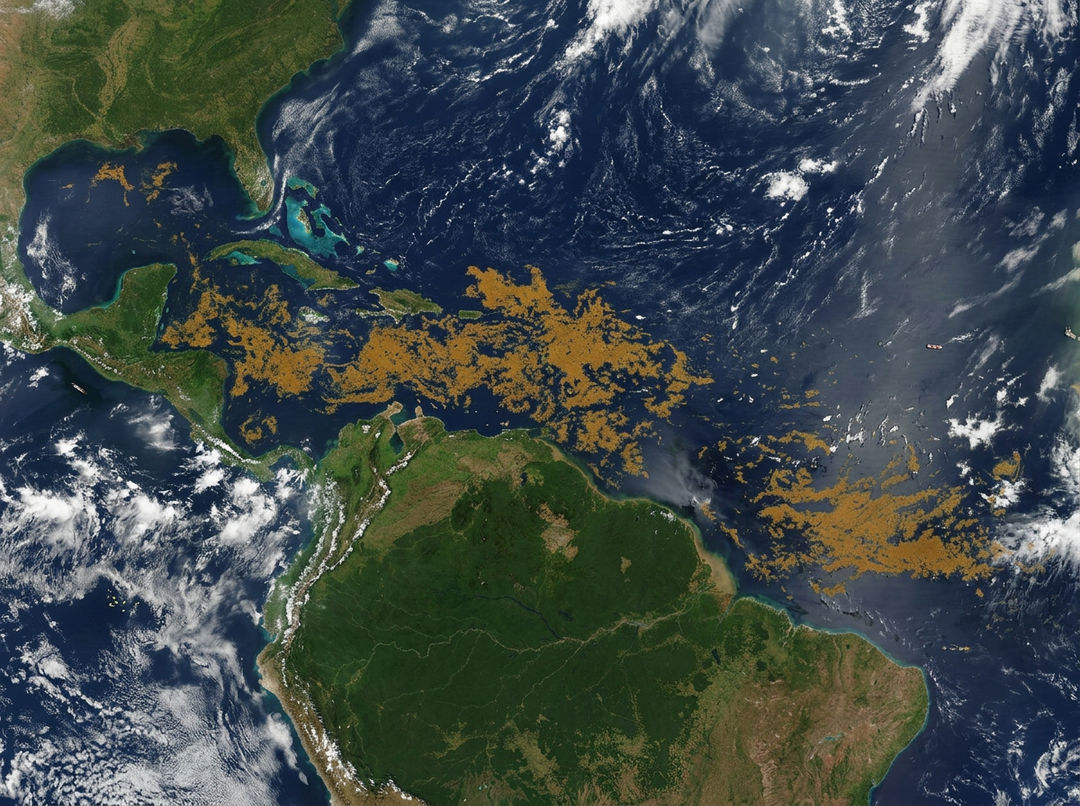
Imágenes satelitales recientes han confirmado tres conglomerados masivos de sargazo formándose en el océano Atlántico, todos moviéndose hacia el oeste en dirección a México y el Caribe en un aumento ambiental sostenido de múltiples fases.
Esta llegada secuencial, detectada por sistemas de monitoreo de alta resolución, indica que la temporada de sargazo 2026 no será un evento singular sino una serie prolongada de inundaciones. Para viajeros y negocios costeros, estos hallazgos representan una advertencia estratégica crítica mientras la región se prepara para lo que los modelos científicos sugieren podría ser un año récord en acumulación de algas.
La Trayectoria de Tres Olas
El pronóstico de sargazo México Caribe 2026 identifica tres "olas" distintas con grados variables de densidad y zonas de impacto proyectado. Esta segmentación permite una planificación más precisa, aunque también confirma que la presión sobre la infraestructura costera se mantendrá constante durante varios meses.
La ola 1 ya está haciendo su aproximación final al Caribe occidental. Los datos satelitales muestran que este conglomerado inicial probablemente impactará primero las costas de México y partes de América Central. Los residentes en Tulum y Cancún deberían esperar las primeras llegadas mayores en los próximos días, caracterizadas por una acumulación rápida en playas expuestas al viento.
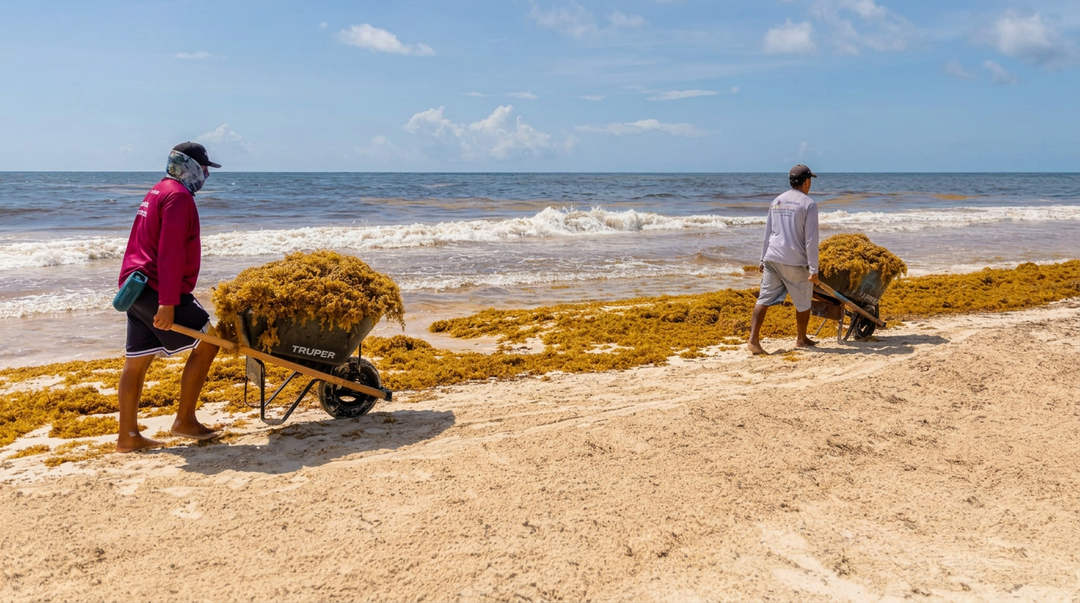
La ola 2 consiste en una banda densa y generalizada que actualmente se extiende por el Caribe central. Este segundo oleaje se espera que afecte las Antillas Mayores, incluyendo República Dominicana, Puerto Rico y Jamaica. Debido a su amplitud, la ola 2 puede causar una turbidez del agua más prolongada y requerir esfuerzos de limpieza manual y mecánica intensificados en las naciones insulares.
La ola 3 permanece más al este, con una acumulación grande detectada frente a la costa de África. Aunque este conglomerado todavía está a varias semanas de distancia de la cuenca del Caribe, representa el próximo oleaje importante. Si las corrientes actuales se mantienen, la ola 3 podría llegar justo cuando la región comienza a recuperarse de la segunda ola, creando un ciclo continuo de desafíos de gestión de algas.

Monitoreo Satelital y el Pronóstico de Sargazo México Caribe 2026
La detección de estas tres olas es posible gracias a sistemas de seguimiento sofisticados, incluyendo el Laboratorio de Oceanografía Óptica de la Universidad de Florida del Sur (USF) y el modelo de Riesgo de Inundación de Sargazo (SIR) de la NOAA. Estas herramientas proporcionan boletines periódicos que se han vuelto esenciales para la gestión ambiental regional.
Los datos del primer trimestre de 2026 indicaron cantidades récord de sargazo pelágico en casi todas las regiones monitoreadas del Atlántico tropical. Los científicos atribuyen este crecimiento temprano rápido a una "población semilla" masiva que permanece de años anteriores, combinado con temperaturas oceánicas favorables y corrientes ricas en nutrientes.

La transición de parches aislados a "bandas" organizadas de algas significa un cambio estructural en la biomasa del Atlántico. En décadas anteriores, el sargazo estaba en gran medida confinado al Mar de los Sargazos; sin embargo, la emergencia de la Gran Banda de Sargazo del Atlántico ha redirigido estas masas hacia el Caribe con creciente frecuencia y volumen.
Implicaciones Económicas y Ambientales
La llegada de ondas masivas de sargazo tiene implicaciones profundas para las economías dependientes del turismo de México y el Caribe. La acumulación pesada en playas no es meramente una preocupación estética; puede llevar a condiciones de agua más turbia y la liberación de gas de sulfuro de hidrógeno cuando el alga se descompone, que es conocido por su olor a "huevo podrido".
Para el sector hotelero, el costo de la gestión del sargazo se ha convertido en un rubro permanente en presupuestos anuales. En Tulum y Cancún, las propiedades a menudo gastan miles de dólares diarios en tractores, mano de obra manual y barreras en el mar para mantener la apariencia prístina que atrae a millones de visitantes anualmente.
Ambientalmente, el impacto es igualmente complejo. Aunque el sargazo proporciona un hábitat para varias especies marinas en el océano abierto, desembarques masivos pueden asfixiar camas de pastos marinos y arrecifes de coral cerca de la orilla. La "marea marrón de sargazo" bloquea la luz solar de llegar al fondo marino, potencialmente interrumpiendo ecosistemas delicados que ya han sido estresados por el cambio climático y el aumento de temperaturas marinas.
Estrategias de Mitigación y Respuesta
Las autoridades mexicanas han intensificado su respuesta al pronóstico de sargazo México Caribe 2026. La Armada de México (Secretaría de Marina) continúa liderando esfuerzos de contención en el mar, desplegando embarcaciones recolectoras de sargazo diseñadas para interceptar los conglomerados antes de que alcancen la línea costera.
Estas operaciones navales son parte de una "Estrategia de Sargazo" más amplia que incluye la instalación de barreras anti-sargazo en áreas de alto tráfico como la Zona Hotelera de Cancún y Playa del Carmen. Sin embargo, los funcionarios reconocen que durante eventos de oleaje máximo, el volumen de algas a menudo excede la capacidad de la tecnología de contención actual.
Nuevas iniciativas, tales como "Caribe Circular," también están ganando tracción. Estos programas buscan transformar el sargazo de un pasivo ambiental a un recurso industrial. Los investigadores están explorando formas de usar el sargazo recolectado para biofertilizantes, materiales de construcción e incluso energía renovable. Aunque estos proyectos todavía están escalando, ofrecen una visión a largo plazo para la gestión sostenible del sargazo.
Recomendaciones para Viajeros y Residentes
Conforme los impactos de estas tres olas se desarrollen durante las próximas semanas y meses, se recomienda a los viajeros monitorear de cerca las condiciones de playas locales. Es importante notar que los desembarques de sargazo no son uniformes. La dirección del viento, las corrientes locales y la geografía costera significan que mientras una playa puede estar fuertemente impactada, otra a solo unos pocos kilómetros de distancia podría permanecer despejada.
Para quienes planeen un viaje al Caribe mexicano en 2026, se recomiendan los siguientes pasos:
- Consultar Reportes Diarios: Usa plataformas oficiales como la Red de Monitoreo de Sargazo de Quintana Roo para obtener actualizaciones en tiempo real sobre playas específicas.
- Diversificar Actividades: Considera explorar atracciones hacia el interior como cenotes, zonas arqueológicas, o la ruta del Tren Maya en días cuando las condiciones de playa son menos que ideales.
- Contactar a Tu Hotel: La mayoría de grandes resorts tienen equipos activos de limpieza de sargazo y pueden proporcionar información directa sobre el estado de su frente de playa.
Las tres olas detectadas vía satélite son un recordatorio de la naturaleza dinámica del ambiente del Caribe. Aunque la presencia de sargazo es un desafío significativo, la resiliencia de la región y los sistemas de respuesta cada vez más sofisticados continúan proporcionando caminos para que los visitantes disfruten la belleza natural de la costa. Mantente informado, permanece flexible, y observa el horizonte para la próxima ola.
¿Cómo te estás preparando para la temporada de sargazo 2026? Únete a la conversación y comparte tu perspectiva con nosotros en Instagram y Facebook en @thetulumtimes.

The Tulum Times · Newsletter
La nota sigue en tu correo.
Lo esencial de Tulum y contexto local, un par de veces por semana. Gratis.
Sin spam. Cancelá cuando quieras.
Tulum Sargassum Updates and Beach Conditions
Live seaweed conditions, cleanup updates, forecasts, and practical beach planning across Tulum and the Riviera Maya.

“The best journalists reporting from paradise, highlighting the heroes that keep Tulum the most beautiful place in the world! THANK YOU!”