

The NASCAR Mexico Series Tulum 2026 arrives this weekend for a historic second round of the championship, transforming the Military Air Base No. 20 into a high-speed circuit in the heart of the Riviera Maya. This inaugural event marks a strategic expansion for Mexican motorsport into the southeast, challenging teams with a brand-new "Super Oval" and extreme tropical temperatures that will redefine the early momentum of the championship.
Following a hard-fought victory at the season opener in San Luis Potosí, Everardo Fonseca, the pilot of the number 94 truck for the HO Speed Racing team, arrives in Quintana Roo with a clear objective: to maintain his lead while navigating the logistical and physical unknowns of a circuit that has never been tested in professional competition. The transition from the high-altitude, semi-arid climate of the Huasteca Potosina to the humid, sea-level conditions of Tulum presents a variables-heavy puzzle for engineers and drivers alike.
A Momentum Built on Teamwork
Fonseca’s triumph in the first date of the championship was not merely a product of individual skill but the result of a meticulously executed strategy. Speaking on his recent success, the driver emphasized that the victory in San Luis Potosí was the culmination of persistence and technical coordination.
"We are very happy because we are moving well in the championship," Fonseca stated during a recent briefing. "San Luis Potosí was a closed race, but that victory is behind us now. Our focus is entirely on this new date in Tulum, which promises to be just as exciting and significantly more demanding."
The number 94 team has prioritized communication as the bedrock of their performance. In a sport where a fraction of a second can separate the podium from the pack, the ability to synchronize driver feedback with pit adjustments is vital. While Fonseca acknowledged a "touch of luck" in his opening win, he was quick to anchor that luck in the rigorous preparation that defines HO Speed Racing.

The Technical Challenge of the NASCAR Mexico Series Tulum 2026
The circuit at the Military Air Base No. 20 is not a standard stop on the NASCAR Mexico tour. The "Súper Óvalo Tulum" is a temporary configuration designed to bring professional racing to a region that has historically lacked the infrastructure for large-scale automotive events. Initial reports suggest a reduced-size track, which typically implies tighter turns and less room for error.
For pilots like Fonseca, a shorter track translates to a higher frequency of contact and a constant state of defensive and offensive maneuvering. There is no space to "rest" on the straightaways when the oval is compressed. This technical reality forces a shift in mental preparation, as the cognitive load on the driver increases with every lap.
"This is the first time we are visiting Tulum, and it will be a challenge for everyone," Fonseca noted. "The format of the track is more compact, which changes how we analyze the videos and program our race strategy. Since this is a completely new venue, the dose of emotion and uncertainty is much higher than usual."
The Tropical Variable: Heat and Endurance
Beyond the geometry of the track, the most significant adversary this weekend may be the climate of the Mexican Caribbean. April in Tulum brings high humidity and temperatures that can soar inside the cockpit, where drivers already deal with the intense heat generated by the engine.
Managing physical condition and hydration is no longer a secondary concern; it is a primary technical requirement. Heat fatigue can lead to lapses in judgment and slower reaction times, both of which are catastrophic at high speeds. The HO Speed Racing team has integrated specific physiological monitoring into their routine for this trip to ensure that Fonseca remains at peak performance during the night race.
"Physical condition and hydration will be fundamental," Fonseca explained. "We usually watch videos to analyze the track, but since this is a first-time venue, we are relying more on our ability to adapt in real-time. The heat is a factor we cannot ignore, and it will test the endurance of both the pilots and the mechanical components of the trucks."
Expanding the Footprint of Mexican Motorsport
The decision to bring the NASCAR Mexico Series to Tulum is part of a larger vision to decentralize professional sports in Mexico. Historically, the heart of the national automotive scene has been concentrated in Mexico City, Guadalajara, and the northern states. By moving into the southeast, the series is tapping into a passionate and growing fan base that has rarely had the opportunity to witness professional racing in person.
Fonseca praised the move by NASCAR Mexico to explore new venues, noting that the country possesses a wealth of locations that deserve a place on the national stage. "It is essential to expand this vision to the southeast. There is a huge fan base here that wants to feel included in the national sporting conversation. This demonstrates that Mexico is much more than its central and western hubs."
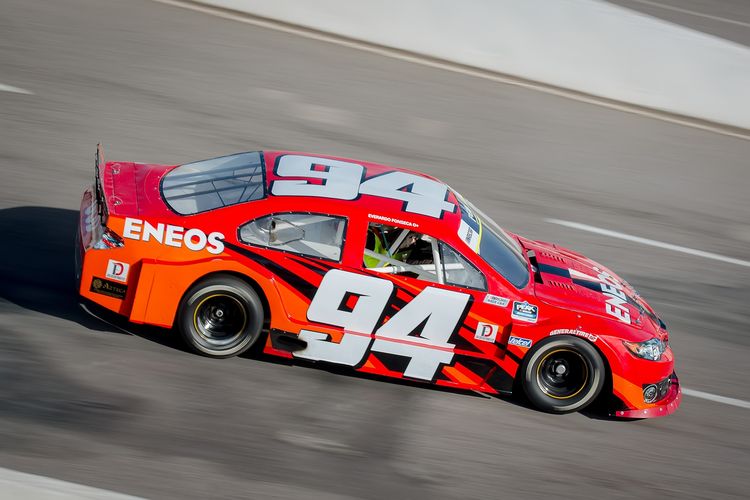
The project at the Military Air Base is seen as a pilot program that could pave the way for a more permanent racing infrastructure in Quintana Roo. As Tulum continues to evolve into a global tourism and logistics center, the integration of high-level sporting events adds a layer of cultural and economic complexity to the city’s profile.
Strategic Goals for the Weekend
As the sun sets over the jungle and the lights illuminate the tarmac at the air base, Everardo Fonseca will be looking for more than just a trophy. His primary goal is to accumulate points to solidify his position in the 2026 championship standings.
"The team has a driver that grows with every race," Fonseca said. "Our goal is to finish the race and ideally win it, but the priority is generating points every weekend. We want to show the fans something special, a performance that justifies the excitement surrounding this historic visit."
The invitation to the local community is clear: join the historic night at the Military Air Base. For those unable to attend in person, Fonseca and his team are offering digital dynamics through social media to bring the fans closer to the action, bridging the gap between the cockpit and the grandstands.
As the second date of the 2026 season begins, the NASCAR Mexico Series in Tulum stands as a testament to the sport's resilience and its ability to find new frontiers in the most unexpected landscapes.
Join the conversation: How do you think the tropical heat will affect the mechanical performance of the NASCAR trucks this weekend at the Military Air Base? Share your predictions for the historic night race in the comments below on Instagram and Facebook at @thetulumtimes.