
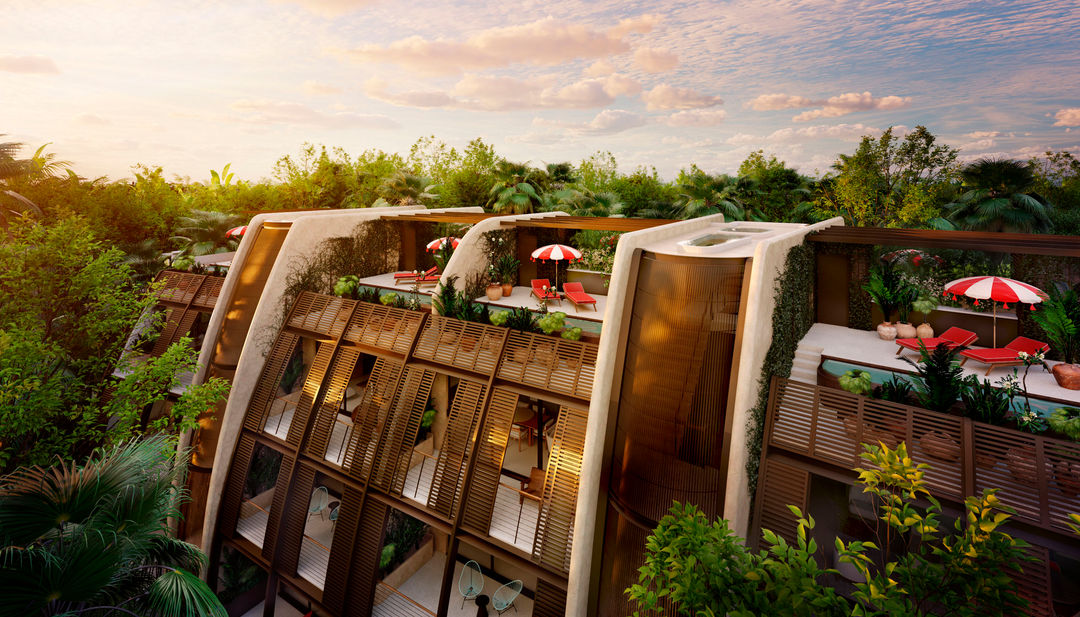
Some properties are acquired for location. Others are chosen for the world they create around the owner. Faena Tulum is clearly aiming for the second category. Conceived by Alan Faena and designed by Brandon Haw Architecture, the project presents itself not as a standalone real estate product, but as a fully composed environment where architecture, service, culture, and wellbeing are intended to shape daily life with unusual depth. In a destination as competitive and closely watched as Tulum, that distinction matters.
For the sophisticated buyer, the value of a project like this is rarely limited to finishes, amenities, or square footage. What carries weight is authorship, atmosphere, location, and the ability of a development to hold a clear point of view. Faena Tulum is built around precisely that proposition. It combines 147 residences with a larger masterplan that includes hotel, wellness, ocean club, and cultural components, positioning the project within a broader lifestyle framework rather than a purely residential one.
An Address with Cultural and Geographic Weight
Tulum continues to attract global interest because it offers more than coastline. It carries a strong identity shaped by archaeology, nature, ritual, and an international creative community. Faena Tulum draws directly from that context. Project materials describe the destination as a place where beauty, healing energy, and cultural expression converge, and the development has been positioned as an extension of that sensibility rather than a detached luxury enclave.
Its location reinforces the point. According to the project materials, Faena Tulum sits near the meeting point of Avenida Cobá and the Tulum-Boca Paila corridor, close to the Caribbean Sea, the Tulum archaeological site, Parque del Jaguar, and within reach of Tulum International Airport. For a prospective owner, that means access to one of the area’s most recognizable zones, where ecological value, cultural significance, and long-term visibility meet.

Architecture with Presence, Restraint, and Memory
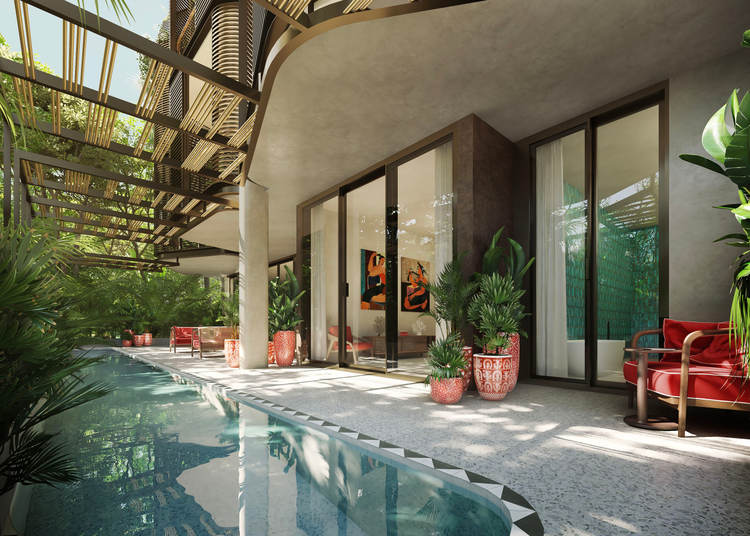
One of the project’s strongest arguments is the coherence of its architectural language. Brandon Haw’s approach looks to the solidity of ancient Maya construction and translates that reference into a contemporary residential form that appears grounded rather than decorative. The materials describe a palette of raw concrete, warm wood, local stone, and chukum, combined with filtered light, shaded terraces, and privacy screens in burnt sienna tones. The result is substantial, tactile, and visually calm.
That restraint is important. In the upper tier of the market, luxury often loses force when it becomes too eager to impress. Faena Tulum seems to understand that. Its visual language relies less on excess and more on composition, texture, proportion, and the relationship between built form and surrounding greenery. That gives the project a more mature and durable identity, which can matter as much to a buyer as any individual amenity. This is an editorial inference based on the project’s stated design approach and visual materials.
Residences Designed for Privacy and Sensory Ease
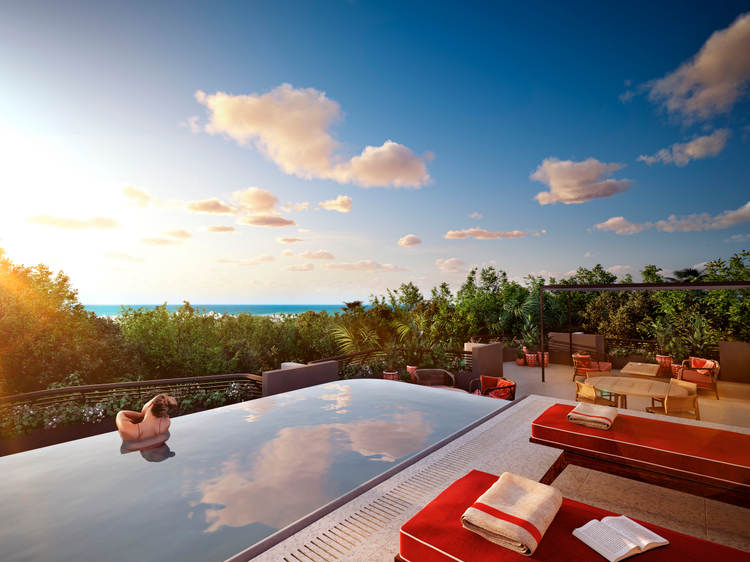
The residences range from one to three bedrooms and were conceived to dissolve into their natural surroundings. Interiors are described as open and refined, with fully equipped kitchens, double vanity bathrooms, mosaic detailing, soaking tubs, and outdoor areas that extend the experience of the home. Roof gardens with infinity-edge pools and outdoor kitchens add another layer, opening wide views over the treetops and giving private life a stronger sense of release and calm.
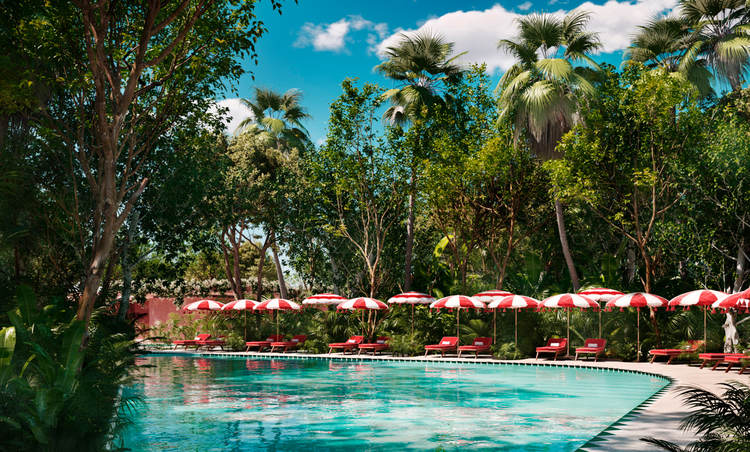
Five-star amenities support that living experience with quiet consistency. The project materials mention a residence-only swimming pool, a state-of-the-art gym, and gathering areas designed to coexist with nature. These are not incidental additions. They are part of a residential atmosphere intended to feel complete, where comfort, service, and aesthetic coherence work together from the outset.
A Masterplan That Expands the Meaning of Ownership
Faena Tulum gains much of its strength from the fact that it is not limited to residences alone. The masterplan integrates the Faena Tulum Hotel, the Ocean Club, an Art Pavilion, and shared spaces designed to support gathering, expression, and social life. The hotel component includes 87 rooms and suites, while lower levels incorporate dining, private spaces, and Faena’s Living Room concept. Together, these elements frame ownership within a larger hospitality and cultural ecosystem.
This matters for both lifestyle buyers and investors. In branded residential projects, long-term distinction often comes from the quality of the world built around the residence, not only from the residence itself. A project with a clear social, cultural, and service framework tends to hold stronger identity in the premium segment. Faena Tulum appears to be positioning itself exactly in that category, where ownership is tied to access, atmosphere, and belonging, not simply to square meters in a desirable postcode. This is an analytical inference based on the project’s masterplan and positioning.
Wellness as Daily Infrastructure
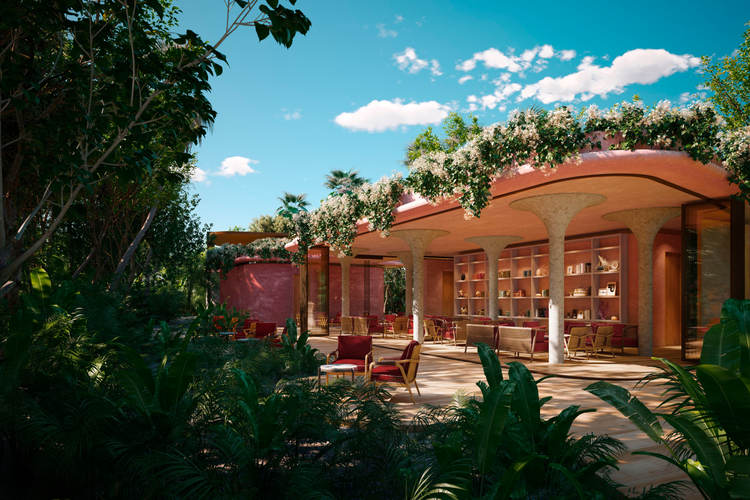
Wellness is not treated here as a decorative layer added for market appeal. It is one of the project’s structural ideas. Tierra Santa Healing House is described as an oasis for spirit, mind, and body, blending ancestral healing rituals from different traditions with a contemporary wellbeing model designed to restore balance and focus. In practical terms, that makes wellness part of the rhythm of ownership rather than an occasional indulgence.
The Ocean Club extends the experience toward the sea with hospitality, floating pools, culinary offerings, and an atmosphere designed for ease and sociability. The project materials also reference concierge, valet, security, maintenance, a convenience store, and additional services at extra cost, including personal chef, fitness training, personal shopping, childcare, and laundry. For the buyer who values seamless living, that service structure is part of the asset.
The Strength of Creative Authorship
High-end buyers tend to pay attention to who shaped a project, not only to how it is marketed. Faena Tulum benefits from a roster of collaborators with distinct creative profiles. In addition to Alan Faena and Brandon Haw, the project materials name interior designer Peter Mikic, artist Pilar Zeta, wellness specialist Inge Theron, Maat Handasa for landscaping, Taller G as architect of record, and L’Observatoire International for lighting design. That range of authorship gives the development intellectual and aesthetic weight.
It also helps explain why the project feels broader than a standard branded residence. Faena has built its reputation through environments where hospitality, art, design, and cultural programming operate together, with prior district-scale references in Buenos Aires and Miami highlighted in the project materials. In Tulum, that same model is being adapted to a setting defined by jungle, sea, and a more contemplative pace of life.
Why the Project Reads Differently in Tulum
Tulum has no shortage of developments that promise beauty, privacy, and lifestyle. What makes Faena Tulum read differently is the degree of conceptual alignment behind it. The architecture, residences, hotel, wellness program, art component, and service model all point in the same direction. Whether one is approaching the project as a primary residence, a second home, or a branded real estate acquisition with long-term positioning in mind, that clarity can be a decisive advantage.
This does not mean the project should be evaluated only through its narrative. Serious buyers will still assess execution, delivery, legal structure, and market timing. But from a positioning standpoint, Faena Tulum is presenting a stronger and more complete identity than many developments competing for attention in the same destination. For a premium audience, that difference is rarely superficial. It often shapes both desire and confidence. This final judgment is an editorial assessment based on the materials provided, not an investment guarantee.
A More Selective Kind of Opportunity
At its best, residential luxury is not about abundance alone. It is about precision, coherence, and the ability to make life feel more considered. Faena Tulum is attempting to bring those qualities together in one of the Mexican Caribbean’s most sought-after settings. What it offers is not simply a home in Tulum, but entry into a carefully authored environment where hospitality, culture, wellbeing, and privacy have all been given architectural form.
For readers seeking private information about the project, Faena Tulum lists contact at +52 999 185 0584, while the official residences information is available through faena.com/residences/tulum. The project materials also reference commercial inquiries through faenatulum@inmobilia.mx.