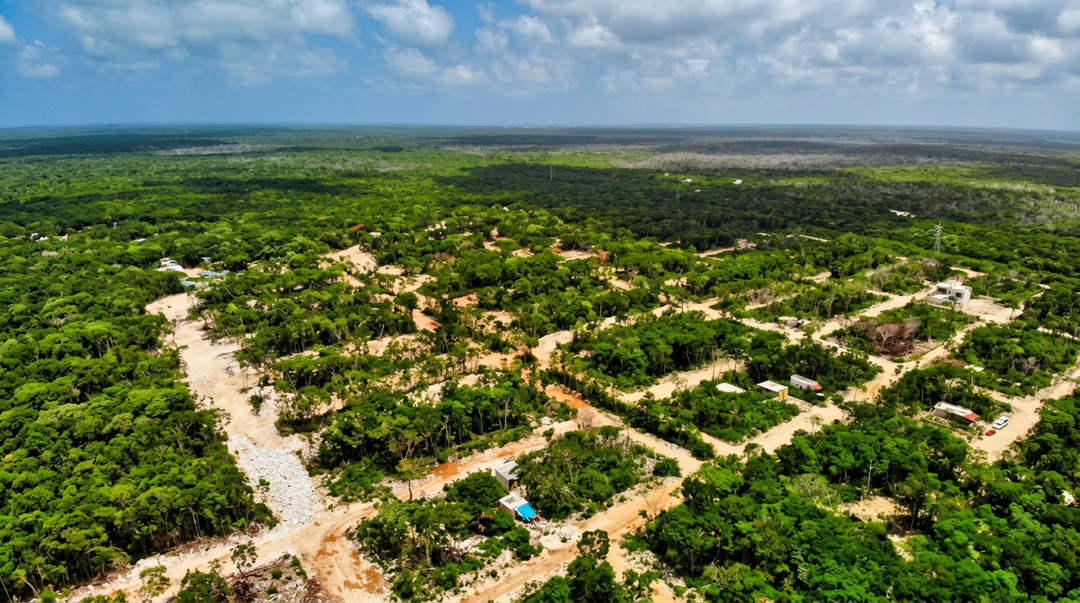

El grupo ambientalista Sélvame MX ha presentado un recurso de amparo federal impugnando una exención de permiso que la Semarnat otorgó al Tren Maya, administrado por el ejército, para la construcción de una carretera cerca de Tulum.
El caso, actualmente pendiente de admisión ante el Tribunal del Quinto Distrito, se centra en un proyecto vial denominado Camino Jacinto Pat, cuyas obras de desmonte han comenzado el Ejército Mexicano siguiendo el mismo trazado que el desvío Libramiento Tulum, previamente objeto de controversia. La demanda solicita a un juez federal que detenga las obras, las cuales, según la organización, carecen de la evaluación ambiental exigida por la ley mexicana.
Lo que está en juego es si un importante proyecto de infraestructura puede avanzar cerca del Parque Nacional Jaguar sin una evaluación de impacto ambiental, y si una carretera previamente cerrada por las autoridades ambientales federales puede reabrirse con un nuevo nombre.
El caso Sélvame MX Amparo y su trayectoria legal
Raúl Aldama Gavilán, abogado de Sélvame MX, indicó que la organización está a la espera de que un juez federal admita el recurso de amparo y se pronuncie sobre las medidas cautelares solicitadas, entre ellas la suspensión de las obras mientras se tramita el caso. El recurso de amparo se encuentra registrado en el Juzgado del Quinto Distrito.

Un recurso de amparo es un recurso de protección constitucional que permite a individuos u organizaciones impugnar actos de autoridad ante tribunales federales. En este caso, el acto impugnado es la decisión de la Semarnat de eximir a la empresa paraestatal Tren Maya de la obligación de obtener una autorización de impacto ambiental para el proyecto.
Si el tribunal admite el recurso de amparo y concede la suspensión, el ejército deberá detener las labores de desminado hasta que se resuelva la legalidad de la exención. En caso de rechazo, las obras podrían continuar, si bien Sélvame MX ha indicado que existen otras vías legales disponibles.
Se concedió una exención de permiso en febrero.
Según documentos obtenidos mediante una solicitud de transparencia, la Semarnat emitió la exención el 26 de febrero a través del documento oficial SRA/DGIRA/DG-01735-26. La exención se otorgó a favor del paraestatal Tren Maya, que es administrado por la Secretaría de la Defensa Nacional, conocida como Sedena.
Según argumenta la organización, esa decisión permitió que el proyecto siguiera adelante sin la evaluación de impacto ambiental a la que están obligadas las obras de infraestructura similares. Sélvame MX se enteró de la exención solo después de presentar la solicitud de transparencia, mucho después de que ya hubieran comenzado los trabajos preparatorios sobre el terreno.

La misma ruta que el disputado Libramiento Tulum
El actual Camino Jacinto Pat sigue el trazado de un proyecto anterior conocido como Libramiento Tulum, una carretera de circunvalación que había sido objeto de repetidas quejas medioambientales y sanciones federales.
"Cuando se inauguró la carretera, teníamos incertidumbre sobre las obras que se estaban realizando. Al analizar los datos, surgió un proyecto previo que la Secretaría de Comunicaciones y Transportes había presentado en 2021 para modificar un Manifiesto de Impacto Ambiental regional, con el objetivo de construir una vía de circunvalación conocida como Libramiento Tulum", dijo Aldama Gavilán.
Para la organización, la coincidencia de rutas no es casualidad. Sélvame MX sostiene que el mismo proyecto ha reaparecido con otro nombre, lo que permite al gobierno federal impulsar la construcción eludiendo las objeciones ambientales previas.
Se ha detectado desmonte cerca de la carretera Cobá-Tulum.
Miembros de Sélvame MX detectaron el 31 de marzo trabajos de desmonte en un tramo cercano a la carretera Cobá-Tulum. La ubicación coincide con el trazado del Libramiento Tulum, un proyecto que ya fue denunciado en 2025 y que la Procuraduría Federal de Protección al Ambiente (Profepa) ordenó paralizar en aquel entonces.
Para los defensores del medio ambiente, ese cierre anterior fue una clara señal de que el proyecto carecía de fundamento legal. Por lo tanto, la reanudación de la tala bajo un nuevo nombre plantea una pregunta directa: ¿cómo un proyecto que había sido formalmente suspendido por las autoridades ambientales federales pudo reiniciarse con una exención de permiso en lugar de un permiso?
Un proyecto con raíces en el Plan Aeroportuario de la época del Calderón
Según Sélvame MX, la carretera también forma parte de un proyecto más amplio que se remonta a la administración del expresidente Felipe Calderón, cuando las autoridades planearon la construcción de un aeropuerto para la Riviera Maya.
Ese aeropuerto nunca se construyó, pero la infraestructura vial asociada ha reaparecido periódicamente en documentos de planificación regional. La organización argumenta que el trazado actual se remonta a esos diseños originales.
El terreno en cuestión se encuentra cerca de áreas que ahora conforman el Parque Nacional Jaguar, un área natural protegida creada durante la actual administración federal para salvaguardar ecosistemas de selva y cenotes de gran valor ecológico. La organización argumenta que la proximidad a una zona protegida dificulta especialmente la justificación de la ausencia de una evaluación de impacto ambiental.
¿Qué sigue?
En los próximos días, se espera que el Juzgado del Quinto Distrito decida si admite el recurso de amparo y si concede las medidas cautelares solicitadas por Sélvame MX, incluida la suspensión de las obras mientras se tramita el caso.
Esta decisión será la primera prueba de cómo los tribunales federales tratan las exenciones de permisos otorgadas a proyectos de infraestructura dirigidos por el ejército en el Caribe mexicano, una región donde el turismo, la protección del medio ambiente y las obras públicas a gran escala chocan cada vez más.
Por ahora, las obras continúan. La carretera avanza siguiendo un trazado que ya ha sido objeto de controversia en los tribunales, bajo un nuevo nombre que, según sus críticos, es prácticamente idéntico al proyecto que las autoridades ambientales federales intentaron detener en su momento.
¿Deberían las autoridades federales exigir evaluaciones completas de impacto ambiental para los proyectos de infraestructura liderados por el ejército cerca de áreas protegidas como el Parque Nacional Jaguar? Únete a la conversación y comparte tu opinión con nosotros en Instagram y Facebook en @thetulumtimes .

The Tulum Times · Newsletter
La nota sigue en tu correo.
Lo esencial de Tulum y contexto local, un par de veces por semana. Gratis.
Sin spam. Cancelá cuando quieras.
Tulum Development, Permits, and Construction Watch
Reporting on permits, construction, regulation, and major development decisions shaping Tulum’s urban growth and investment climate.

“The best journalists reporting from paradise, highlighting the heroes that keep Tulum the most beautiful place in the world! THANK YOU!”