


Investigadores del Colegio de la Frontera Sur están desplegando una red avanzada de sistemas de drones equipados con tecnología de imagenología especializada para monitorear el creciente deterioro ambiental en las costas del Caribe mexicano. Esta iniciativa de monitoreo con drones de Ecosur proporciona los datos necesarios para proteger la delicada calidad del agua de la región y rastrear las llegadas de sargazo.
La iniciativa, encabezada por expertos académicos de Ecosur, utiliza sensores RGB e multiespectrales para analizar la calidad del agua costera con una precisión sin precedentes. Al capturar datos de alta resolución desde el aire, los científicos ahora pueden determinar los orígenes exactos de los picos de nutrientes, específicamente amonios y fosfatos, que han afectado las playas de la región durante más de una década.
Este salto tecnológico se centra fundamentalmente en resolver un misterio ambiental crítico: si la degradación química de la costa es resultado de la llegada masiva y posterior descomposición del sargazo o la filtración silenciosa de contaminantes desde el subsuelo.
Durante años, la distinción entre estas dos fuentes ha permanecido borrosa, complicando los esfuerzos de conservación e impidiendo el desarrollo de estrategias de mitigación efectivas. Los nuevos datos permiten a los investigadores identificar las "mareas rojas" producidas por la descomposición de algas y separarlas de los flujos de contaminación que emergen del acuífero.

Monitoreo de Precisión con Drones de Ecosur
Juan Alberto Sánchez Sánchez, un destacado académico de Ecosur, señaló que el protocolo requiere que los drones operen a una altitud específica de 120 metros, adhiriéndose a las regulaciones aeronáuticas mexicanas mientras se asegura la confiabilidad de los datos. "En las imágenes podemos ver las acumulaciones costeras que hablan de sitios específicos", explicó Sánchez. "Debemos establecer un protocolo de acción donde podamos identificar con confiabilidad la llegada del sargazo".
El sistema de monitoreo se basa en la generación de ortofotos georreferenciadas, que son imágenes altamente precisas similares a mapas creadas al unir cientos de fotografías más pequeñas. Estos mapas digitales permiten la cuantificación de la biomasa de sargazo y la evaluación de la turbidez del agua con una precisión de casi centímetro.
Al integrar sensores multiespectrales, el equipo puede aplicar índices de vegetación que revelan el estado biológico del alga. Esta capacidad es esencial para identificar áreas donde el sargazo ha alcanzado la "descomposición total", un estado que produce los resultados más tóxicos para la vida marina local. A diferencia de las cámaras estándar, los sensores multiespectrales capturan luz en longitudes de onda específicas, como el rojo lejano e infrarrojo cercano, que proporcionan una firma directa de la actividad orgánica dentro de la columna de agua.
El Escudo Regional: 7,200 Metros de Contención
Mientras los drones de Ecosur sirven como los "ojos" de la respuesta ambiental, la Secretaría de Ecología y Ambiente (SEMA) ha acelerado el despliegue de su "escudo" físico. De acuerdo con reportes oficiales recientes, las autoridades ya han instalado 7,200 metros de barreras de sargazo a lo largo de la costa estatal, lo que representa poco menos de la mitad de los 15,000 metros programados para 2026.
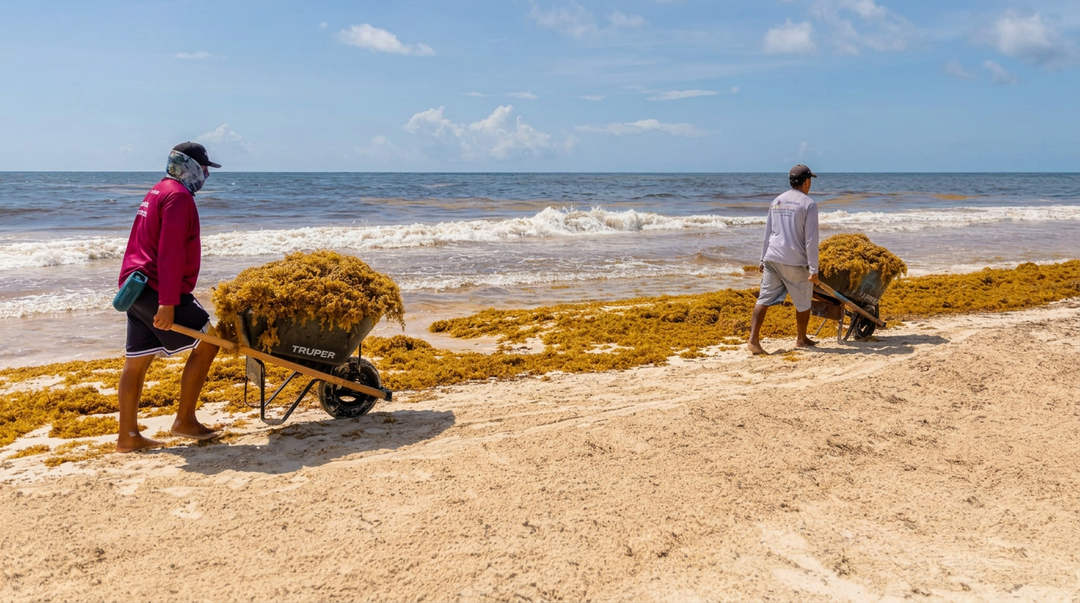
Esta estrategia de contención estatal da prioridad a las zonas de alto impacto y turismo. Actualmente, Puerto Morelos mantiene 2,300 metros de barreras, mientras que Playa del Carmen y Mahahual han desplegado 2,600 y 2,300 metros respectivamente. Estas áreas son críticas no solo por su relevancia económica sino también por su alta incidencia de "recales", haciendo que la contención física sea indispensable para mantener la salud costera.
Los 7,800 metros restantes del objetivo anual se distribuirán estratégicamente en las próximas semanas. Tulum está programada para recibir un total de 2,300 metros de barreras, mientras que Cancún y Mahahual verán refuerzos adicionales de 400 metros cada una para fortalecer sus defensas existentes contra la influx masiva de algas.
Un Arsenal Marítimo para el Caribe
La estrategia implementada por la SEMA combina esta infraestructura física con una operación robusta de logística marítima. La flota actual desplegada a lo largo del Caribe incluye un buque transatlántico capaz de interceptar sargazo en aguas profundas y 11 barcos costeros de sargazo diseñados para maniobras cercanas a la costa.
Apoyando esta operación hay 22 unidades menores y cuatro equipos especializados "AquaMarine" específicamente configurados para trabajar en aguas poco profundas. Este esquema marítimo multicapa busca no solo remover el sargazo visible de las playas sino interceptar la biomasa en puntos oceánicos estratégicos, optimizando la capacidad de respuesta del estado durante los períodos de mayor llegada.
Esta combinación de monitoreo científico e interceptación mecánica representa una evolución significativa en la gestión de la región sobre la crisis del sargazo. Al usar datos de drones de Ecosur para dirigir la flota marítima, las autoridades pueden dirigir sus esfuerzos con mucha mayor eficiencia, preservando tanto la estética de las zonas turísticas como la integridad de los ecosistemas marinos.
Devastación Biológica en Mahahual
La urgencia de este trabajo es más visible en zonas sureñas como Mahahual y Xahuayxol. En estas áreas, los investigadores han documentado franjas de sargazo alcanzando hasta 25 metros de ancho, en un estado de descomposición avanzada. Esta "barrera" de biomasa en descomposición previene el intercambio mareal normal, creando condiciones anaeróbicas localizadas que son hostiles para la mayoría de formas de vida.
Este proceso desencadena una reacción en cadena catastrófica bajo la superficie. Conforme el alga se descompone, libera lixiviados y gases tóxicos que agotan el oxígeno del agua y alteran su balance químico. El resultado es frecuentemente letal para el ambiente cercano a la costa, particularmente para los arrecifes de coral delicados y praderas de pasto marino.
"Hemos detectado una disminución en los pastos marinos; donde estaban localizados, ya no hay sitios", dijo Sánchez, describiendo la pérdida de viveros vitales para especies marinas. Las condiciones tróficas generadas han conducido a eventos de mortalidad significativa, con peces muertos y otras especies frecuentemente encontradas en el rastro de las "mareas rojas". Estos eventos no solo impactan la biodiversidad sino que también amenazan a las comunidades de pesca local que dependen de estos ecosistemas cercanos a la costa para sus medios de vida.
Impacto Estatal: 23,000 Toneladas Recolectadas en 2026
La escala de la temporada de 2026 ya está superando los puntos de referencia previos. Las autoridades estatales han reportado la recolección de 23,392.78 toneladas de sargazo en Quintana Roo durante los meses iniciales del año. Playa del Carmen lidera la recolección regional con 8,259.53 toneladas, seguida por Benito Juárez (Cancún) con 4,420.34 y Puerto Morelos con 3,410.50 toneladas.
En Tulum, el desafío logístico se está intensificando. Juan Buchanan, director de la Zona Federal Marítimo Terrestre (Zofemat), indicó que el municipio ya ha superado el umbral de 1,000 toneladas. El despliegue de barreras físicas en Tulum oficialmente comenzó el 12 de abril; para el 16 de abril, los primeros 200 metros ya estaban en posición, con el objetivo de completar la instalación completa de 2,300 metros antes del final del mes.
Esta llegada temprana sorprendió a muchos, forzando a las autoridades locales a acelerar sus planes de despliegue. Para un municipio como Tulum, que depende mucho de la imagen pristina de sus playas, la capacidad para diferenciar entre problemas relacionados con algas y contaminación de agua subterránea sigue siendo un asunto de supervivencia económica y ecológica.
Una Defensa Científica para el Caribe
El despliegue de drones representa un cambio en cómo México defiende su activo natural más valioso. En lugar de confiar en la observación manual y suposiciones históricas, la región se está moviendo hacia una defensa impulsada por datos. Esta transición es esencial para la resiliencia a largo plazo de la industria turística, que enfrenta presión creciente tanto del cambio climático global como de los impactos del desarrollo local.
Conforme Ecosur continúa refinando sus sistemas de identificación basados en redes neuronales, incorporando incluso fotografías proporcionadas por ciudadanos, la resolución de nuestra comprensión de las aguas del Caribe solo aumentará. Este componente de "ciencia ciudadana" empodera a la población local, convirtiendo a cada visitante de playa con una cámara en un potencial contribuyente a la seguridad ambiental de la región.
La integración de tecnología, academia y gestión local sigue siendo el único camino viable hacia adelante. En los datos de alta altitud capturados por los drones de Ecosur, el futuro de la conservación del Caribe mexicano finalmente está entrando en enfoque. El desafío ahora radica en traducir estos datos de alta fidelidad en cambios políticos sostenidos que protejan el acuífero y el océano para futuras generaciones.
*Imagen de portada generada por IA.
¿Cómo pueden la tecnología y las barreras físicas proteger mejor nuestros ecosistemas costeros de las amenazas duales del sargazo y la contaminación? Únete a la conversación y comparte tu perspectiva con nosotros en Instagram y Facebook en [@thetulumtimes](https://www.instagram.com/thetulumtimes).

The Tulum Times · Newsletter
La nota sigue en tu correo.
Lo esencial de Tulum y contexto local, un par de veces por semana. Gratis.
Sin spam. Cancelá cuando quieras.
Tulum Sargassum Updates and Beach Conditions
Live seaweed conditions, cleanup updates, forecasts, and practical beach planning across Tulum and the Riviera Maya.

“The best journalists reporting from paradise, highlighting the heroes that keep Tulum the most beautiful place in the world! THANK YOU!”


