
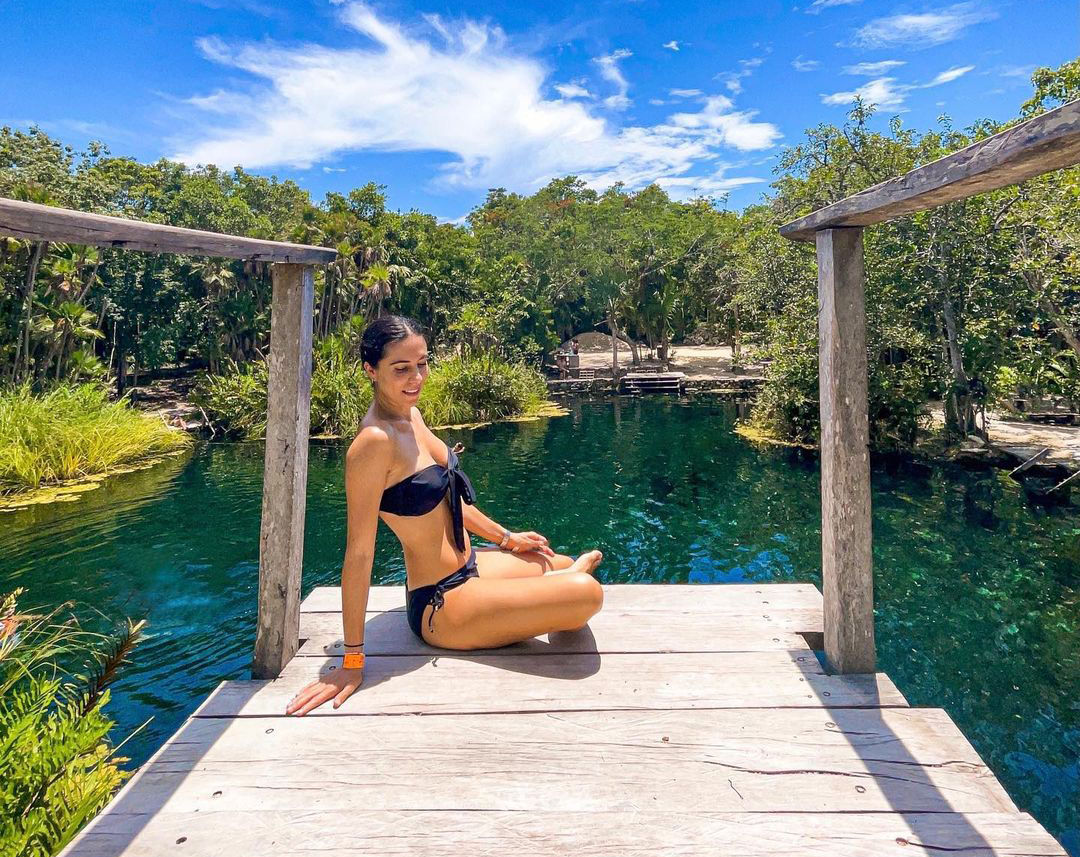
Cientos de cenotes se encuentran a menos de 30 kilómetros de Tulum, desde paradas de carretera bien cuidadas donde se alquila equipo de snorkel hasta cenotes remotos que requieren un guía local y un descenso en la oscuridad mediante una escalera de cuerda. La variedad es innegable, al igual que la diferencia entre una mañana bien planificada y un largo viaje para visitar una poza abarrotada.
Tulum se asienta sobre uno de los sistemas de cuevas submarinas más extensos del planeta. La red de Sac Actun, que se extiende bajo la selva desde Tulum hacia el norte, en dirección a Puerto Morelos, abarca aproximadamente 350 kilómetros y permanece en gran parte inexplorada. Los cenotes visibles desde la superficie son puntos de acceso a esta red, y cada uno ofrece una experiencia diferente según su profundidad, geometría, iluminación y proximidad al nivel freático.
El corredor a lo largo de la carretera de Cobá concentra los cenotes más accesibles y visitados. Un segundo grupo se ubica al sur de la zona arqueológica, a lo largo de la carretera costera hacia Boca Paila. Más al norte, en dirección a Playa del Carmen, los sistemas de cuevas se vuelven más extensos y complejos. A continuación, se describen las opciones más recomendables, ordenadas aproximadamente desde las más cercanas a Tulum hasta las más alejadas. El portal de cenotes y ruinas de tulumtimes.com ofrece información actualizada sobre cambios en el acceso, cierres y condiciones estacionales.
Gran Cenote: El que todo el mundo visita, y por qué está justificado.
El Gran Cenote se encuentra a cinco kilómetros de la plaza principal de Tulum, en la carretera de Cobá, lo que lo convierte en el cenote más accesible de la zona. Además, es sin duda uno de los más hermosos. La cámara principal es un cenote semiabierto con una sección de cueva en un extremo, agua cristalina que se mantiene entre 23 y 26 grados Celsius durante todo el año, y una plataforma poco profunda donde las tortugas de agua dulce emergen entre los nenúfares con la luz del amanecer.
Para los amantes del snorkel, las condiciones son excepcionales. La visibilidad alcanza una profundidad de aproximadamente cinco metros, el túnel de la cueva es lo suficientemente largo como para resultar interesante, y la combinación de zonas al aire libre y cuevas invita a repetir la visita en diferentes momentos del día. La luz del amanecer, cuando incide en el agua en ángulo a través del techo abierto, es la que más merece la pena contemplar.
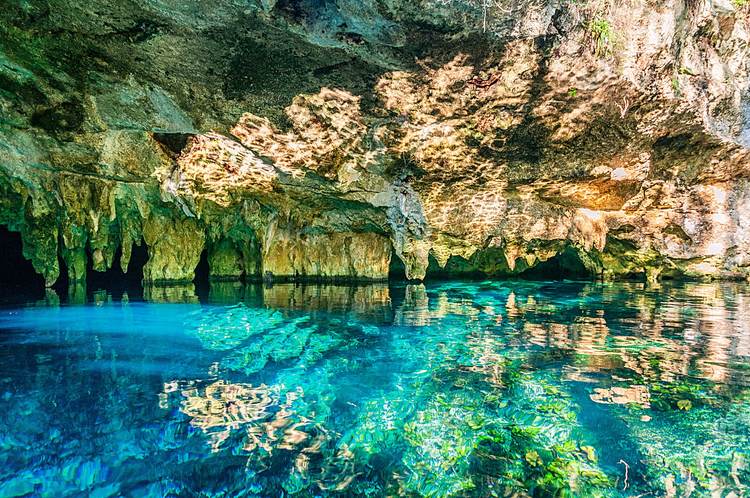
El problema de la multitud es real. Las furgonetas turísticas empiezan a llegar alrededor de las 9 de la mañana, y a media mañana la piscina está llena y el aparcamiento colapsa. Llegar antes de las 8 te permite disfrutar del lugar en su mejor momento. Se pueden alquilar equipos de snorkel y chalecos salvavidas en el cenote. No se aceptan tarjetas; lleva efectivo.
- Dirección: Carretera Tulum-Cobá km 2.5, Tulum, QR
- Distancia desde el centro: 5 km (15 min en bicicleta, 10 min en coche)
- Horario: de 8:00 a 16:45. Cerrado los domingos.
- Entrada: entre 400 y 500 MXN por persona. Solo efectivo.
- En el lugar: Alquiler de equipo de snorkel y chalecos salvavidas, baños, taquillas.
- Mapa: Abrir en Google Maps
Cenote Calavera: Tres agujeros en el suelo de la selva, un salto limpio.
El Cenote Calavera, también conocido como el Templo de la Perdición, se encuentra a unos 2,5 kilómetros del centro de Tulum, un poco más cerca del pueblo que el Gran Cenote. Desde el nivel del suelo se aprecian tres aberturas circulares en la roca, la mayor de las cuales funciona como una plataforma de salto de cuatro metros hacia la poza de la cueva. Ese salto es la clave.
El cenote atrae a un público más joven y aventurero, y suele estar mucho menos concurrido que el Gran Cenote, en parte porque la experiencia es menos fotogénica en el sentido de nenúfares y tortugas, y se centra más en la sensación específica de caer por el agujero. La cueva inferior tiene una profundidad considerable para los buceadores que se animen a explorarla, y la geometría de la luz que entra por las tres aberturas del techo al mediodía es una de las configuraciones naturales más impactantes a lo largo del corredor.
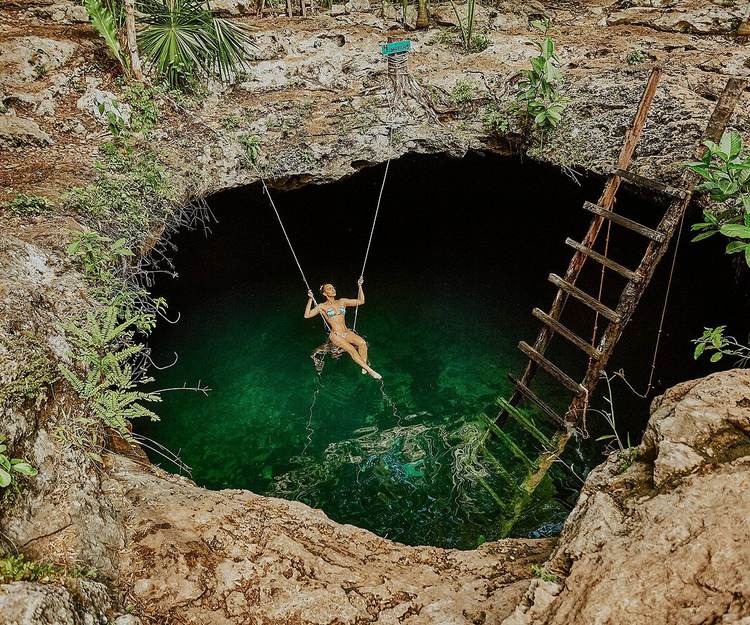
Las prospecciones arqueológicas han hallado aquí los restos de más de 100 cuerpos, evidencia del uso ceremonial por parte de los antiguos mayas.
- Dirección: Carretera Tulum-Cobá km 1.5, Tulum, QR
- Distancia desde el centro: 2,5 km (10 min en bicicleta, 5 min en coche)
- Horario: de 9:00 a 17:00, los siete días de la semana.
- Entrada: ~250 MXN por persona. Equipo fotográfico profesional: +200 MXN.
- Profundidad: Hasta 15 metros. Posibilidad de practicar snorkel en cuevas.
- Mapa: Abrir en Google Maps
Aktun-Ha: El cenote que las guías turísticas omiten sistemáticamente
A unos nueve kilómetros de Tulum, en la carretera de Cobá, Aktun-Ha también es conocido como el Cenote del Lavado de Autos, un nombre que data de cuando los taxistas y conductores de colectivos locales usaban el lugar para enjuagar sus vehículos. El apodo suena a advertencia. El cenote no es lo que su nombre sugiere.
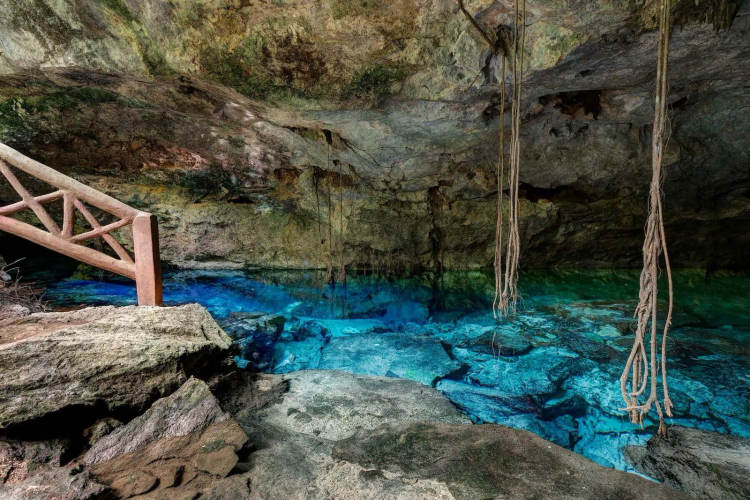
Aktun-Ha es un cenote grande y abierto, cuya superficie está casi completamente cubierta de nenúfares y vegetación flotante. Bajo la capa verde, el agua es fría y excepcionalmente cristalina, y desciende hacia una sección de cueva en el extremo este, que constituye uno de los puntos de buceo con mayor atmósfera de la región. El contraste entre la exuberante vegetación de la superficie y la limpia piedra caliza del fondo es la experiencia única que ofrece este cenote, y no es fácil de fotografiar, lo que explica en parte por qué suele estar poco concurrido.
- Dirección: Carretera Tulum-Cobá km 9, Tulum, QR
- Distancia desde el centro: 9 km (15 min en coche)
- Horario: de 9:00 a 17:00, de lunes a domingo.
- Entrada: 300 MXN general / 150 MXN ciudadanos mexicanos / 100 MXN residentes de Quintana Roo.
- En el lugar: Alquiler de chalecos salvavidas (20 MXN). No se alquila equipo de snorkel; traiga el suyo.
- Mapa: Abrir en Google Maps
Dos Ojos: Cuando el snorkel se convierte en algo completamente distinto
Dos Ojos se ubica aproximadamente a 25 kilómetros al norte del centro de Tulum, en el kilómetro 244.5 de la Carretera Federal 307, en dirección a Playa del Carmen. La distancia es importante porque lo que sucede aquí es completamente diferente a todo lo que se encuentra en el corredor de Cobá. Los dos cenotes principales del sistema están conectados por un pasaje submarino que constituye uno de los sitios de espeleobuceo más visitados del mundo.
El circuito guiado de snorkel abarca la cámara de la Cueva de los Murciélagos, donde una grieta en la superficie deja pasar un rayo de luz que atraviesa el agua en un ángulo preciso, y la caverna principal de Dos Ojos, donde las estalactitas y estalagmitas formadas cuando la cueva estaba por encima del nivel del mar permanecen intactas y visibles a través del agua. El circuito dura aproximadamente 45 minutos a un ritmo moderado.
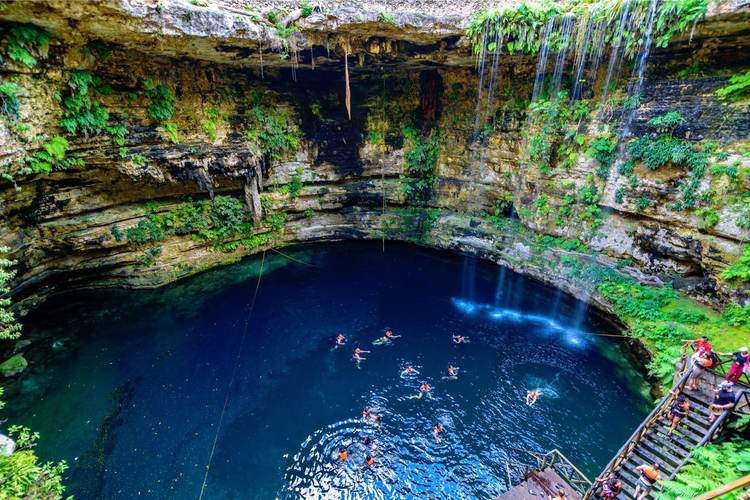
Para buceadores certificados, el acceso se extiende al sistema de cuevas Sac Actun, que conecta con este punto y se extiende por kilómetros a través de la península. Los operadores de buceo en Tulum ofrecen excursiones de un día completo a través de esta red de cuevas. La señal celular es inestable en este tramo de la carretera; descargue la ubicación de Google Maps para usarla sin conexión antes de salir de Tulum.
- Dirección: Carretera Federal 307, km 244.5, Quintana Roo.
- Distancia desde el centro: ~25 km al norte (30 minutos en coche por la autopista 307)
- Horario: de 8:00 a 17:00, los siete días de la semana.
- Entrada: 400 MXN solo entrada / 800 MXN tour guiado de snorkel con equipo incluido.
- Niños: 200 MXN entrada / 400 MXN visita guiada.
- Buceo en cuevas: Disponible para buceadores certificados. Reserve con antelación a través de los operadores de buceo de Tulum.
- Mapa: Abrir en Google Maps
Cenote Cristal y Escondido: Aire libre, menos gente, ecosistema diferente
Estos dos cenotes se ubican en la carretera costera al sur de las ruinas de Tulum, en dirección a la Reserva de la Biosfera de Sian Ka'an. Son al aire libre y están rodeados de manglares en lugar de selva, y el ecosistema se percibe notablemente diferente al del corredor de Cobá. No hay cuevas, ni alquiler de equipo de snorkel, ni avistamientos de tortugas. Lo que ofrecen es espacio y una mayor cercanía al entorno natural de la franja sur.

El Cenote Cristal es el mayor de los dos, con una amplia zona de baño y una plataforma de madera para saltar. El Cenote Escondido es más pequeño y se accede a él por un sendero corto desde la carretera. Ambos comparten una entrada común, lo que los convierte en un par natural. Suelen incluirse en itinerarios ciclistas que también recorren las ruinas, dada su ubicación en el carril bici que va hacia el sur desde el pueblo de Tulum.
- Dirección: Carretera Costera Sur, al sur de las ruinas de Tulum, Tulum, QR
- Distancia desde el centro: ~4 km al sur (5 min en coche, 15 min en bicicleta)
- Horario: De 8:00 a 16:00 todos los días.
- Entrada: 300 MXN entrada combinada para ambos cenotes.
- Nota: No se alquila equipo de snorkel en el lugar. Traiga su propio equipo.
- Mapa: Abrir en Google Maps
Cómo combinar el cenote con el viaje
Para quienes visitan el Gran Cenote por primera vez y disponen de una sola mañana: vayan antes de las 8 a. m. y lleven su propio equipo de snorkel si lo tienen. Salgan antes de las 10 a. m. Para quienes estén dispuestos a añadir 20 minutos más de viaje: combinen la visita con Calavera y vayan primero a esta última.
Para una experiencia completa en cuevas: Dos Ojos, sin duda la mejor opción. Si tienes certificación, puedes añadir una inmersión en cuevas. Lleva agua, calcula el tiempo del viaje y planea comer en Tulum después. Para una mañana más tranquila con menos grupos turísticos: Aktun-Ha entre semana. La menor presencia comercial significa mucha menos competencia por el agua.
Para familias o ciclistas: la combinación de los ríos Cristal y Escondido cerca de las ruinas. En algunos tramos, el río es menos profundo, al aire libre y lo suficientemente cerca de Tulum como para hacer una excursión tranquila de medio día desde la zona hotelera sin necesidad de coche.
Una regla se aplica a todos: no usar protector solar convencional en el agua. Los químicos de la mayoría de los productos comerciales dañan el ecosistema del acuífero. En las farmacias de Tulum y en la mayoría de las entradas de los cenotes, se pueden encontrar alternativas biodegradables y respetuosas con los arrecifes. Su uso es obligatorio, y los letreros en la entrada lo dejan claro.
¿Qué cenote cerca de Tulum te ha impresionado más? ¿Lo recomendarías antes que el Gran Cenote para una primera visita? Comparte tu opinión con nosotros en Instagram y Facebook en @thetulumtimes .