
Tulum is currently facing an unusually early sargassum season that has challenged the traditional image of its pristine white sand beaches. While record high levels of the brown macroalgae have been recorded across the Caribbean this year, including a staggering 244 tons collected in February and over 750 tons in the first three weeks of March, the situation does not have to ruin your April vacation.
For travelers visiting the Mexican Caribbean this month, the key to a successful trip is flexibility and access to accurate information. The phenomenon, often referred to as the "brown tide," is highly dependent on wind patterns and ocean currents. This means that while one beach may be covered in seaweed on a Monday morning, it could be crystal clear by Tuesday afternoon. Understanding how to navigate these irregular patterns is the first step toward enjoying the best of what Tulum has to offer during the 2026 season.
Monitoring Your Beach Day in Real Time
The most important rule for an April visit is to check the latest conditions daily before heading to the coast. Because sargassum moves in waves, relying on a week-old forecast or general seasonal predictions is often counterproductive. Travelers should prioritize local, verified sources that provide photographic or video evidence of current conditions along the various sections of the Riviera Maya.
The best tool for this is the Tulum Times sargassum update. This platform provides daily reports and visual confirmation of which beaches are experiencing heavy arrivals and which remain clear. By checking this resource every morning, you can avoid the frustration of arriving at a beach that is currently undergoing a heavy sargassum influx and instead pivot to a more favorable location. Knowing which way the wind is blowing and which specific bays are protected can save hours of travel time and ensure your vacation remains focused on the water.
Safe Zones and Protected Bays
While the main Hotel Zone of Tulum often bears the brunt of the seaweed due to its open orientation toward the Atlantic, several nearby spots are geographically shielded or naturally better managed. These locations often remain clear even when the prominent public beaches are struggling with accumulation.
Soliman Bay and Tankah Bay, located just fifteen minutes north of the Tulum downtown area, are excellent alternatives. These bays are protected by a robust reef barrier that catches much of the incoming sargassum before it reaches the shallow water near the shore. The result is a reef lagoon that remains significantly clearer than the open beaches of the Hotel Zone. These areas are ideal for families looking for calm, shallow water and a more relaxed atmosphere away from the heavier sargassum deposits.
Further north, Akumal Bay often fares better due to its unique bay shape and the active ecological management from local centers. Known for its turtle snorkeling, Akumal has dedicated teams that work around the clock to ensure the seaweed is manageable. For those seeking a guaranteed sargassum-free experience, Yal-ku Lagoon in Akumal is the ultimate secret. Because it is a brackish lagoon fed by underground cenotes, it is one hundred percent free of seawater macroalgae. The water is calm, incredibly clear, and filled with tropical fish, making it the perfect snorkeling destination when the ocean is too rough or brown.

The Cenote Pivot Strategy
When the "brown tide" is at its peak and the ocean water takes on a dark, silty appearance sometimes called "chocolate water," the best strategy is to turn your back to the sea and head into the jungle. Tulum is home to the most extensive underground river system in the world, and its cenotes are entirely unaffected by sargassum. These natural sinkholes offer some of the most stunning swimming and diving experiences on the planet and serve as the perfect refuge during heavy seaweed days.
For families and sun-seekers, open-air cenotes like Cenote Azul or Zacil-Ha are ideal. These locations feel like natural swimming pools with crystal-clear water and plenty of space to relax. If you prefer a more dramatic setting, Gran Cenote is famous for its resident turtles and breathtaking visibility. For the more adventurous traveler, the cave and cavern systems of Dos Ojos provide stunning stalactites and deep blue water that remains cool and refreshing even during the hottest April afternoons.
Understanding the Tulum Reborn Efforts
Under the new "Tulum Reborn" initiative, the local government and the private sector have significantly intensified their response to the 2026 sargassum arrivals. Municipal President Diego Castañón Trejo has overseen the deployment of ten large-scale containers designed to speed up the logistics of seaweed removal, ensuring that collected algae is transported away from the beaches as quickly as possible.
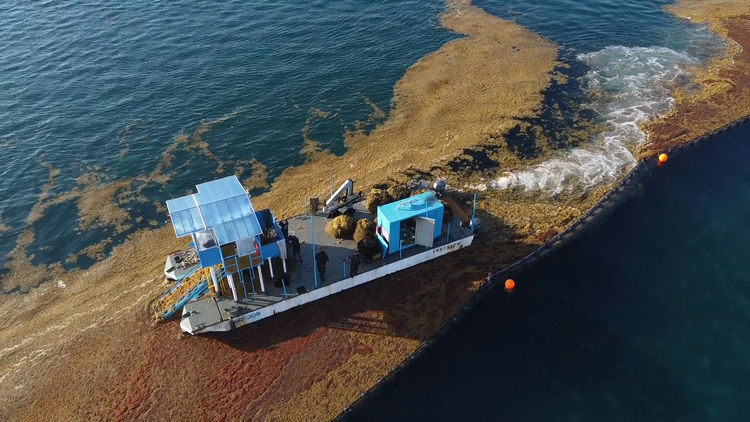
The federal and state governments have also integrated Tulum into the National Strategy for Beach Cleaning and Conservation 2025-2030. This plan involves the installation of over seven thousand meters of offshore barriers and the use of specialized "sargaceras" vessels designed to intercept the algae mats before they reach the sand. While no barrier system is one hundred percent effective against the power of the Caribbean Sea, these efforts have significantly reduced the volume of seaweed reaching key public areas like Playa Paraiso.
Tips for the Savvy Traveler
If you are determined to have a beach day despite the sargassum reports, timing is everything. The "morning window" is usually your best bet for a clean shoreline. Beach clubs and luxury hotels often have dedicated teams that rake the sand at dawn, providing a pristine experience for early arrivals. Clubs like Ziggy's or Mia are known for their active cleaning programs and offer day passes that can guarantee a white-sand experience even during the peak of the season.
It is also important to be aware of the environmental signs. If sargassum is allowed to sit on the beach and decompose, it begins to release hydrogen sulfide, which has a distinct sulfur smell similar to rotten eggs. If you notice this odor, it is best to visit a cenote or head further inland to the Sian Ka'an Biosphere Reserve immediately. Finally, support the local cleanup crews. The work of raking and transporting tons of wet seaweed is back-breaking labor done to preserve the beauty of the town. A simple thank-you to the workers or a tip at your favorite beach club goes a long way in supporting the community effort to keep Tulum beautiful.
How are you planning to adapt your Tulum itinerary to make the most of the 2026 sargassum season? Join the conversation and share your perspective with us on Instagram and Facebook at @TulumTimes.
Support The Tulum Times
Independent journalism takes time and resources. If you found this article valuable, consider supporting our work!
Buy us a taco 🌮“The best journalists reporting from paradise, highlighting the heroes that keep Tulum the most beautiful place in the world! THANK YOU!”
Read Next