
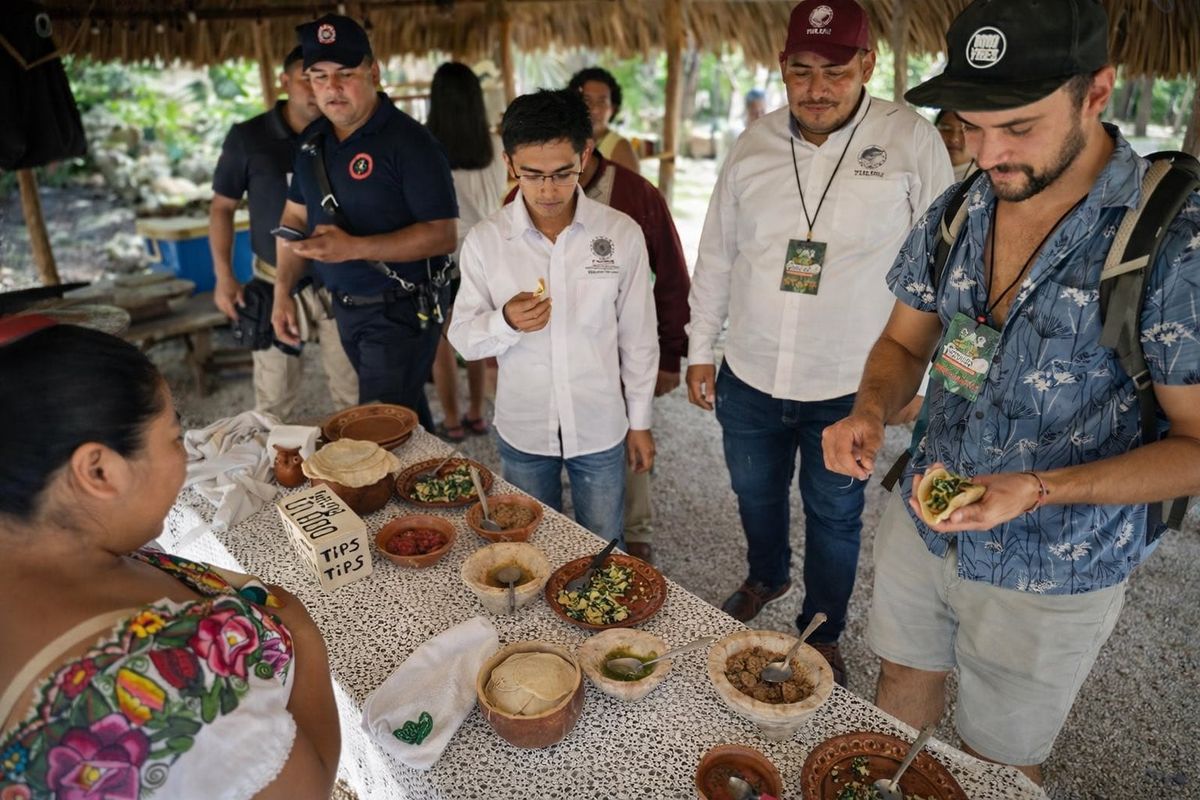
First councilor David Tah Balam has reaffirmed his commitment to advancing the Cultural Tourist Circuit of Tulum’s Maya Zone, a project aimed at strengthening rural tourism and bringing direct economic benefits to Maya communities across the municipality.
Tah Balam, who highlighted his own Maya roots, said the initiative is designed to expand community participation in tourism through traditional gastronomy, community guides, cultural experiences, and nature-based tours. He said the project responds to current travel trends, in which ecotourism and community tourism have become some of the most sought-after options for visitors.
The proposal has been developed over the last four years with residents from several communities and is intended to connect cultural and natural attractions across Tulum’s Maya zone. At its core, the project seeks to ensure that tourism activity does not remain concentrated in the most visible destinations, but reaches families and local groups that can take part directly in offering services and experiences.
For Tulum, that matters because tourism continues to shape the local economy, and decisions about how it grows affect not only visitors and businesses, but also the future of rural communities that have long preserved the region’s cultural identity and natural wealth. The circuit, as described by Tah Balam, places those communities at the center of the tourism model rather than at its margins.

A project focused on Maya communities
Tah Balam said the Cultural Tourist Circuit is meant to create a more direct economic flow into Maya communities in the municipality. The emphasis is on tourism that is organized around local participation, allowing families to become part of the visitor economy through activities tied to their own knowledge, traditions, and territory.
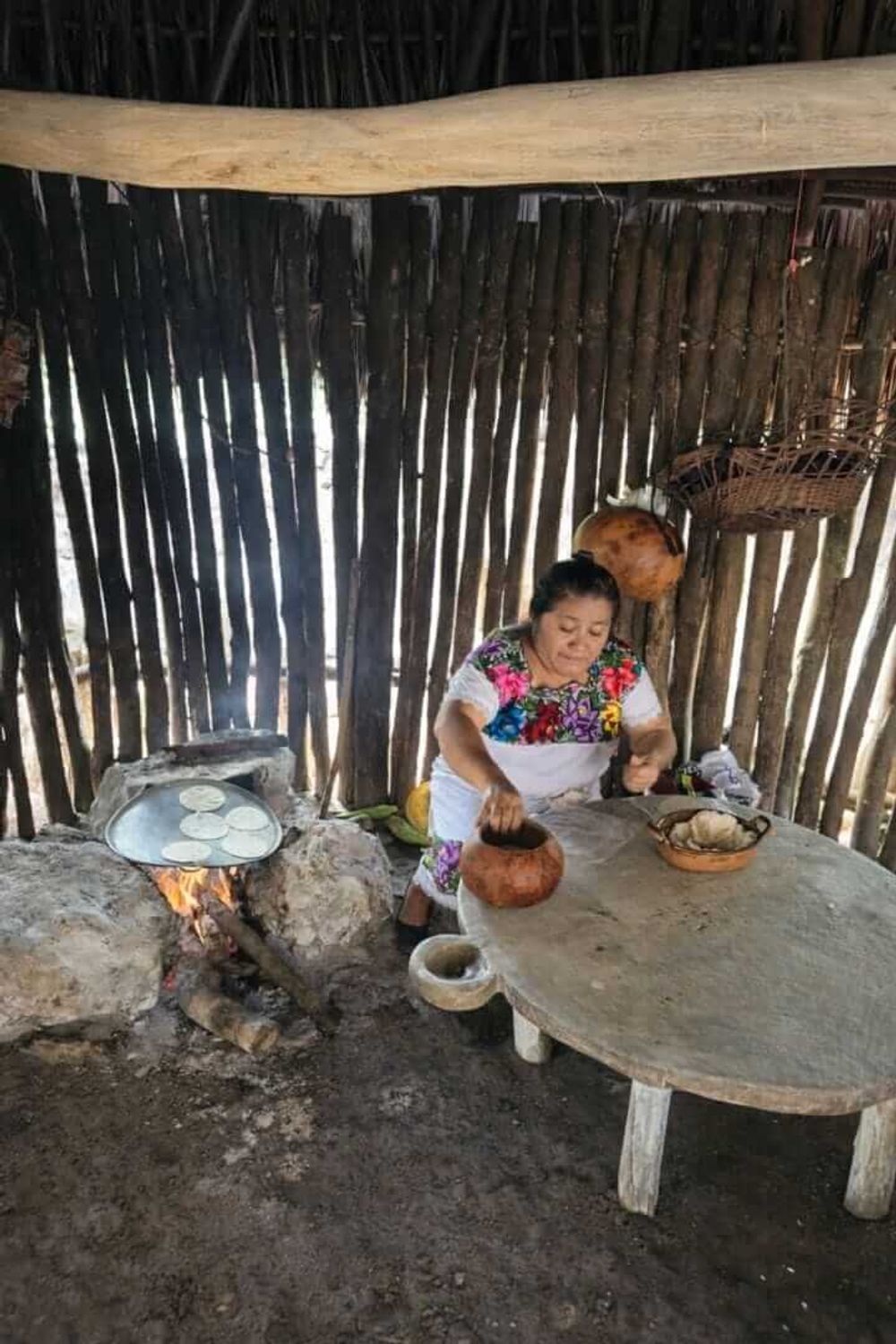
That includes traditional food, guiding services led by community members, cultural activities, and routes through natural areas. In practical terms, the project presents rural tourism not as a secondary attraction, but as a structured offering built around what communities already protect and sustain.
The councilor said this approach also aligns with broader travel preferences. Ecotourism and community tourism, he noted, are now among the main trends in travel. In that context, the Maya zone of Tulum could gain visibility not only for its scenery, but for experiences shaped by local people themselves.
The distinction is important. Rather than separating nature from culture, the circuit combines both. Visitors are invited to engage with the region through organized routes that connect different attractions while also creating opportunities for residents to play a more active role in tourism development.
How the circuit has taken shape
According to Tah Balam, the project has been promoted for the past four years in collaboration with inhabitants of different communities. That timeline suggests a process built gradually, with participation from local residents rather than a short-term proposal imposed from outside.
He said the initiative includes attractions such as cenotes, jungle, lagoons, and cultural routes in communities including Cobá and Sahcabmucuy. In Sahcabmucuy, he noted, the Center for the Safeguarding of Customs and Traditions has even been consolidated as part of this broader effort.
That element gives the project a wider scope. It is not presented only as a tourism route, but also as a framework for preserving Maya identity and protecting the natural environment. In a municipality where tourism growth often draws attention to infrastructure and promotion, the circuit points instead to continuity, local memory, and stewardship of place.
And that may be one of its defining features. The value of the project does not rest only in attracting visitors, but in how those visits are organized and who benefits from them. In Tah Balam’s description, the circuit is intended to connect territory, culture, and income in a way that keeps communities visible within Tulum’s tourism future.

What visitors would experience
Tah Balam said the circuit allows visitors to get close to the cultural and natural richness of Tulum’s Maya zone through organized tours linking different attractions across the territory. The model he described is one of connection rather than isolation, where each stop contributes to a broader understanding of the area and its communities.
That means a visitor experience shaped by multiple elements: local cuisine, shared cultural practices, community-led interpretation, and access to natural settings such as cenotes, forest areas, and lagoons. The project frames those experiences as part of a single route, making the Maya zone legible as a connected destination.
In tourism terms, that offers an alternative way of seeing Tulum. The municipality is widely associated with its better-known destinations, but the circuit would draw attention to inland communities whose cultural and environmental assets are part of the same territory. Tah Balam’s message is that these places should not be treated as peripheral.
For residents, the project could also mean a stronger role in how tourism is presented and managed at the community level. When guides, food, and cultural experiences come directly from local families and groups, tourism participation becomes more immediate. The potential economic spillover then moves closer to the people who host and interpret those spaces.

Preservation as part of tourism development
A central part of the initiative is the preservation of Maya identity and the protection of the surrounding environment. Tah Balam said the circuit promotes both, integrating tourism with the safeguarding of customs and the care of natural areas.
That matters because the attractions mentioned in the project are not interchangeable sites. Cenotes, jungle, lagoons, and cultural routes are tied to specific communities and local histories. Presenting them as part of a community tourism circuit suggests that their value lies not only in scenery, but in the relationships communities maintain with them.
There is also a practical implication for Tulum. A tourism model based on community participation can redistribute attention toward areas that are often discussed less in mainstream tourism promotion, while supporting forms of visitation tied to local identity. The Tulum Times has followed how tourism decisions affect both urban and rural parts of the municipality, and this project places rural communities more clearly within that discussion.
Tah Balam’s remarks also show a political commitment to continuity. By reiterating his support, he signaled that the initiative remains an active priority rather than a closed proposal. After four years of work with communities, the message now is one of persistence: the circuit is still being pushed as a way to strengthen rural tourism and create direct local benefits.

What changes from here
What changes going forward is not the existence of the Maya zone’s attractions, but the effort to connect them under a clearer community tourism model. Tah Balam said the circuit is intended to organize routes across the territory and deepen community participation in tourism development, which would give the project a more defined structure for both visitors and residents.
The people most directly affected are the Maya families and communities expected to participate through food, guiding, cultural experiences, and nature tours. Visitors would also be affected, in the sense that the circuit offers a different entry point into Tulum, one centered on organized access to the municipality’s inland cultural and natural richness.
For the municipality, the project places renewed attention on whether tourism growth can deliver direct benefits beyond the most visible areas. The Cultural Tourist Circuit of Tulum’s Maya Zone is being promoted as one answer to that question, linking economic opportunity with preservation of identity and care for the environment.
What is at stake now is whether that community-based model continues to gain ground as part of Tulum’s tourism agenda. The next phase for the Cultural Tourist Circuit of Tulum’s Maya Zone will be measured by how strongly it can sustain local participation while keeping Maya culture and nature at the center. We’d love to hear your thoughts. Join the conversation on The Tulum Times’ social media. How should Tulum ensure that tourism growth brings lasting benefits to Maya communities?