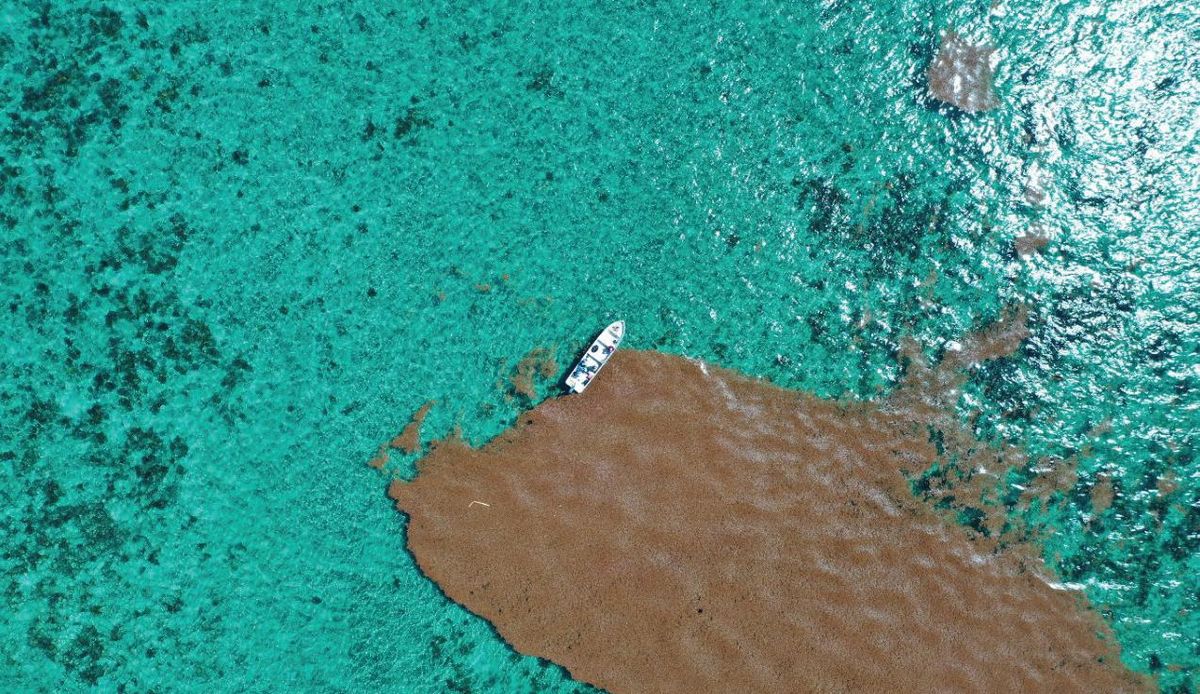
Quintana Roo’s tourism sector activated a massive environmental security operation along the state’s coastline on Monday after scientific projections indicated the arrival of an unprecedented mass of sargassum. The response combines high-resistance ocean barriers, autonomous collection vessels using artificial intelligence, minute-by-minute satellite monitoring, and specialized cleanup brigades to intercept the algae before it reaches white-sand beaches in destinations including Tulum and Playa del Carmen.
The campaign reflects how closely the region’s economy is tied to beach conditions. In tourism hubs where visual quality shapes guest decisions, sargassum is not treated only as an environmental issue but as an operational and financial risk. Summer bookings, according to the sector’s current strategy, depend heavily on maintaining a perception of clean beaches and careful ecosystem management.
For Tulum, the stakes are immediate. The destination’s appeal is inseparable from its coastline, and any large-scale sargassum arrival can quickly affect visitor experience, hotel operations, and the image projected to travelers planning upcoming stays. What changes now is the scale and sophistication of the response. Instead of relying mainly on removal after landfall, the sector is trying to stop the algae offshore and manage the threat in real time.
Offshore defenses move to the front line
The operation now centers on prevention at sea. High-resistance floating barriers have been deployed as a first layer of defense, designed to contain the algae before it reaches the shore. At the same time, autonomous collection boats equipped with artificial intelligence are being used to intercept and gather sargassum in coastal waters.
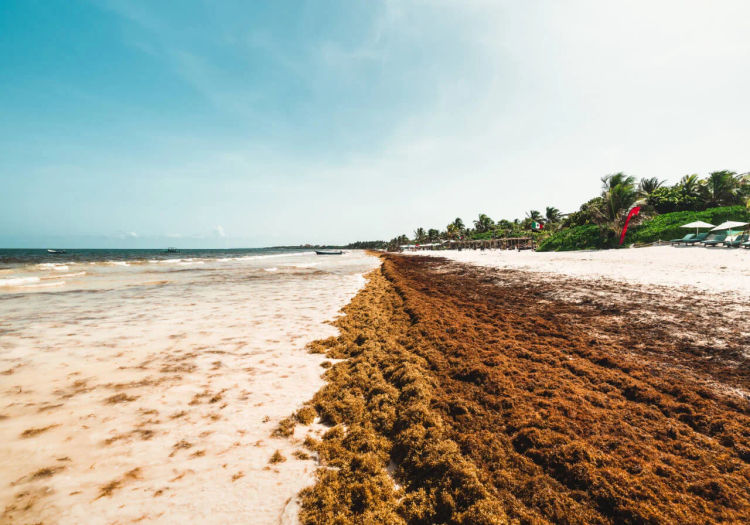
That shift matters because once the algae accumulates on the beach, the challenge grows more complex. Removal becomes more labor-intensive, visual damage is immediate, and decomposition near the shore can affect nearby marine ecosystems. The state’s tourism industry appears to be treating faster offshore interception as the most effective way to reduce those consequences.
The operational reliability of these floating systems has become a central concern. The barriers must withstand the combined force of heavy biomass and the spring swells typical of the season. In that sense, the physical durability of the infrastructure is now part of the region’s tourism defense strategy, not a secondary technical detail.

Data now guides beach protection decisions
The sector’s response is also being shaped by real-time information. Satellite data is allowing minute-by-minute monitoring of sargassum movement, helping operators identify higher-risk areas and direct resources with greater precision.
That has changed how decisions are made inside the tourism industry. Climate data, according to the scenario described by the sector, has become the most consulted tool in resort boardrooms, even ahead of occupancy reports. This is a subtle but important signal. It shows that environmental forecasting is no longer being treated as background information but as a core factor in business planning.
In practical terms, this means logistics can be adjusted quickly as conditions evolve. Crews, vessels, and containment systems can be redirected toward coastal stretches facing the greatest pressure. For destinations such as Tulum, where demand is highly sensitive to visual conditions, that speed may shape both visitor perception and short-term revenue.
Hotels adapt guest information and spending
The tourism industry is not relying only on containment and collection. Major hospitality groups have integrated real-time beach information into their apps so guests can check current conditions and, when necessary, shift plans toward cenotes or archaeological zones.
This adaptation shows how the sector is trying to manage both the physical problem and the guest experience around it. The goal is not only to remove algae but to reduce disruption for travelers whose impression of the destination can affect reviews, repeat visits, and future bookings.
Hotel operators are also committing significant funds to the effort. According to the base information underlying this article, hoteliers have allocated emergency funds equal to 5% of their operating income to support daily collection and maintenance of the containment barriers. That level of spending underlines how expensive sargassum management has become and how central it is to protecting the region’s competitiveness.
For workers, the campaign also changes daily operations. Human teams dedicated to cleanup and conservation have been reinforced with specialized brigades working under strict marine wildlife protection protocols, especially during sea turtle nesting season. That adds another layer of complexity, since any response must limit damage while still moving quickly enough to protect the shoreline.
An environmental threat with financial consequences
The projected magnitude of this season’s algae arrival is estimated at 30% above the average of the last decade, a development attributed in the base text to warming marine currents in the South Atlantic. Whether that estimate ultimately holds, it is already shaping how businesses, governments, and investors are preparing.
The economic implications extend beyond beach cleaning costs. The industry is seeking a federal catastrophic insurance mechanism tailored specifically to sargassum, similar to the protection used for hurricanes. That request illustrates how the algae is being framed not as a routine seasonal inconvenience but as a recurring hazard with broader commercial consequences.
Property valuations in tourism corridors may also be affected when uncertainty around sargassum grows. So can liability insurance costs. For hotel groups and property owners, the issue is now tied to asset value, operational predictability, and long-term financial planning as much as to visitor satisfaction.
This is one reason coordination between the state government and the private sector has tightened. Both sides appear to recognize that the sustainability of the destination cannot be handled by one actor alone. Beach quality, ecosystem stability, and tourism performance are too closely linked.
Coral reefs and nesting species remain at risk
The preventive effort is also aimed at protecting ecosystems beyond the sand itself. When sargassum accumulates and decomposes along the shore, coral reefs can suffer from the resulting stress, including conditions described in the base text as suffocation.
That adds urgency for coastal communities already balancing tourism pressure with conservation needs. In Tulum, where marine life is part of both local identity and visitor demand, the environmental cost of inaction would extend well beyond aesthetics.
The response has therefore been framed through the language of regenerative hospitality. Visitors are being invited to take part in supervised cleanup and environmental education activities led by marine biologists. The message is clear: the destination wants tourists to see preservation not as a separate cause, but as part of the travel experience itself.
There is a practical side to that approach. Public participation can help build awareness of why access conditions may change and why cleanup operations are being intensified. But it also reflects a deeper reality. The region’s appeal depends on living ecosystems that cannot be treated as scenery alone.
Processing technology could reshape cleanup economics
Alongside collection efforts, innovation in drying and pressing processes is helping reduce transport costs to processing plants. That improvement, as described in the base text, is making cleanup work more financially sustainable by lowering one of the recurring costs associated with large-scale sargassum removal.
This does not eliminate the burden, but it may improve the economics of response at a time when volumes are rising and intervention is becoming more constant. For an industry preparing for a season projected to be more severe than average, those efficiency gains may matter almost as much as containment systems offshore.
The Tulum Times has repeatedly reported on how environmental pressures increasingly shape tourism management across the Mexican Caribbean. In this latest phase, the region’s response to sargassum appears more integrated, more data-driven, and more expensive than before.
What is at stake now is not only the appearance of the beaches but the operating model of the destination itself. For Tulum and the wider Quintana Roo coast, this sargassum response will influence how hotels spend, how guests plan, how workers operate, and how ecosystems are protected in the months ahead. The primary keyword, Quintana Roo sargassum, will define much of that challenge going forward. We’d love to hear your thoughts. Join the conversation on The Tulum Times’ social media. How should Tulum balance visitor expectations with the rising cost of coastal protection?